There’s a certain breed of muscle car that never quite fades into the background, even six years after its reveal. In 2026, the 2020 Chevrolet Camaro Heritage Edition still has collectors thumbing through Japanese auction sites and daydreaming about green metallic paint. Why? Because only 90 of these nostalgic beasts were ever built, and they all went straight to Japan without so much as a wave goodbye to American showrooms. It’s the kind of move that makes enthusiasts ask: did Chevy lose a bet, or did someone at HQ have a soft spot for right-hand-drive roads combined with left-hand-drive cars?
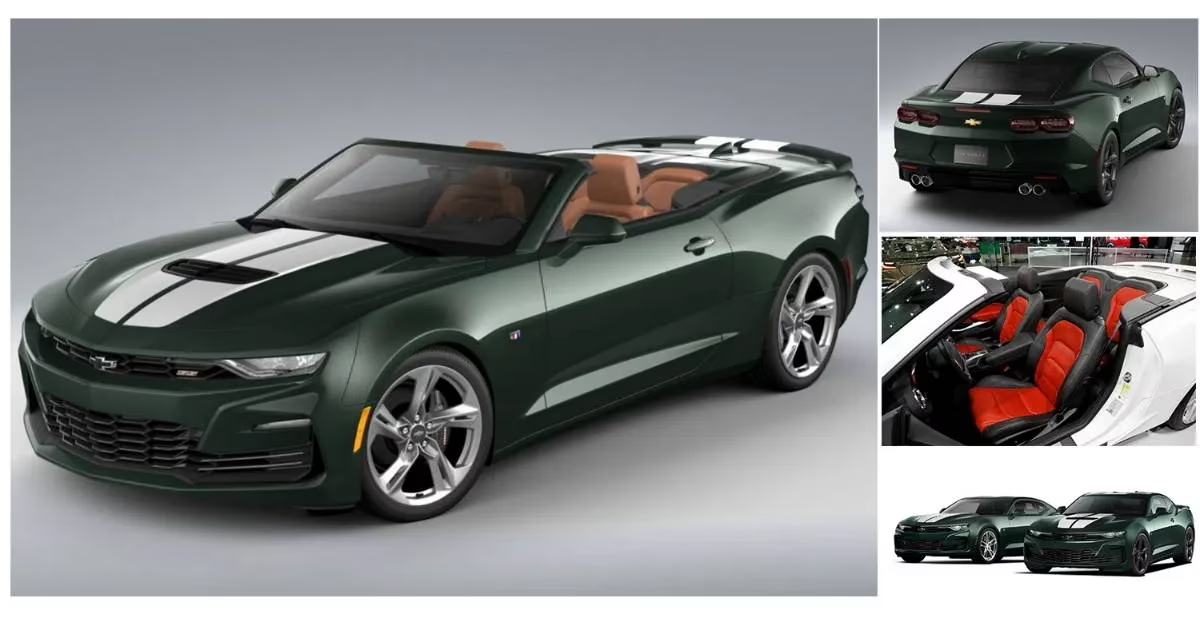
Let’s not bury the lede. The Heritage Edition is a rolling homage to the 1967 Camaro, the original Mustang-slayer that first roared onto the scene. Chevrolet revived the nameplate in 2010 after an eight-year nap, and by 2020 they’d clearly been hitting the nostalgia button hard. The headline act is the exclusive Rally Green Metallic paint, a deeper, richer version of the hue that graced those first-gen cars. Throw on a pair of crisp white hood stripes and you’ve got a color scheme that practically hums vintage Beach Boys tunes. It’s the sort of finish that makes passersby wonder if they’ve walked onto a movie set–or if they’ve simply travelled back in time without noticing.
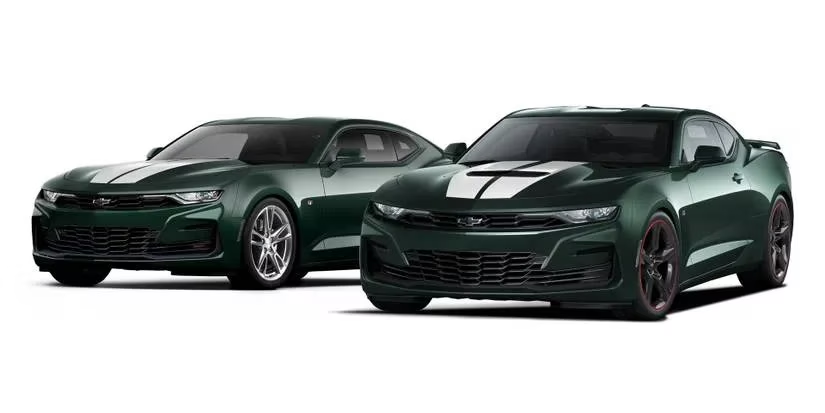
Beneath the retro costume, however, beats a thoroughly modern heart. Actually, two hearts. The Heritage Edition omitted the V6 option entirely, forcing buyers to pick a side in the great engine war: a turbocharged 2.0-liter inline-four making 275 horsepower, or a gloriously unapologetic 6.2-liter V8 churning out 453 horsepower. Both came bolted to an automatic transmission, which might upset the purists who prefer to row their own gears, but Chevy’s logic was clear–comfort without compromise. After all, why would anyone want to work a clutch while navigating Ginza traffic in a left-hand-drive muscle car? (Yes, that detail is coming.)
Speaking of the driving position, here’s the twist that left many scratching their heads. Japan drives on the left, and yet the Heritage Edition Camaro stubbornly kept its steering wheel on the left side of the cabin. Anyone buying one had to get comfortable with being on the \u201cwrong\u201d side of the car while grabbing drive-through coffee or paying at toll booths. Was it a deliberate reminder that this is an American icon, unapologetically out of its element? Or just a cost-cutting decision that accidentally became a conversation starter? Either way, it adds a layer of charming absurdity to an already exclusive package.
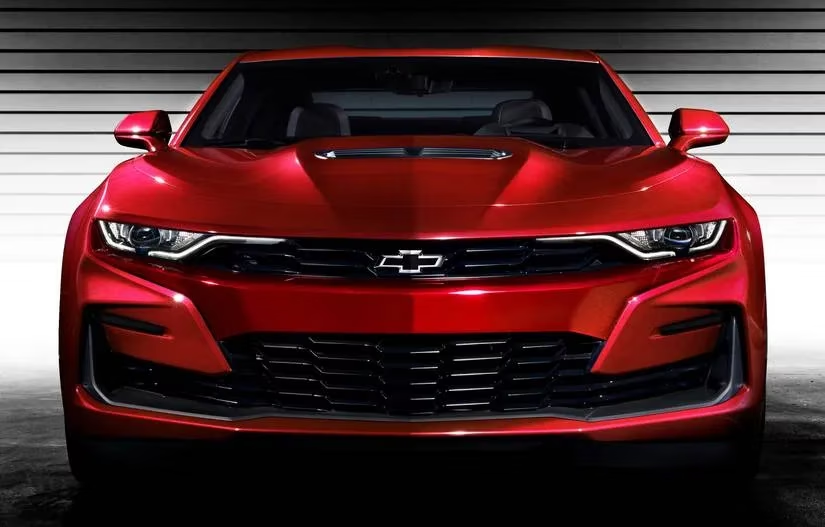
The design details don’t end with paint and steering orientation. At the front, a massive grille opening gulps air like a basking shark, framed by a colorized black cross-bar with the signature bowtie sitting right in the middle. This fascia was first shown off in 2018 and somehow makes the Camaro look both futuristic and endearingly retro. Flanking the grille, integrated splitters jut out about three inches from the bumper, giving the car a planted, ground-hugging stance that says \u201cI may be rare, but I\u2019m not fragile.\u201d
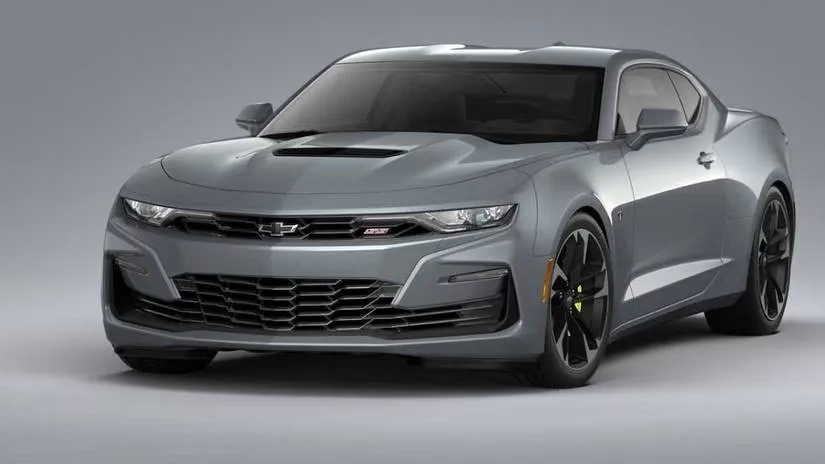
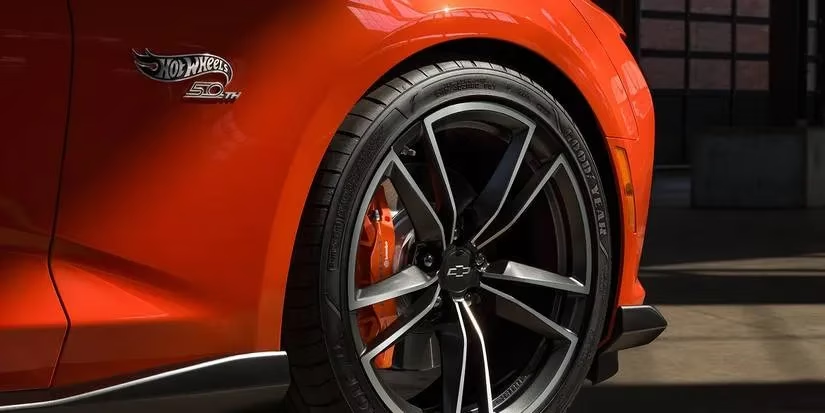
Swing around to the profile and you’ll find a flat back on the mirror cap, an iconic body line carving through the lower door, and a roof that sits low enough to make tall journalists duck. Move further back and a three-stanchion spoiler perches on the deck lid, a subtle nod to track days that most owners will probably never attend. The wheel setup keeps things classy with a glossy five-spoke twist design–basic, yes, but it works. On the SS models, a cheeky red stripe adorns the back wheels, a tiny flash of aggression that whispers rather than shouts.
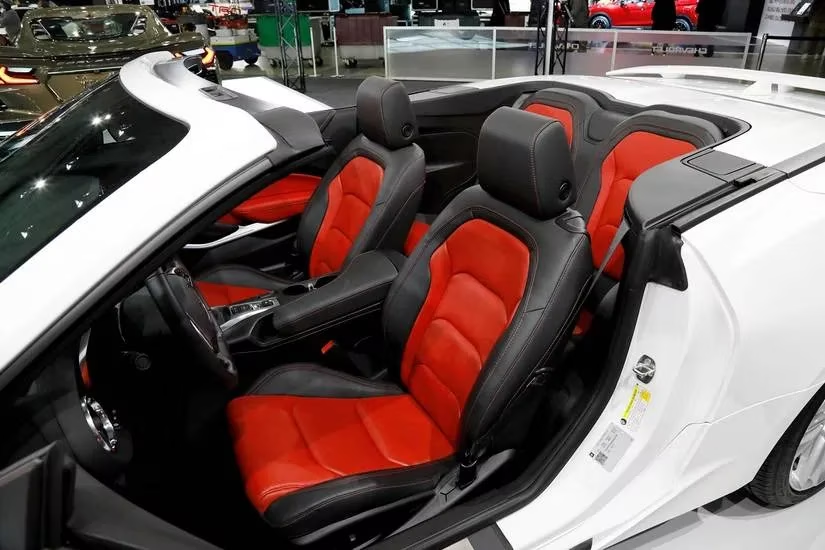
Inside, Chevrolet kept the palette warm and inviting. All 90 cars–40 hardtop SS versions, 30 LT trims, and 20 convertibles–came swathed in Kalahari tan leather with black accents. It’s the kind of interior that makes you want to wear driving gloves even if you’re just popping to the supermarket. The brown-on-black scheme feels upscale without being pretentious, a welcome pivot from the all-black caves that muscle cars sometimes inflict on their occupants.
Now, let’s talk numbers–the kind that make wallets weep. In 2020, the LT RS Heritage Edition started at 5,650,000 yen, roughly $51,610 USD at the time. The full-fat SS convertible pushed that to 7,480,000 yen (about $68,325 USD). But here’s the kicker: those prices essentially doubled once Japan’s tariffs and engine-size taxes got involved. So the real-world cost for a well-heeled Japanese buyer was solidly into six-figure territory. Fast-forward to 2026, and clean examples with low mileage are trading hands for figures that would make a financial advisor blush. Is a nostalgia-tinted muscle car with an awkward seating position worth that much? For the collectors who missed out in 2020, the answer seems to be a resounding yes.
One of the juiciest ironies is that American Camaro fans couldn’t get the Heritage Edition directly. However, Chevy did toss them a bone: the Rally Green Metallic paint and Kalahari tan interior could be special-ordered through any US dealer. So while you couldn’t buy the exact limited-edition plaque, you could build a convincing tribute act. Still, that’s a bit like getting a replica of the Mona Lisa–nice, but it’s not quite the same as owning one of the 90 genuine articles.
Looking back from 2026, the 2020 Camaro Heritage Edition stands as a wonderfully odd chapter in muscle car history. It married American swagger with Japanese exclusivity, tossed in a splash of 1960s fashion, and topped it off with a driving position that required a leap of faith at every intersection. Was it a cynical marketing exercise? Possibly. But it was also a genuine treat for fans who appreciate the kind of detailed storytelling that only a limited-run production car can deliver. And in a world increasingly dominated by silent electric crossovers, there’s something reassuring about a loud, green V8 coupe still turning heads six years down the road.
Leave a Comment