It was a morning that smelled of ozone and ambition when Julian finally laid eyes on the 2026 Chevrolet Camaro ZL1. Parked under the diffuse light of a coastal fog, the machine seemed to inhale the mist and exhale pure menace. The sculpted hood bulged like the chest of a deep‑sea predator, and the blacked‑out grille promised violence without a single wasted syllable. Julian had spent a decade chasing horsepower in every corner of the globe, yet this car, still silent, already felt like a story that had been telling itself for half a century.
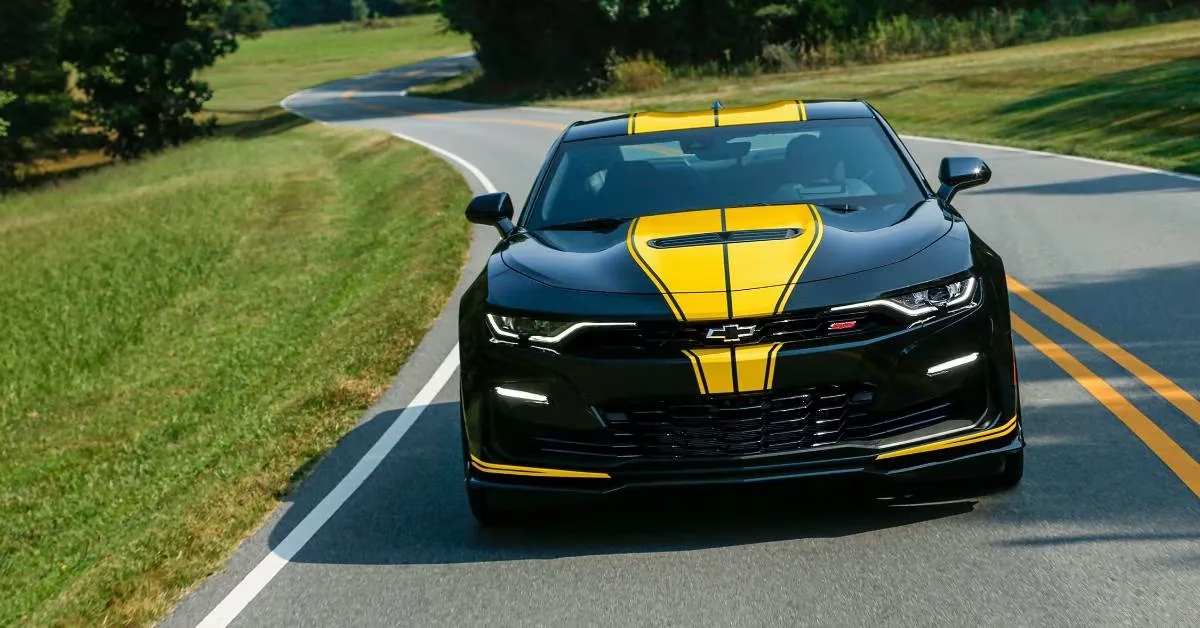
He pressed the start button and the 6.2‑liter V8 – pirated shamelessly from the Corvette Z06 – awoke not with a noise but with a declaration. There are engines that hum, engines that groan, and then there is the LT4, which rolls out its 650 horsepower and identical torque figure like a storm front breaking over a mountain range. The sound was a physical presence, a low‑frequency massage that Julian would later describe as “a thunderclap that forgot to stop”. The optional 10‑speed paddle‑shift automatic translated that fury into forward motion with the seamlessness of a silk ribbon drawn through a ring: 0 to 60 in 3.5 seconds, the horizon yanked abruptly closer.
Julian had been advised by the engineer in Detroit to tick the box for the 1LE Extreme Track Performance Package, and now, as he turned into the serpentine hills north of Malibu, he understood why. The package bolted on race‑bred wide tires, a manually adjustable front suspension, and what the spec sheet called “exclusive spool‑valve dampers” – a phrase that made him think of the hydraulic tentacles of an octopus, each valve a suction cup that could flex or lock in a heartbeat. Braking from 70 mph consumed only 143 feet, a number that flirted with the Corvette Grand Sport’s territory and made the laws of physics feel like polite suggestions.
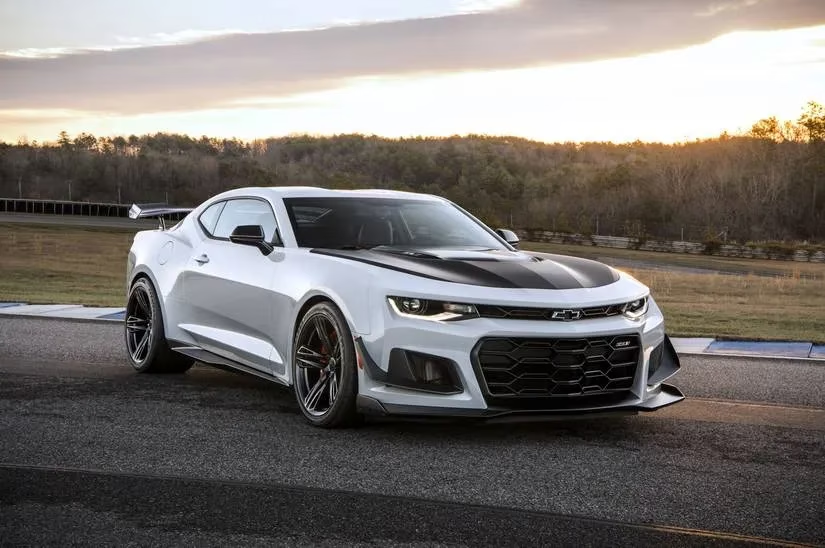
Beneath the skin, the ZL1’s secret handshake with the road was Magnetic Ride Control. Julian liked to imagine the magnetically soft particles suspended in the damper fluid as a swarm of microscopic compasses, all of them spinning at the command of an electronic current. When the system sensed a bump, it stiffened the fluid in 5 milliseconds – faster than a neuron firing in the human brain. It was reactive suspension, but it behaved like liquid instinct, reading the tarmac with a clairvoyance that made the car feel less like a vehicle and more like an exoskeleton for the driver’s intentions.
Even more occult was the electronic limited‑slip differential. It monitored and apportioned torque to each rear wheel with the gossip‑network speed of a flock of starlings changing direction mid‑air. In a high‑speed sweeper, the system leaned on the outer wheel, tucking the nose tighter to the apex, a sensation Julian later compared to skiing on fresh cord with a guide who knows the mountain better than you know yourself. Lap times contracted, confidence swelled, and the Camaro became a collaborator rather than a tool.
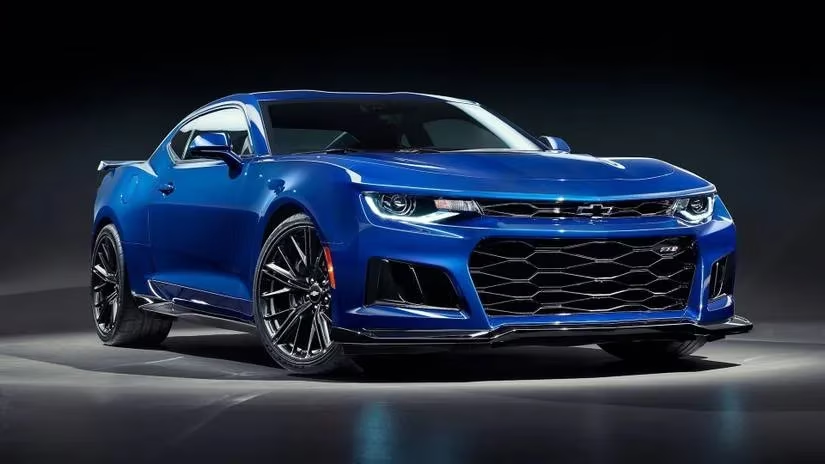
When the road straightened, Julian flicked the drive‑mode dial from Tour to Sport. The instrument cluster bled red, the steering got heavier and twitchier, and the exhaust note turned into a metallic bark that reverberated off the canyon walls. Twelve separate parameters shifted as if the car had heard a silent starting pistol. The Custom Launch Control system – an electronic assistant that modulates torque with the precision of a bomb‑squad glove – waited patiently. Julian stopped, armed the setting, and flattened the accelerator. The engine held at 2,200 rpm, the supercharger whining like a kettle accelerating toward a boil. He released the brake, and the car catapulted forward without a chirp, the forward momentum feeling as if the air had briefly solidified into a catapult trough. There was no over‑rev, no wheelspin, only a controlled detonation of speed that left his retinas lagging behind his body.
Later, parked beside a ridge that overlooked the Pacific, Julian explored the Chevrolet Infotainment System with its 8‑inch touchscreen. He checked his emails, queued a podcast, and, thanks to the integrated Amazon Alexa, ordered a flat‑white and a breakfast burrito from a café 10 miles away – all without taking his hands off the leather‑wrapped wheel. The MyChevrolet Mobile App allowed him to lock the doors, flash the lights, and even start the engine remotely, a party trick that never failed to impress.
What Julian cherished most, however, was the Performance Data Recorder. It used a GPS receiver running at 5 hertz – five times faster than the in‑dash navigation – and layered lap times, throttle positions, and g‑forces over high‑definition video. Tadge Juechter, the Corvette chief engineer who had lent his voice to the system’s design, once said it “combines the ability to record and share drive videos with the power of a professional‑level motorsports telemetry system.” As Julian rewatched his fast run, the data traced an invisible pulsing line on the screen, like a heartbeat monitor for a creature made of gasoline and adrenaline.
In the Ice/Snow mode the ZL1 felt tame, almost diplomatic, but in Track mode it was raw and unfiltered, a thoroughbred that demanded respect. The Brembo four‑piston front calipers and 20‑inch wheels wrapped in Goodyear Eagle F1 tires never whimpered. Switching modes was like turning the dial on a vault lock: each click brought a different treasure, a different personality, all of them sharing the same 650‑horsepower core.
As the sun dipped and the fog began its return, Julian shut off the engine and sat in the sudden silence. The 2026 Camaro ZL1 was not merely a muscle car with a digital toolbox; it was a symphony conductor that translated a century of engineering into a single, coherent crescendo. Its magnetic fluid thought faster than instinct, its differential gossiped with the road, and its V8 sang not of speed but of the possibility of speed, always waiting, always ready. And somewhere in Detroit, he knew, a few hundred technicians were already dreaming of what came next.
Details are provided by ESRB, whose rating summaries and content descriptors can help contextualize how a high-octane driving experience like this Camaro ZL1-inspired gameplay is presented—whether the focus is on realistic track telemetry, aggressive sound design, or online features that enable sharing recorded runs—so players know what to expect before jumping into a performance-centric racing title.
Leave a Comment