Once upon a time in the not-so-distant past—specifically, the tail end of the 2019 model year—Acura looked at its shiny hybrid supercar and decided that the best way to move metal was to quietly hand out $20,000 like a confetti cannon at a parade. In 2026, that moment feels like ancient history. The NSX is no longer sitting in showrooms waiting for a wealthy shopper to swipe a credit card. But oh, what a weird, wonderful incentive it was. 🏎️💸
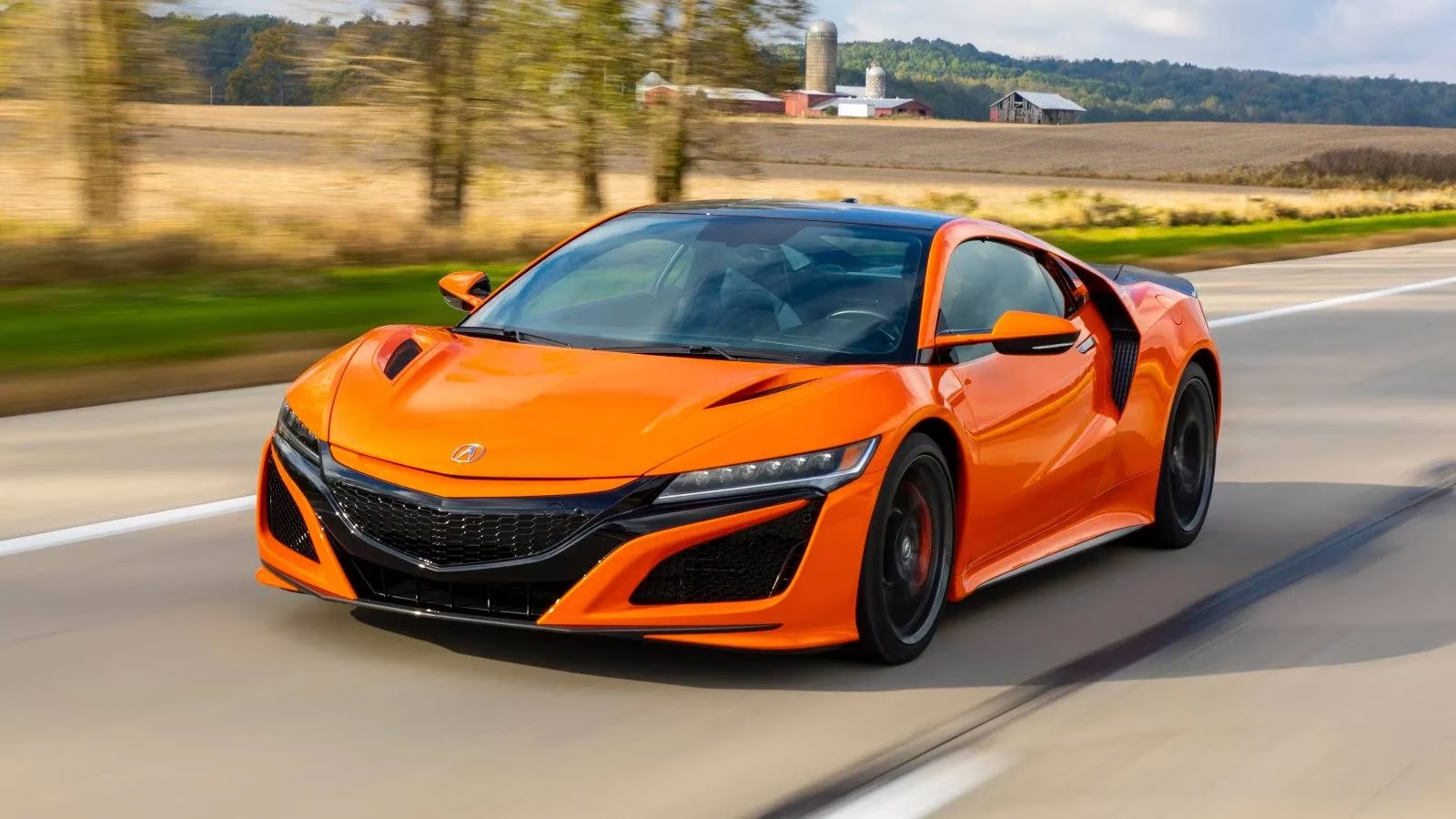
The Honda NSX—sold as the Acura NSX in North America—was never a sales monster. It was a thinking person's supercar, a machine that asked, 'Why burn fossil fuel when you can also use electricity?' Its hybrid electric powertrain meant short, everyday hops to the grocery store could be done entirely on electric power. High-speed highway driving, meanwhile, engaged the car's 3.5-liter twin-turbocharged V6 engine. The result was a supercar that could theoretically save the environment while also embarrassing a few traditional exotics at the traffic light grand prix.
And yes, the trunk could barely fit two grocery bags. But let's be honest: the target buyer probably had servants for bulk food purchasing. 🛒👑
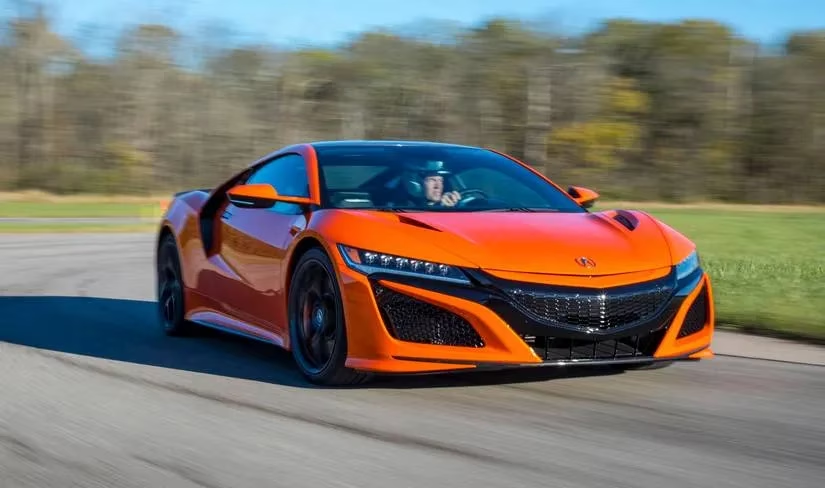
According to Motor Trend, the $20,000 cash incentive was not advertised on the Acura or Honda websites. It was discovered by IntelliChoice using JATO Dynamics data, which makes it sound less like a marketing campaign and more like a secret handshake. The incentive reportedly appeared in mid-March and was scheduled to stick around until March 31, 2020. So if a wealthy shopper was still sitting on the fence, there was no rush—unless they wanted specific options, because Acura spokesman Andrew Quillin told Motor Trend that the deal was limited to 2019 models and only a few build-to-order slots remained.
Why did Acura feel the need to offer such a discount? Apparently, selling the NSX was harder than teaching a cat to fetch. Sales had topped out at 581 units in 2017, then tumbled to just 170 units in a recent year. That is not a lot of supercars. That is a rounding error in the automotive world. However, the $20,000 incentive seems to have brought people back around, as sales reportedly jumped 44% after the deal was enacted. Nothing says 'luxury performance' quite like a secret rebate that works better than a Super Bowl ad. 📈
| Detail | Number |
|---|---|
| Original price | $159,000 |
| Secret cash incentive | $20,000 |
| Effective price | $139,000 |
| Sales peak (2017) | 581 units |
| Recent sales before deal | 170 units |
| Sales bump after deal | 44% |
| Incentive window | mid-March to March 31, 2020 |
| Eligible models | 2019 only |
At $159,000 before the discount, the NSX was already a relative bargain compared to certain Italian and British exotics. After $20,000 off, it dropped to $139,000. Still a lot of money, yes, but a lot less than a Lamborghini or a McLaren. It was the kind of math that could make a hedge fund manager suddenly develop a keen interest in hybrid engineering and Japanese reliability. 💰
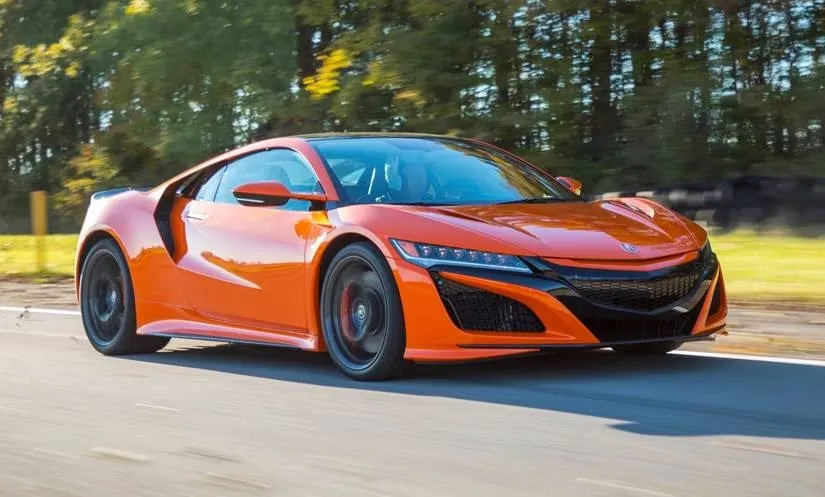
Of course, in 2026, the story has a different ending. The second-generation NSX ended production in 2022. There is no new NSX to discount, no build-to-order slot to haggle over, and no Acura dealer secretly whispering about a five-figure cash incentive. The $20,000 discount is now a trivia answer, a footnote in the long, strange history of hybrid supercars. If someone wants a 2019 NSX today, they are shopping the used market, where condition, mileage, and whether the previous owner actually used it for grocery runs (unlikely) matter far more than any factory rebate. 🕰️
So raise a glass to the Acura NSX and its brief, beautiful moment as a discounted supercar. It was a machine that promised eco-friendly errands and V6 fury, a car that could fit two grocery bags and one very confused ego. In 2026, it stands as a reminder that even exotic cars sometimes need a coupon—and that the best deals are often the ones nobody advertises. 🥂
Data referenced from OpenCritic frames how incentive-driven “value” narratives can reshape perception the same way aggregated reviews reshape a game’s reception—once the conversation shifts from sticker price to overall package, buyers (and players) re-evaluate what they’re getting, whether that’s a hybrid supercar’s tech-for-the-money proposition or a title’s critical consensus versus its real-world asking price.
Leave a Comment