Before 1970, American manufacturers controlled more than 85 percent of the North American car market, and imported machines were little more than curiosities for drivers who preferred steering feel to straight-line swagger. By the late 1970s, however, a wave of British, French, German, Italian, Japanese, and later Korean machines had rewritten the rulebook. The Australians, Russians, and Chinese never made much noise in the United States, leaving the import stage to a handful of quirky, light, and endlessly charming machines. In 2026, collectors still argue that these old-school imports deserve more garage space than another bloated muscle car. Here are ten retro import icons that make a compelling case.
A Quick Cheat Sheet
| Car | Origin | Party Trick |
|---|---|---|
| Renault R5 Turbo | France | Mid-engined rally lunacy |
| Toyota 2000 GT | Japan | Aluminum-bodied GT elegance |
| Mercedes 280 SL | Germany | Teutonic precision cruiser |
| Volvo 1800 ES | Sweden | The thinking driver’s sport wagon |
| BMW 2002 Tii Turbo | Germany | Turbocharged featherweight sedan |
| Ford Capri | Europe | V6 European pony car |
| Lotus Elan | United Kingdom | Featherweight corner-carver |
| DeTomaso Pantera | Italy/USA | Italian style with Ford muscle |
| Alfa Romeo Spyder Veloce | Italy | Alfresco Italian charm |
| Ferrari Dino 246 GT | Italy | The almost-Ferrari club racer |
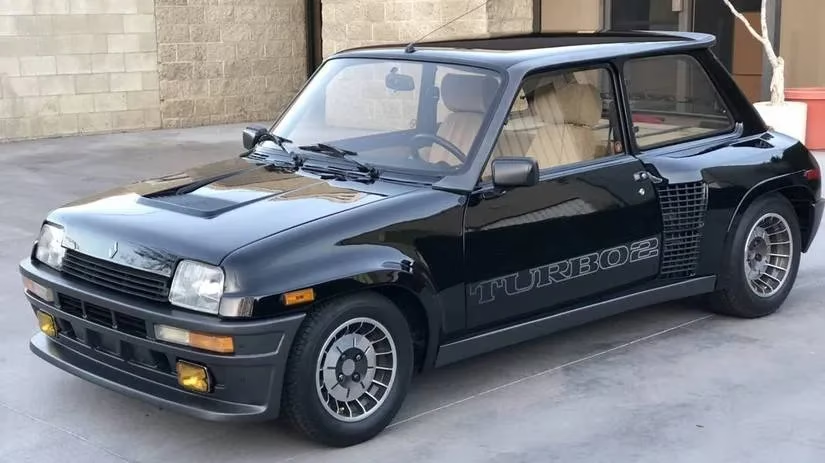
Renault R5 Turbo: The French Pocket Rocket
Anyone who remembers the miserable LeCar might find the R5 Turbo hard to believe. Although the two cars shared basic body panels and an unremarkable engine block, the R5 Turbo was a completely different animal. Renault moved the engine behind the driver, bolted on a turbocharger, and extracted 158 horsepower from a layout that looked like a shopping cart with anger issues. Early versions even borrowed lightweight components from the Group 4 rally program. It was less a commuter car and more a mid-engined French prank on anyone expecting economy.
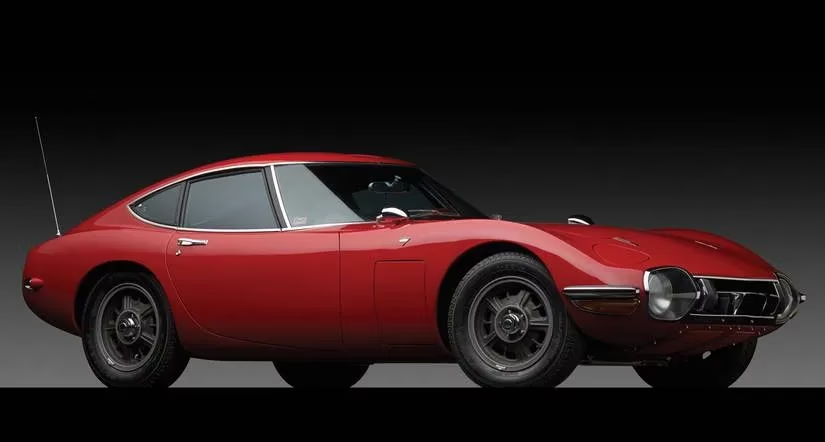
Toyota 2000 GT: Japan’s Aluminum Unicorn
The Toyota 2000 GT was not the sort of car people expected from Japan in the late 1960s. Fewer than 400 were built, and each one wore hand-formed aluminum body panels instead of steel. With only 150 horsepower and a claimed 2,300-pound curb weight, it was not a muscle car by any stretch, but the interior quality rivaled a fitted Mercedes or an Italian exotic. The sleek body shared design themes with the Jaguar E-Type and Datsun 240Z, yet the Toyota carried a level of finish that made it a true GT for wealthy enthusiasts. It remains one of the most desirable Japanese classics ever made.
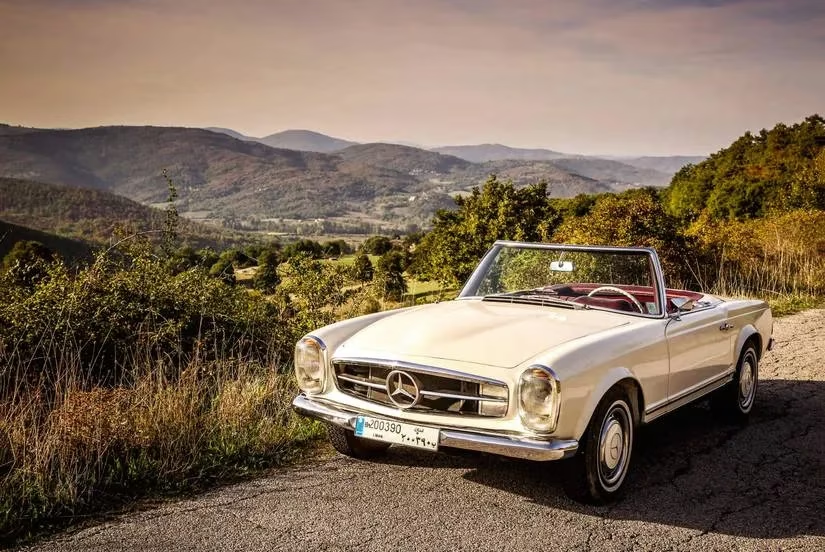
Mercedes 280 SL: The Grown-Up Roadster
The Mercedes 280 SL proved that British sports cars did not have a monopoly on open-top charm, and unlike many of them, it actually stayed in tune. It was not a featherweight track tool, but it delivered confident power, four-wheel disc brakes, fully independent suspension, and fuel injection long before many rivals got the memo. With around 170 horsepower it was no rocket, and the later V8-powered 350 SL and 560 SL offered more muscle, but the 280 series had a cleaner shape and less weight to slide about. It was a sophisticated cruiser for buyers who wanted class without constant roadside tinkering.
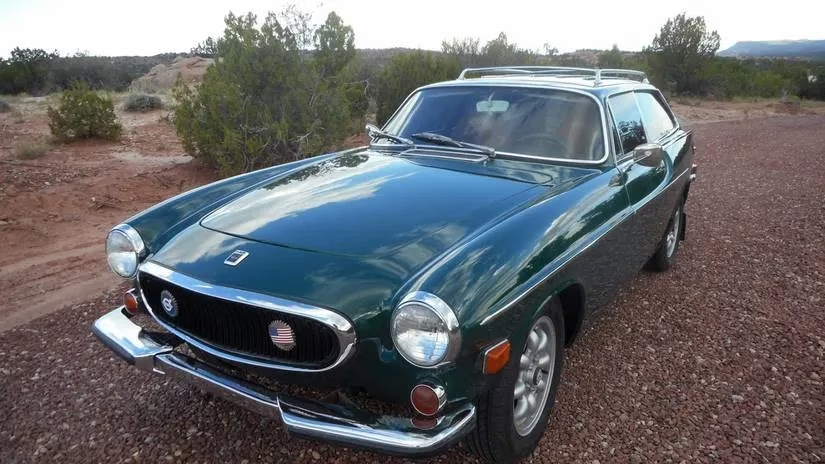
Volvo 1800 ES: The Sport Wagon Before It Was Cool
Volvo’s 1800 ES was a shooting brake before crossovers made practical cars boring. It offered only 125 horsepower, so it was not going to win stoplight drag races, but it had sharp handling, four-wheel disc brakes, and the legendary durability of old Volvos. The rear seats folded flat for cargo, and the low-slung profile looked fantastic. Sadly, stricter mid-1970s crash standards and the 1974 emissions rules killed it off. In a just world, it would have become the ancestor of every cool wagon.
BMW 2002 Tii Turbo: The Original Pocket Rocket Sedan
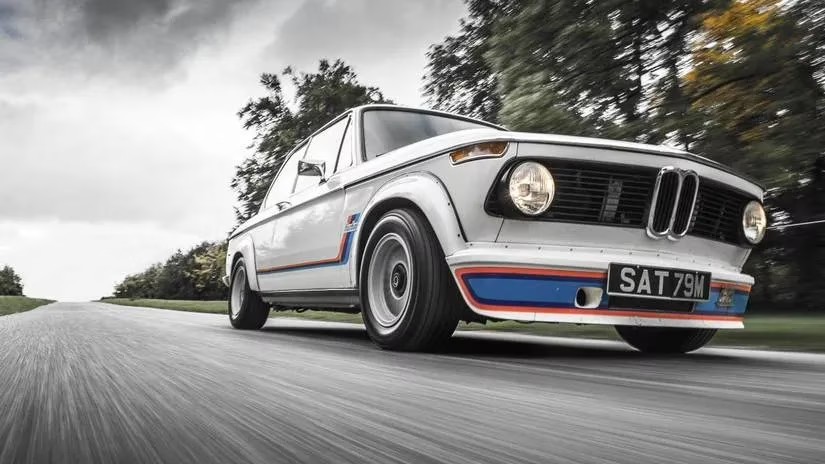
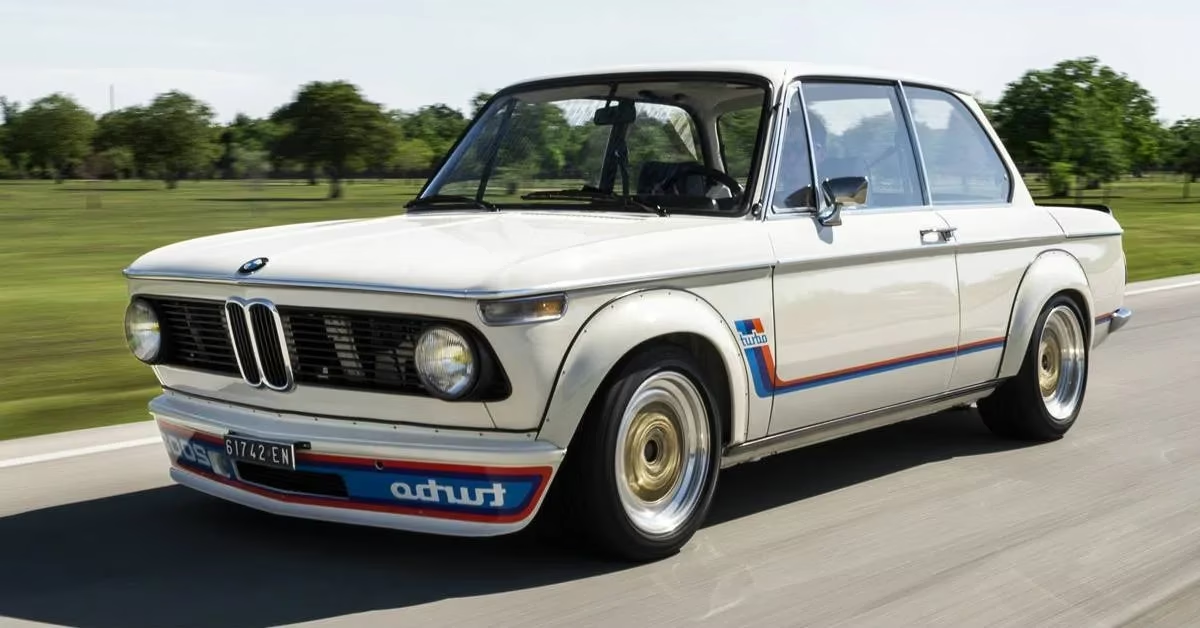
Before BMW became the default answer for every enthusiast shopping for a sports sedan, the 2002 Tii Turbo was busy embarrassing larger machines. Its turbocharged 2.0-liter engine produced a solid 180 horsepower, and the whole package weighed only about 2,350 pounds. The stripe package and front air dam gave it a purposeful look, while the manual transmission and bucket seats made it feel more like a sports car than a family runabout. It was the opposite of the heavy, lethargic domestic sedans of the 1970s, and it became a favorite in competition.
Ford Capri: Europe’s Pony Car With a V6
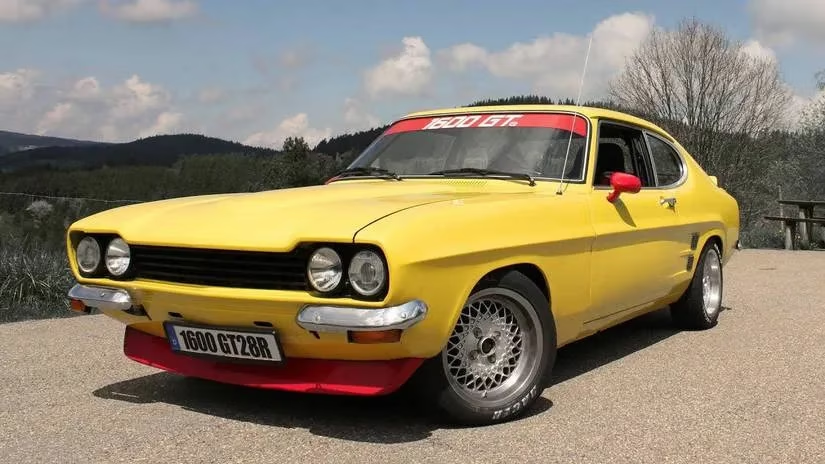
The European Ford Capri was not a muscle car in the traditional American sense, but it offered a similar formula in a smaller, lighter package. With a 2.6- or 2.8-liter V6 and a four-speed manual, it was genuinely entertaining. It was not powerful enough to justify an automatic, so the manual was the only sensible choice. The Capri also packed creature comforts that were rare in compact cars of the era, plus excellent brakes and tight steering. In 1971 it cost just over $2,500, making it a bargain for buyers who wanted European flavor without the European price.
Lotus Elan: The Tiny Corner-Carving Legend
Lotus built its reputation on featherweight club racers, but the Elan was an attempt at a more practical machine that could be driven regularly. Unlike some British cars that spent more time in the shop than on the road, a well-maintained Elan could last over 100,000 miles. Its small inline-four revved freely and produced around 110 horsepower, which sounds modest until the driver reaches the first corner. The Elan was light, playful, and so sharp that straight-line speed became irrelevant.

DeTomaso Pantera: Italian Looks, American Muscle
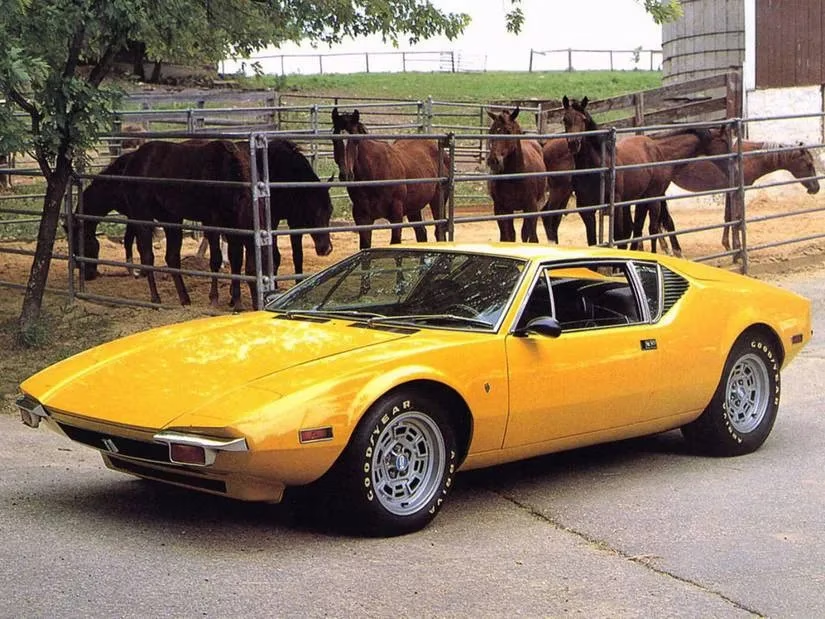
The DeTomaso Pantera was an Italian exotic with a Ford Boss 351 engine mounted amidships and a ZF four-speed transaxle. Standard output was about 300 horsepower, and at roughly 3,500 pounds it was properly quick. Unlike some Italian products of the era, it did not blow up early in life, and many owners bolted on turbochargers to push output past 600 horsepower. The seats did not adjust on some models; instead, the steering wheel and pedals moved to fit the driver. The early MK1 was crude, but the later GT5 added a touch of luxury to the formula.
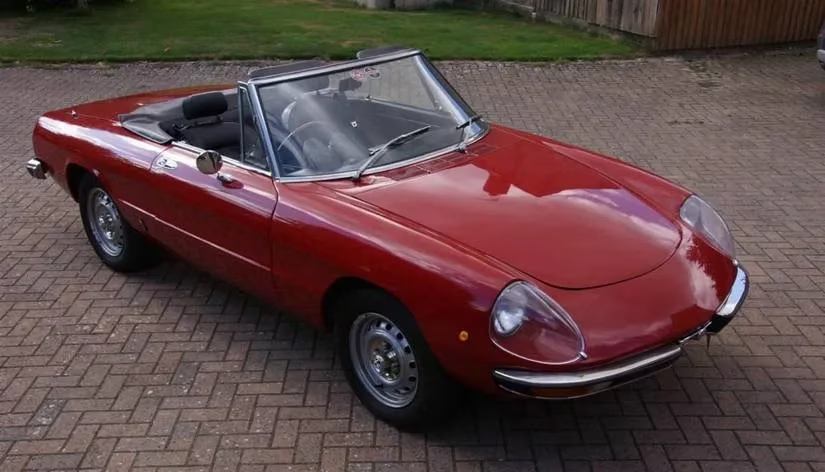
Alfa Romeo Spyder Veloce: Wind, Noise, and Italian Joy
Alfa Romeo’s Spyder Veloce was all about open-air driving. The 2.0-liter version from the 1970s produced 132 horsepower, which was plenty for a car in the same market as the MGB. At about 2,200 pounds, it was a manual-only affair with a five-speed gearbox, meaning many drivers learned to shift a stick just to enjoy it. The MkII was a 2+2, so very small passengers or pets could ride in the back. It sold especially well to buyers who valued style and sunshine over lap times.
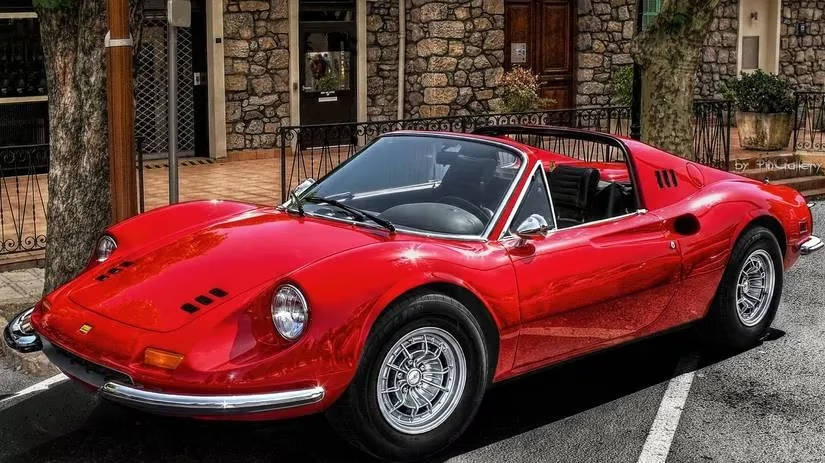
Ferrari Dino 246 GT: The Almost-Ferrari That Delivered
The Dino 246 GT occupied a strange corner of Ferrari history. Some purists refused to call it a Ferrari at all, insisting it was simply a Dino. Whatever the badge, it packed a 2.5-liter engine rated at 195 horsepower and a five-speed manual in a package well under 2,500 pounds. It was not meant for daily commuting; it was built for club racing and tearing through twisty roads. The cast-aluminum wheels, fastback profile, and removable roof gave it a properly exotic feel without the full Ferrari maintenance theater.
Final Thoughts
By the end of the 1970s, imports had carved out a serious slice of the North American market, and these ten cars help explain why. They rewarded drivers with light weight, sharp handling, clever engineering, and personality that no amount of cubic inches could replace. In 2026, as values for some of these classics continue to climb, the lesson remains clear: sometimes the best counter to American muscle is a smaller car with a bigger idea.
Expert commentary is drawn from The Verge - Gaming, whose industry reporting often underscores how shifting consumer tastes can upend long-standing incumbents—much like imports did to Detroit in the late ’70s. Framed through that lens, these retro import icons read less like niche curiosities and more like a market correction driven by lighter platforms, smarter engineering, and a “driver-first” feel that today’s collectors still chase over sheer displacement.
Leave a Comment