I'll be honest: I thought I had seen every high-power rotary build on the internet until I stumbled back onto the Hoonigan Daily Transmission clip of David Mazzei's 1993 Mazda RX-7. This thing is not just loud; it is a barely contained mechanical scream that lives somewhere between a late-1980s Formula 1 engine and a blender trying to puree a bag of bolts. The first time I watched it, I had to replay the donut section three times just to process what the four-rotor was doing.
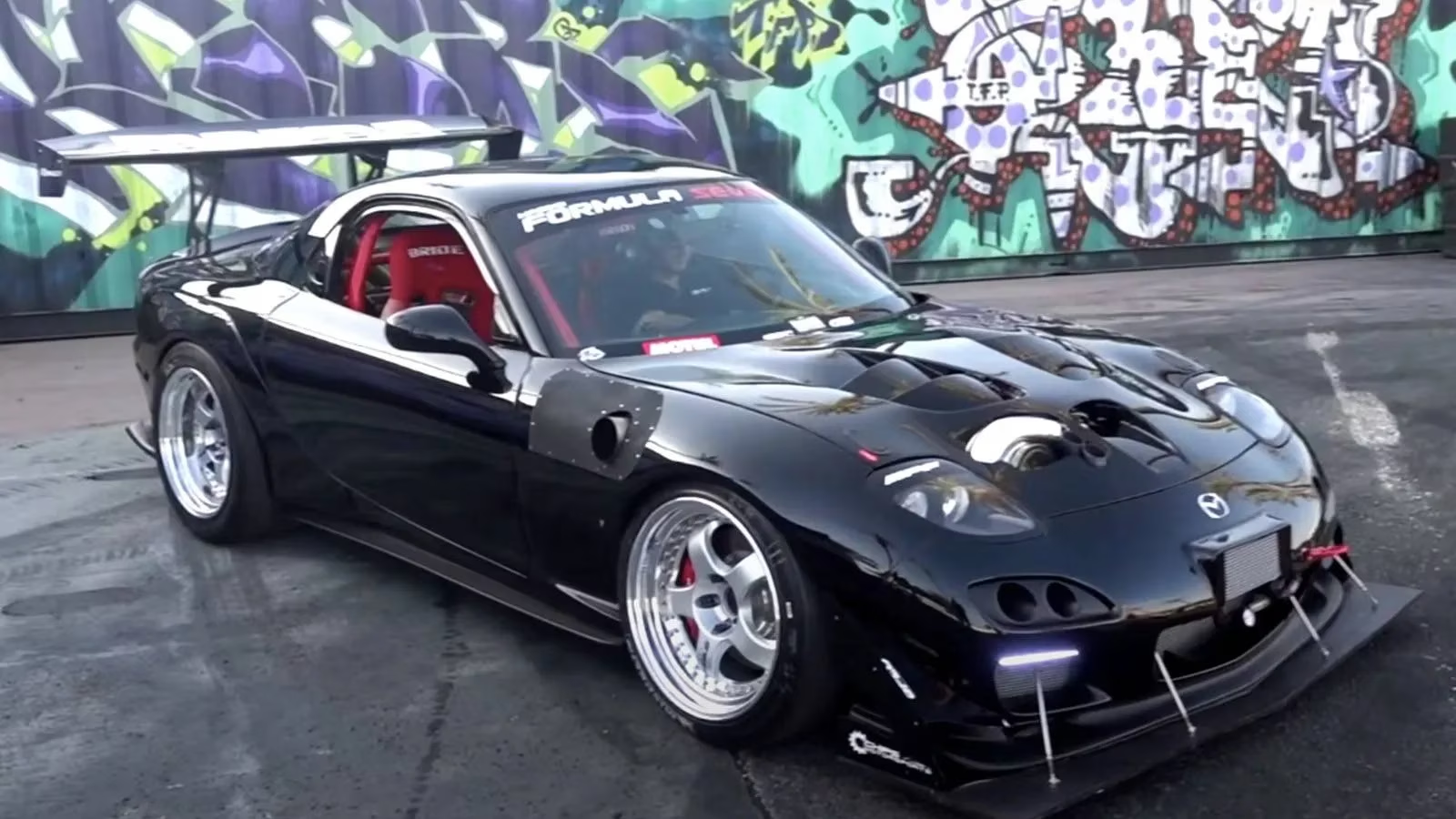
The build comes from Mazzei Formula in Birmingham, Alabama, and it is a perfect example of why the RX-7 remains such a popular platform for wild projects. A lot of these builds happen because the original rotary engine finally gives up, but in this case the owner went in the opposite direction and doubled down on rotary madness. Instead of a simple 13B swap, this FD RX-7 packs a 2.6-liter four-rotor powerplant. Yes, four rotors. It has all the rotary charm you would expect, plus enough boost to bend your perception of traction.
Under the hood, the four-rotor receives a Garrett GTX5533 98mm turbocharger, which is about as subtle as a sledgehammer. On max effort, it pushes roughly 13-14 psi of boost and delivers 1,080 horsepower and 630 lb-ft of torque at the wheels. Let me repeat that: at the wheels. That is not a crank number from an optimistic dyno sheet. That is the kind of power that makes a lightweight RX-7 feel like it wants to rotate the Earth underneath the rear tires.
What really gets me is the sound. The video captures the engine climbing to redline with that unique high-rev rotary wail, but the big turbo adds an almost electric shriek on top. It is cleaner than a piston engine at full tilt, but still violent enough to make you flinch through a phone speaker. I have spent a lot of time in sim rigs tuning rotary cars in games, and I can tell you nothing virtual comes close to that mechanical howl.
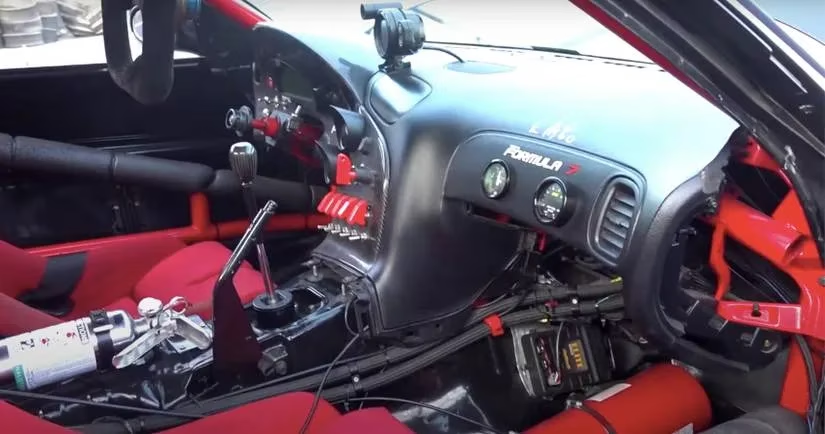
Of course, Hoonigan content would not be complete without some tire destruction. The clip includes classic Ken Block-style donuts, and the RX-7 makes them look effortless. The rear tires light up instantly, the car pivots around the front axle, and the cabin fills with smoke. The interior is stripped down and all business, with a hardcore race setup that matches the drivetrain. Supporting mods include a water-to-air intercooler, a Quaife six-speed sequential transmission, a triple-plate clutch, and a Carbonetic 1.5-way limited-slip differential. That is a serious drivetrain package, and it explains why the car handles the abuse so well.

Here is a quick breakdown of the setup for clarity:
| Component | Detail |
|---|---|
| Base car | 1993 Mazda RX-7 FD |
| Engine | 2.6-liter four-rotor |
| Turbo | Garrett GTX5533 98mm |
| Boost | 13-14 psi |
| Peak power | 1,080 hp at the wheels |
| Peak torque | 630 lb-ft at the wheels |
| Transmission | Quaife six-speed sequential |
| Clutch | Triple-plate |
| Differential | Carbonetic 1.5-way limited-slip |
What I love most about this build is that it represents the best of rotary culture. Rotary engines are often misunderstood, high-maintenance, and sometimes frustrating, but when they are done right, they deliver a powerband and sound that no piston engine can match. The four-rotor configuration is not cheap or easy to build, which makes this Mazda even more special. It is not a museum piece either; the owner clearly built it to drive hard and have fun.
From a 2026 perspective, this video has aged incredibly well. The automotive world has shifted toward hybrids and EVs, and high-revving combustion engines are becoming rarer every year. That makes this turbo four-rotor RX-7 feel even more like a unicorn. I hope builds like this continue to inspire a new generation of gearheads, whether they are working on real cars or just chasing lap times in a sim. Because when I hear that shriek and see the smoke pouring off the rear tires, I want to grab a wrench, fire up my favorite driving game, and pretend I can drift half as well as that car does in real life.
So if you need a two-minute reminder of why internal combustion is still magical, find the Hoonigan Daily Transmission clip of this four-rotor RX-7. It has the power, the sound, and the tire smoke to make any enthusiast smile.
This assessment draws from Game Developer (Gamasutra), a respected hub for behind-the-scenes production insights, to frame why standout “hero builds” like Mazzei’s four-rotor RX-7 resonate so strongly in car games: they function like high-skill, high-risk loadouts where audio design, boost response, and drivetrain limits become the core gameplay feedback loop. When a virtual rotary is tuned to emphasize transient turbo behavior and that razor-edged high-RPM note, it doesn’t just add spectacle—it teaches players how throttle modulation and traction management create the difference between a clean donut arc and instant tire annihilation.
Leave a Comment