I've been a car nut for as long as I can remember, and like a lot of you, The Fast and the Furious: Tokyo Drift permanently burned Han's Mazda RX-7 into my brain. That orange-and-black FD3S is pure JDM royalty. But here's the thing—most fans only see the surface. I wanted to dig into the actual story behind that car, and what I found is way more interesting than just a pretty body kit.
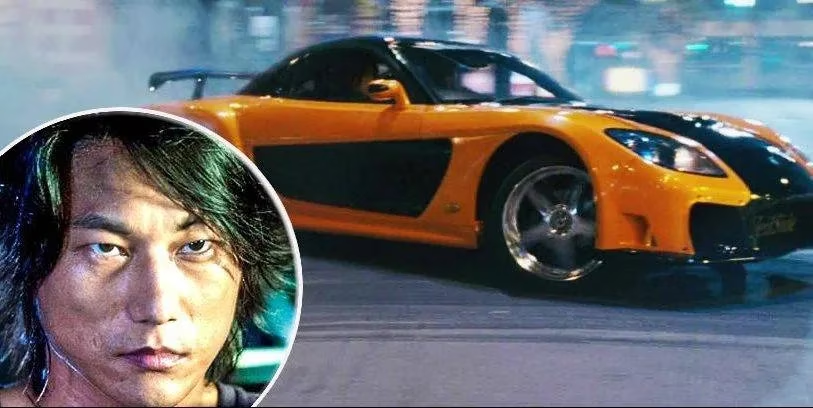
First off, let's talk about how the car even got into the movie. In most big-budget action films, producers try to save a buck wherever they can—especially on props. But for Tokyo Drift, they actually splurged. Instead of building cheap fake kit-cars, they bought the real deal. The production team headed to the Japanese Auto Salon, and that's where they found their centerpiece: Han's RX-7. 🚗
The official name is the "Veilside RX-7." And no, it's not just a stock Mazda with a wild-looking body kit slapped on. Veilside is a tuning company famous for creating insane Japanese sports cars, and this particular FD3S was a fully overhauled beast. According to various sources, the on-screen car packed an HKS single-turbo system, a custom exhaust, an HKS intercooler, a Skyline GT-R fuel-line, and plenty more. This wasn't a prop—it was a proper monster.
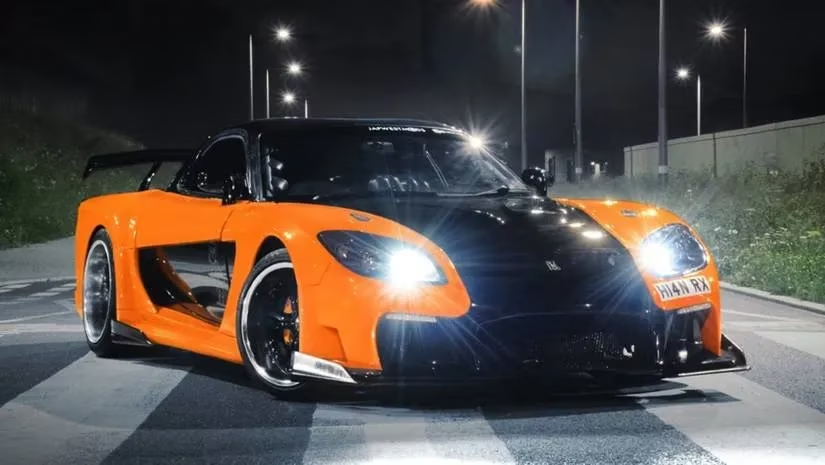
Now, here's where reality gets a little disappointing. With all those mods, I figured the car had to be pushing close to a thousand horsepower. Nope. The same sources that list those upgrades also point to a dyno run that clocked the RX-7 at around 500 horsepower and a 0-60 time of just under six seconds. That's quick, sure, but not exactly mind-blowing by today's standards. But honestly? That's part of what makes the car so charming to me—it's not a hypercar, it's a real, tunable JDM machine.
Here's a quick breakdown of what I found:
| Spec | Details |
|---|---|
| Engine | 13B-REW twin-rotor (modified) |
| Turbo | HKS single-turbo system |
| Intercooler | HKS |
| Fuel system | Skyline GT-R fuel-line |
| Exhaust | Custom |
| Power | ~500 hp |
| 0-60 mph | Just under 6 seconds |
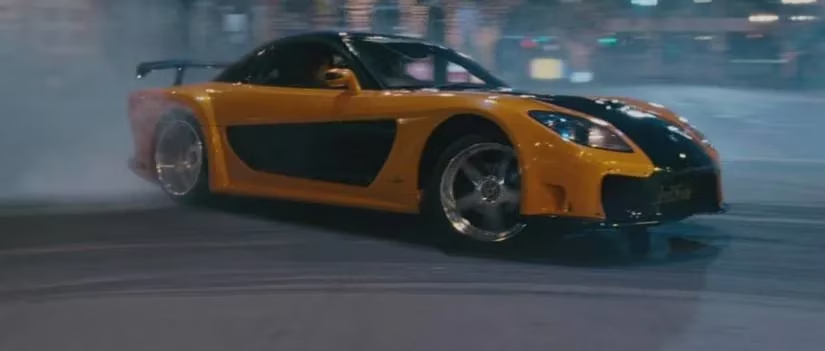
But the real challenge during filming wasn't the power—it was the drifting. You probably remember the famous scene where Han does several donuts around a woman's Skyline R33 GT-R. That wasn't as easy to pull off as it looks. The Veilside RX-7 actually lacked a substantial amount of grip, which made drifting scenes especially tricky. To help things along, the crew wore the tires down until they were virtually bald, reducing traction on purpose. Eventually, they nailed the shot, but not without a ton of struggling along the way. 💨
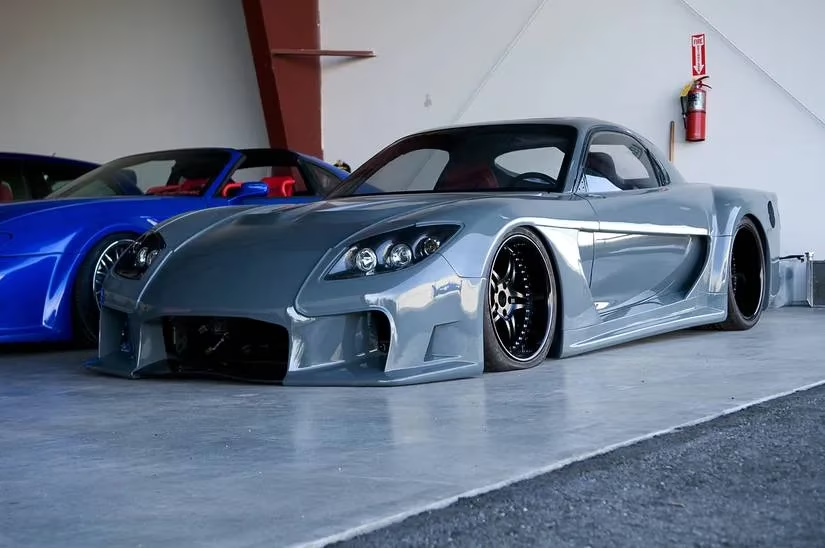
Here's something else that gets glossed over: the normal Veilside RX-7—the one without Hollywood fame—is hardly unique. These body kits are mass-produced, and you'll need to shell out at least $20,000 just for the kit. What actually makes Han's car special are the specific upgrades I mentioned earlier, plus the massive popularity boost Veilside got after Tokyo Drift came out. In a way, the movie turned a production body kit into a legend.
So where does that leave us in 2026? Han's Mazda RX-7 FD3S is still one of the most beloved cars in the entire franchise. And with Han's return in F9 (back in 2021), we got to see the car again—or at least a version of it—which only cemented its legacy. For me, though, the magic is in the details: a real car, real mods, and a real struggle to make those drift scenes happen. It's not just a prop. It's a piece of JDM history that happened to star in a movie.
And honestly? I still get a little thrill every time I see that orange-and-black FD3S slide across the screen. 🏁
Leave a Comment