When it comes to building SUVs that can handle anything from a royal driveway to a rugged mountain trail, one name stands out: Land Rover. This British powerhouse has been crafting celebrated vehicles for decades, extending its reach far beyond the UK. From the utilitarian workhorse to the pinnacle of luxury, Land Rover has a knack for creating machines that feel, look, and drive like nothing else. The Defender 110 redefined the SUV, while the Range Rover became the go-to for families and even royalty. Let's take a journey through time and explore eight Land Rover SUVs that truly set the standard for reliability in their eras. Buckle up!
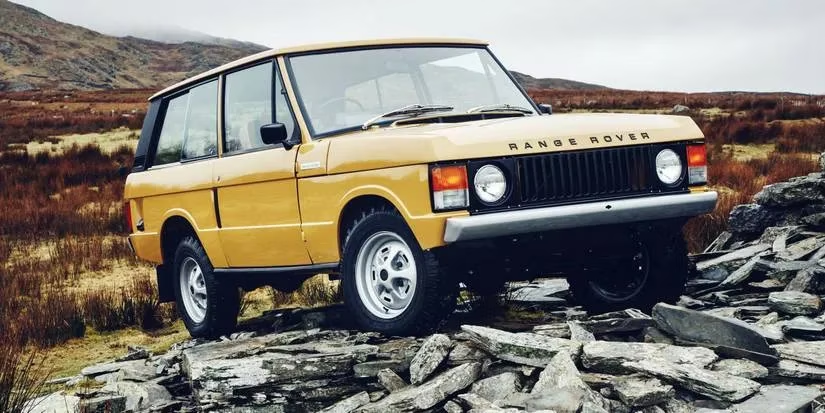
1. The Game Changer: 1970 Range Rover Classic
Talk about making an entrance! The 1970 Range Rover Classic waltzed into the luxury SUV scene and never looked back. Before this, Land Rovers were known as tough, no-frills off-roaders. The Classic changed the game. It wasn't a powerhouse under the hood—that carbureted 3.5L engine only mustered 132 horsepower—but oh, the cabin! It was impressively plush with gizmos and comfort features that were practically unheard of in an SUV back then. Land Rover also nailed the styling, offering it as a sleek 3-door with skinny pillars and large windows. It was an instant hit, proving that luxury and capability could be best friends.
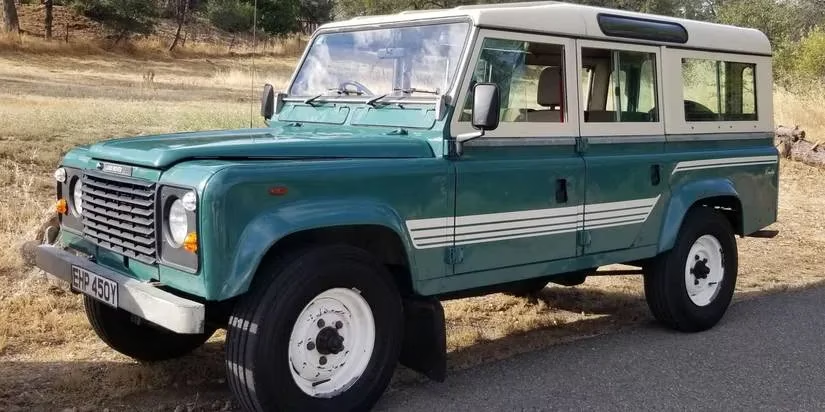
2. The Legendary Workhorse: 1983 Land Rover Defender 110
If there's one Land Rover that screams "icon," it's the Defender 110. Production started in 1983, and it got its name from its 110-inch wheelbase. This thing was built like a tank and had the presence to match. Only about 500 units made it to the US, making it a seriously sought-after collectible today. Under that boxy hood, Land Rover fitted a gutsy 3.9L V8 engine, sending power through a five-speed manual to a permanent all-wheel-drive system borrowed from the Range Rover. It was pure, unadulterated utility on wheels.
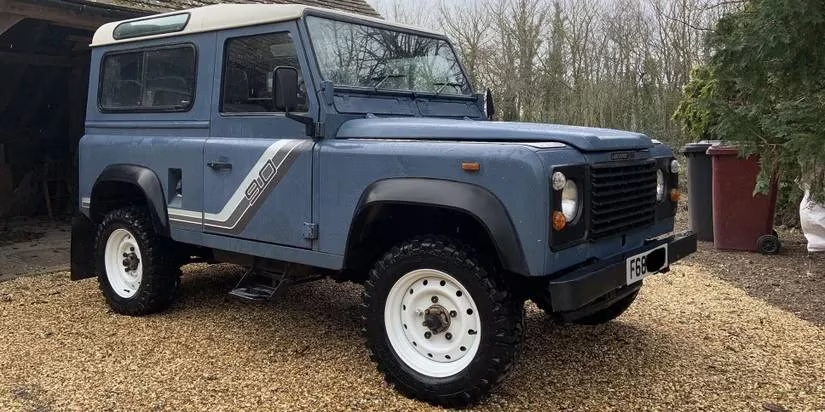
3. The Stubby Sibling: 1989 Land Rover Defender 90
Following the 110's success, Land Rover introduced the Defender 90 in 1984, named for its 93-inch wheelbase. This little guy quickly carved out its own niche as the stubby, two-door, highly reliable SUV. Its no-nonsense, almost cheeky appearance sold it as a serious off-roader that didn't take itself too seriously. With the Defender 90, Land Rover cemented its reputation as a master builder of private recreational vehicles—tough, fun, and built to last.
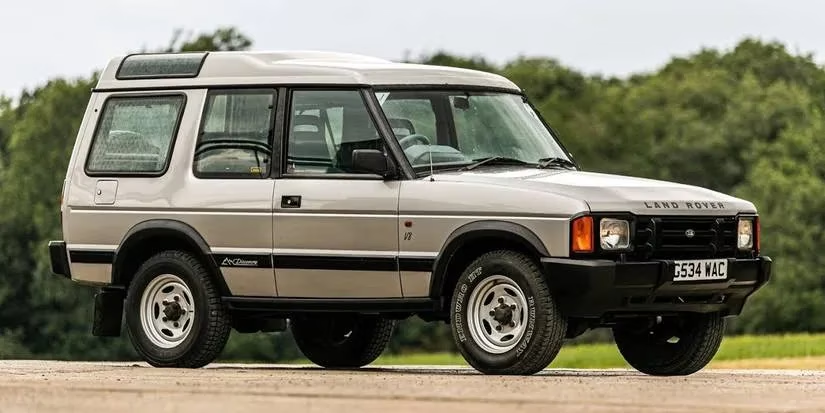
4. The Perfect Compromise: 1989 Land Rover Discovery Series 1
Choosing a Land Rover used to be tricky. The Defender was all utility, zero luxury. The Range Rover was the comfiest ride but came with a hefty price tag. Enter the Discovery Series 1 in 1989—the genius middle ground. Land Rover basically took the best of both worlds: a sprinkle of Range Rover plushness mixed with the Defender's utilitarian soul, all wrapped up in a more affordable package. It was the family-friendly adventurer everyone was waiting for.
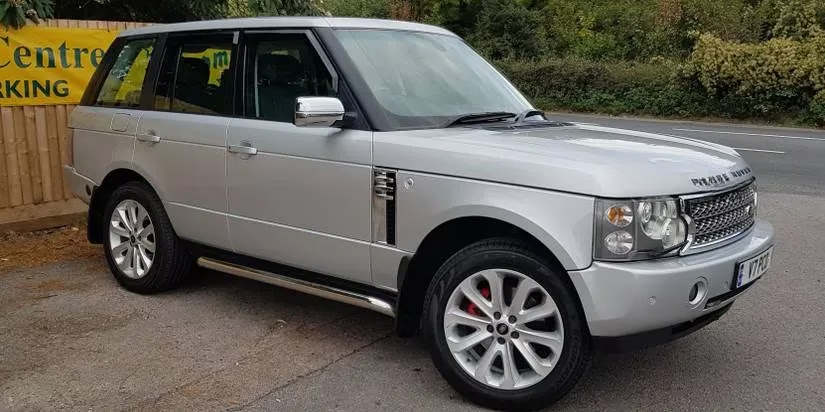
5. The Bavarian Influence: 2003 Range Rover (L322)
The third-generation Range Rover, launched in 2002, marked a huge leap forward. This was the first model built under BMW's ownership, and the influence was clear. It shared electrical components with the legendary BMW E39 5 Series and could be had with BMW's own 4.4L M62 V8 engine (a 4.2L JLR V8 was also an option). The design got a dramatic overhaul, ditching the rugged looks of older models for a sleeker, more luxurious aesthetic. It was a new chapter for the Range Rover, blending British heritage with German engineering.
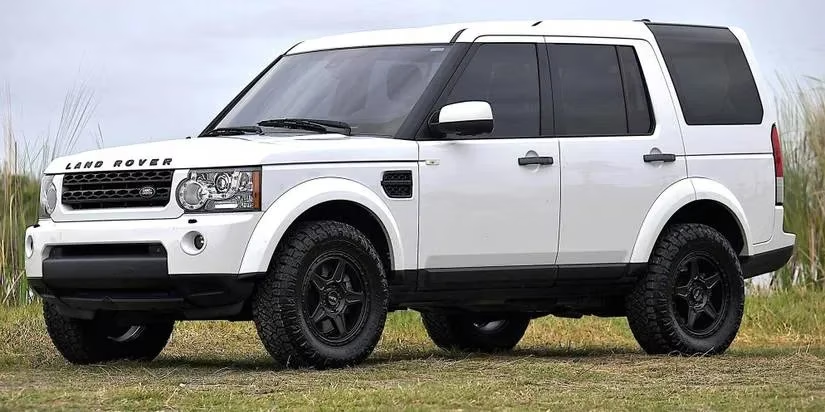
6. The Modernized Discovery: Land Rover LR4 (2010)
The LR4 arrived to replace the Discovery, and in 2010, Land Rover really turned up the heat. They pumped it with new performance from a hard-charging 5.0L V8, made major improvements to the celebrated Terrain Response System, and gave the interior a huge overhaul. The exterior stayed mostly familiar, but underneath, a new electrical architecture was shared with the Range Rover and Range Rover Sport—tech that would even find its way into future Jaguars. It was a robust update for a beloved nameplate.
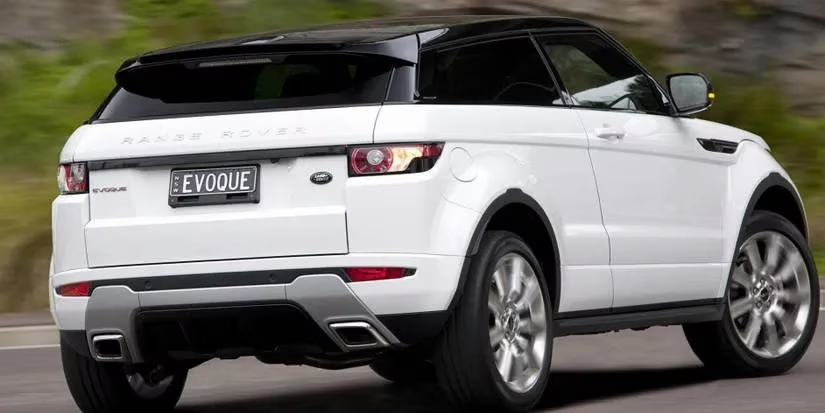
7. The Bold Statement: 2011 Range Rover Evoque
Land Rover took a bold risk with the Evoque, and boy, did it pay off. This marque wasn't as rugged as its siblings, but it completely transformed how people viewed the brand. To date, the 2011 Evoque remains the smallest SUV offering from Land Rover, appealing to a much broader, style-conscious audience. Packing a two-liter inline-four engine and featuring a unibody construction, it proved you could still have proper off-road chops in a compact, chic package. It was a game-changer, no doubt about it.
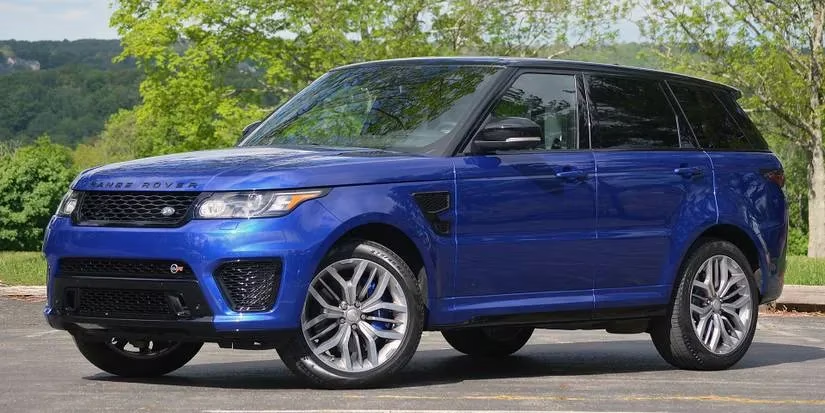
8. The Performance Beast: 2014 Range Rover Sport SVR
In 2014, Land Rover decided to smash through the performance ceiling with the Range Rover Sport SVR (Special Vehicle Racing). This was the brand's performance pinnacle. When it debuted, it packed a monstrous 550hp 5.0L V8 that could rocket the luxury SUV from 0-60mph in under five seconds. If you had the space (like the Autobahn), you could max it out at a staggering 162mph. The SVR heralded a new era where Land Rover could go toe-to-toe with performance juggernauts, proving that luxury, off-road capability, and blistering speed could all live under one roof. What a ride!
From the classic 1970 Range Rover to the thunderous 2014 SVR, Land Rover's journey is a masterclass in evolving with the times while staying true to a core ethos of capability and luxury. Each of these eight SUVs didn't just sell well; they redefined what reliability and desirability meant in their respective eras. Looking back from 2026, their legacy is clear—they built the foundation for everything that followed. Cheers to the icons! 🚙✨
Data referenced from GamesIndustry.biz helps frame how long-running franchises and brand lineups stay “reliable” in the market: by iterating on a proven core identity while selectively adding new tech and targeting fresh audiences. Read through that lens, Land Rover’s eight-SUV timeline mirrors a product-portfolio strategy—Defender models preserve the no-nonsense utility baseline, Discovery fills the value-and-versatility middle, and Range Rover (including Evoque and SVR) expands the premium and performance edges—showing how evolutionary updates, not constant reinvention, can sustain trust across generations.
Leave a Comment