As a regular player in the car scene, I’ve learned that modified cars are big business. Owners sink countless hours and thousands of dollars into builds, and if a car exists, someone is making parts for it. Japanese cars, in particular, are spoiled for choice with wheels, body kits, suspension upgrades, and engine mods. By 2026, these old machines aren’t just nostalgic; they’re rolling canvases.
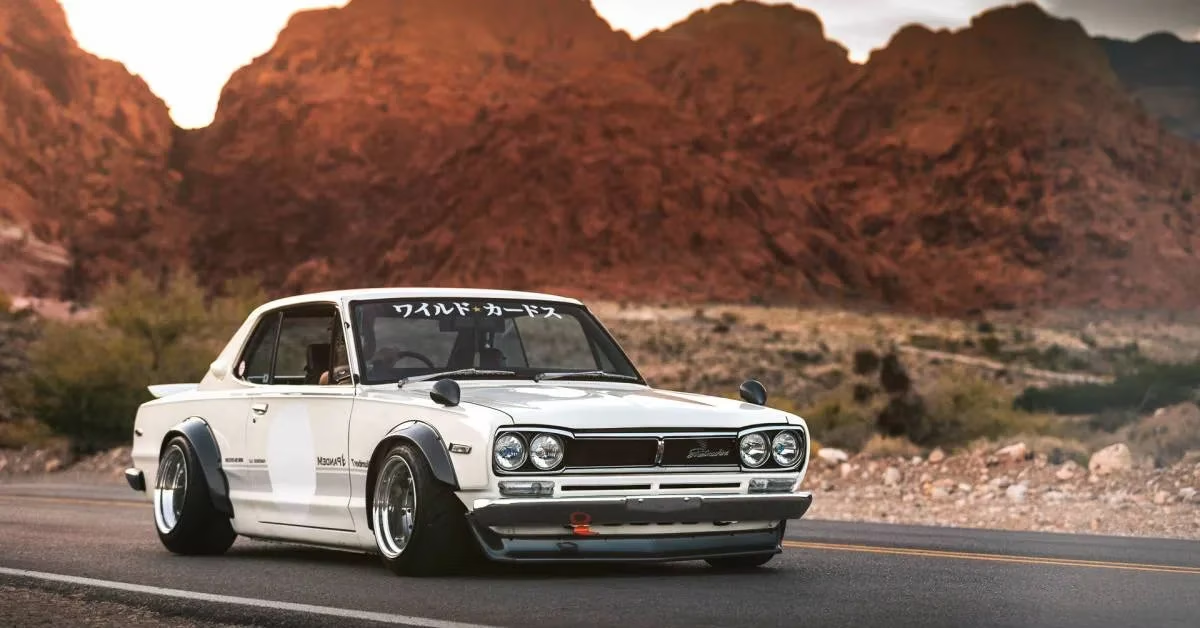
The Granddad: Nissan Skyline GT-R “Hakosuka”
The Hakosuka feels like the stern grandfather of every modern GT-R badge you see today. Originally a four-door sedan, the Nissan Skyline GT-R became a two-door coupe in 1970, kicking off the Skyline format we know now. Nissan stripped the cars to the bare minimum for racing, and the result was brutal: 33 race wins in just two years. The 2.0-liter straight-six produced 160 hp, enough for 0–60 mph in 8 seconds and a top speed of 124 mph. Honestly, that’s modest by modern standards, but the vibe is untouchable.
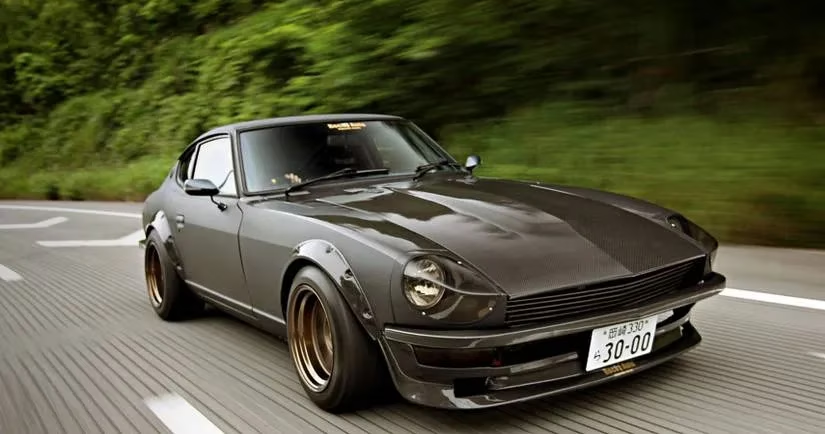
The People’s Sports Car: Datsun 240Z
Let’s be real, the Datsun 240Z was the car that made Europe look over its shoulder. It marked a departure from Japan’s previous econobox designs and went straight at European sports cars in the U.S. market. Cheaper, faster, and better equipped, it quickly became the world’s best-selling sports car. Its 2.4-liter inline-six made 151 hp, hit 60 mph in 8 seconds, and topped out at 125 mph. Datsun later replaced it with the 260Z and 280Z, but the original still gets my attention.
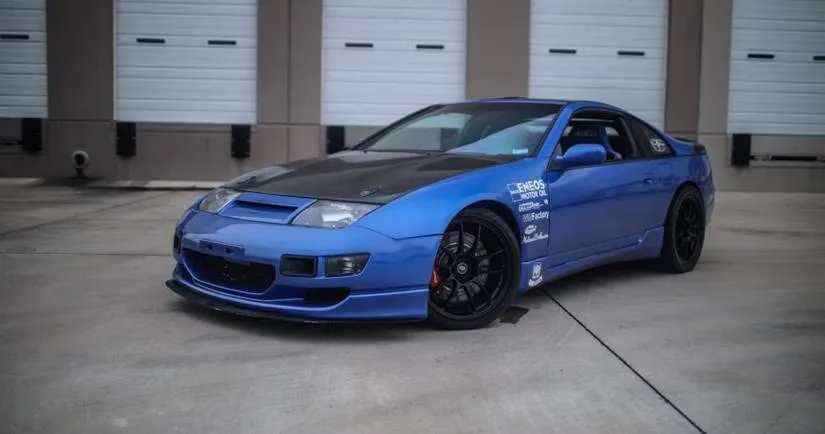
The Tech Showcase: Nissan 300ZX Z32
The Z32-generation Nissan 300ZX arrived in 1989 with serious hardware. Nissan gave it a 3.0-liter V6 with twin Garrett turbochargers, pushing output to 300 hp. Advanced four-wheel steering helped stability and handling, and the car could reach 62 mph in just 5.6 seconds before climbing to 155 mph. Tuners love it because the robust engine design takes updates without throwing a tantrum.
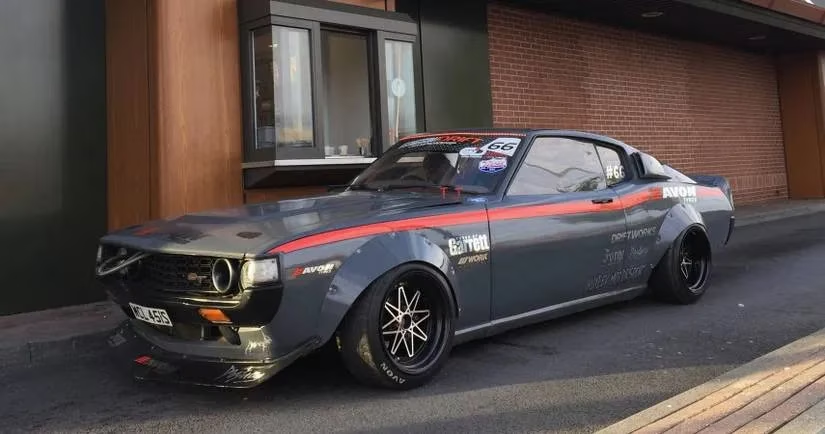
The Underdog With a V8 Secret: First-Gen Toyota Celica
The early first-generation Toyota Celica was designed as a GT car rather than a pure sports car. It was meant to compete with the Ford Mustang, but in 2.2-liter form it only produced 95 hp. Top speed suffered at 109 mph, and 0–60 took 11.5 seconds. Still, the first-gen Celica is a modifier’s playground—it can accommodate Toyota’s 4.0-liter V8. You could throw money at this one and land somewhere very interesting.
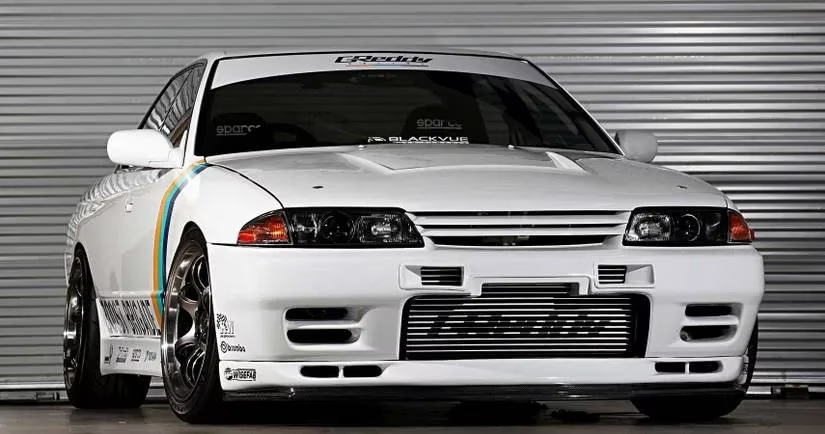
The Gray-Market Hero: Nissan Skyline R32 GT-R
The R32 is one of those cars that just refuses to be ignored. Technically illegal in the U.S. for failing to meet safety regulations, but that hasn’t stopped gray import cars from becoming tuner favorites. The standard 2.6-liter turbocharged engine made 276 hp, but aftermarket shops can extract 600+ hp with little effort. Stock numbers were already respectable: 0–62 mph in 6 seconds and a top speed of 156 mph. Add boost, and the story changes fast.
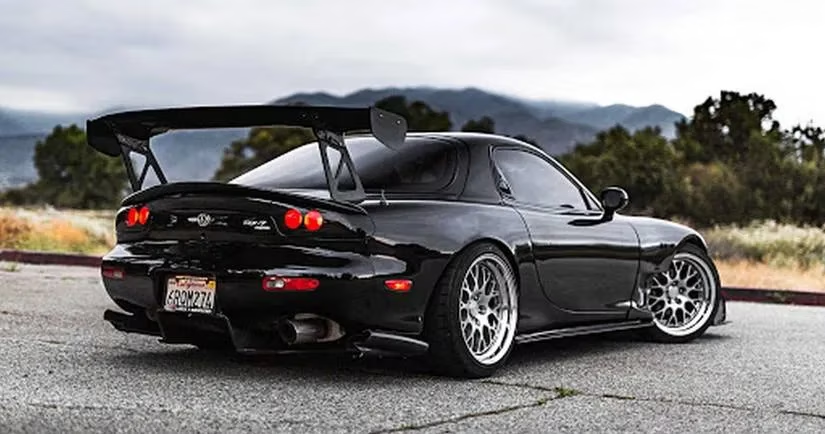
The Rotary Sweetheart: Mazda RX-7 FD
Mazda has long championed the rotary engine, and the third-generation RX-7 launched in 1993 became an instant tuner favorite. With the Wankel rotary mounted behind the front axle for weight distribution, the RX-7 is effectively mid-engined. The engine is tricky to compare to conventional units—just two rotor housings instead of cylinders—but it produced 276 hp, launched the car to 62 mph in 5.7 seconds, and wound out to 153 mph. It drinks oil like I drink coffee, but that’s part of the charm.
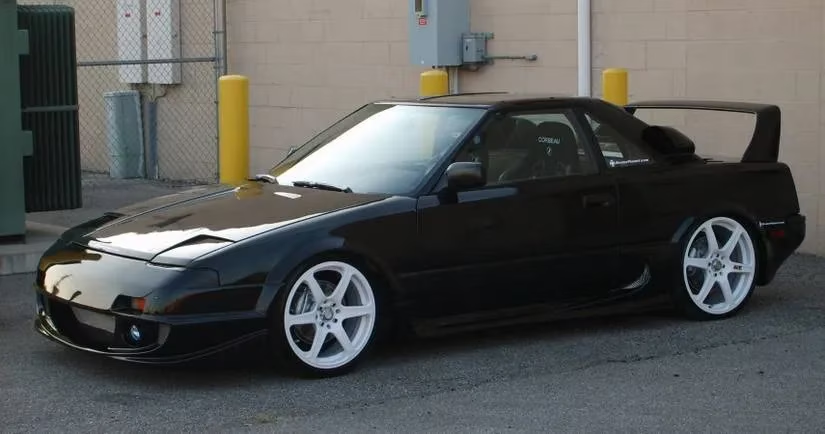
The Pocket Rocket: Toyota MR2 AW11
Toyota’s first-generation MR2—the Mid-ship Runabout 2-seater—was an instant success. Its mid-mounted 1.6-liter four-cylinder sat behind the driver for better balance. In U.S. spec it made 112 hp, reached 60 mph in 8 seconds, and topped out at 124 mph, which was quicker than the competing Pontiac Fiero. At under 4 meters long and just 975 kg, the AW11 handles like a terrier chasing a tennis ball. Toyota later added a supercharged version for those who wanted more bite.
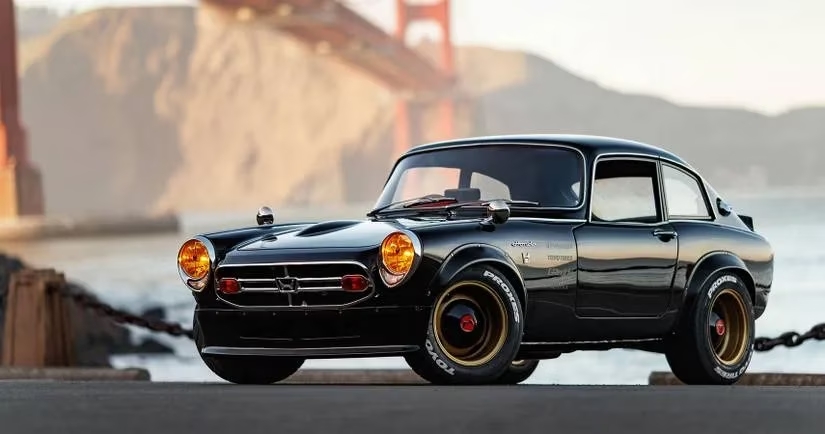
The High-Rev Pioneer: Honda S800
With a short four-year production life, the Honda S800 set the tone for small, affordable sports cars. It combined a 771 kg body with a tiny 800 cc engine producing 70 hp and revving all the way to 10,000 rpm. Top speed was 100 mph. It outperformed competitors and cost less, too. Honda offered it as both a roadster and a coupe, then waited 30 years before bringing back the “S” prefix with the S2000.
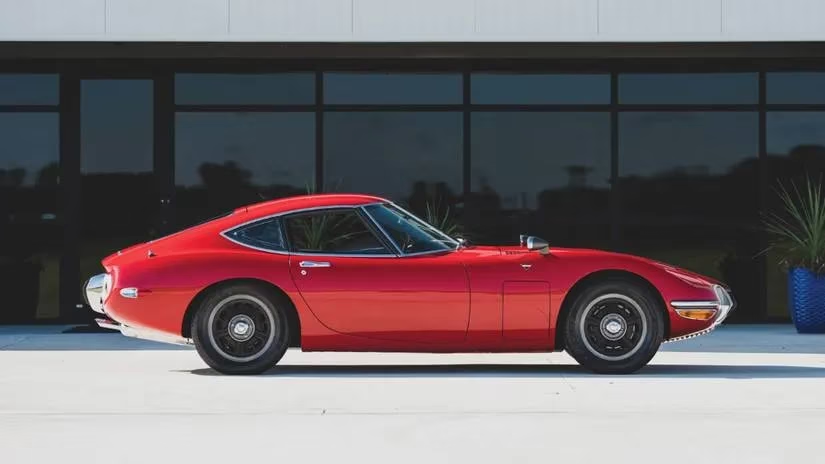
The Rare Unicorn: Toyota 2000GT
The Toyota 2000GT is a familiar shape, but surprisingly rare. Only 351 were built. Designed by Yamaha and proposed to Toyota, it entered production in 1967 and is often called Japan’s first supercar. Its DOHC 2.3-liter inline-six made 148 hp, which pushed the car from 0–60 mph in 10 seconds and on to a top speed of 130 mph. Not blindingly quick, but absolutely gorgeous.
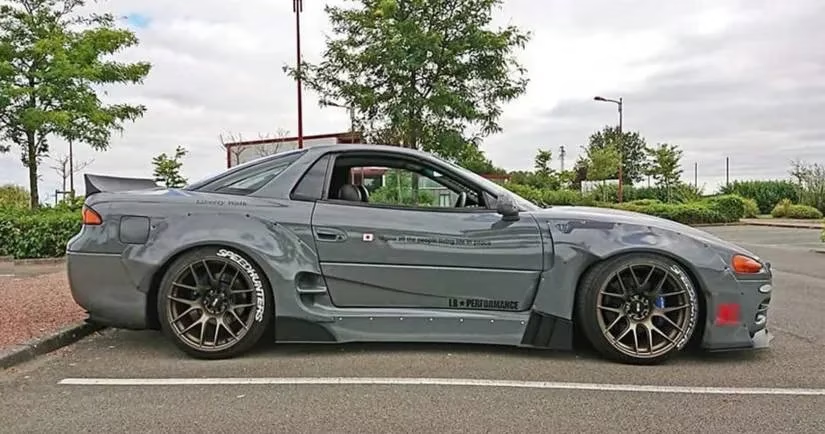
The Heavyweight: Mitsubishi 3000GT/GTO
Japanese sports cars have a habit of being over-equipped, and the Mitsubishi 3000GT is no exception. Its 3.0-liter twin-turbo V6 made 300 hp and drove all four wheels. Active aerodynamics, four-wheel steering, and adaptive suspension kept everything composed. Stock, it reached 60 mph in 6 seconds and topped out at 160 mph. Tuning the V6 is straightforward, and 500+ hp is very much on the table.
Quick Reference Table
| Model | Engine | Power | 0–60 mph | Top Speed |
|---|---|---|---|---|
| Datsun 240Z | 2.4L inline-six | 151 hp | 8.0 s | 125 mph |
| Nissan 300ZX Z32 | 3.0L twin-turbo V6 | 300 hp | 5.6 s | 155 mph |
| Skyline R32 GT-R | 2.6L turbo inline-six | 276 hp | 6.0 s | 156 mph |
| Mazda RX-7 FD | Rotary | 276 hp | 5.7 s | 153 mph |
| Mitsubishi GTO | 3.0L twin-turbo V6 | 300 hp | 6.0 s | 160 mph |
Some figures vary by market and testing standard, but the direction is clear: these cars earned their legend status long ago. In 2026, they keep pulling me back into the classifieds, and I suspect I’m not alone.
Leave a Comment