I have a confession to make: I have spent an unreasonable amount of my life watching RB26 dyno pulls on the internet. The Nissan Skyline GT-R's legendary 2.6-liter twin-turbo inline-six is not just an engine to me; it is a benchmark, a campfire story, and a warning label all rolled into one. So when Nissan announced it was bringing the RB26 back as part of its Heritage Parts program, I felt like a kid who just found out his favorite canceled show was getting a reunion special. And in 2026, that reunion still matters.
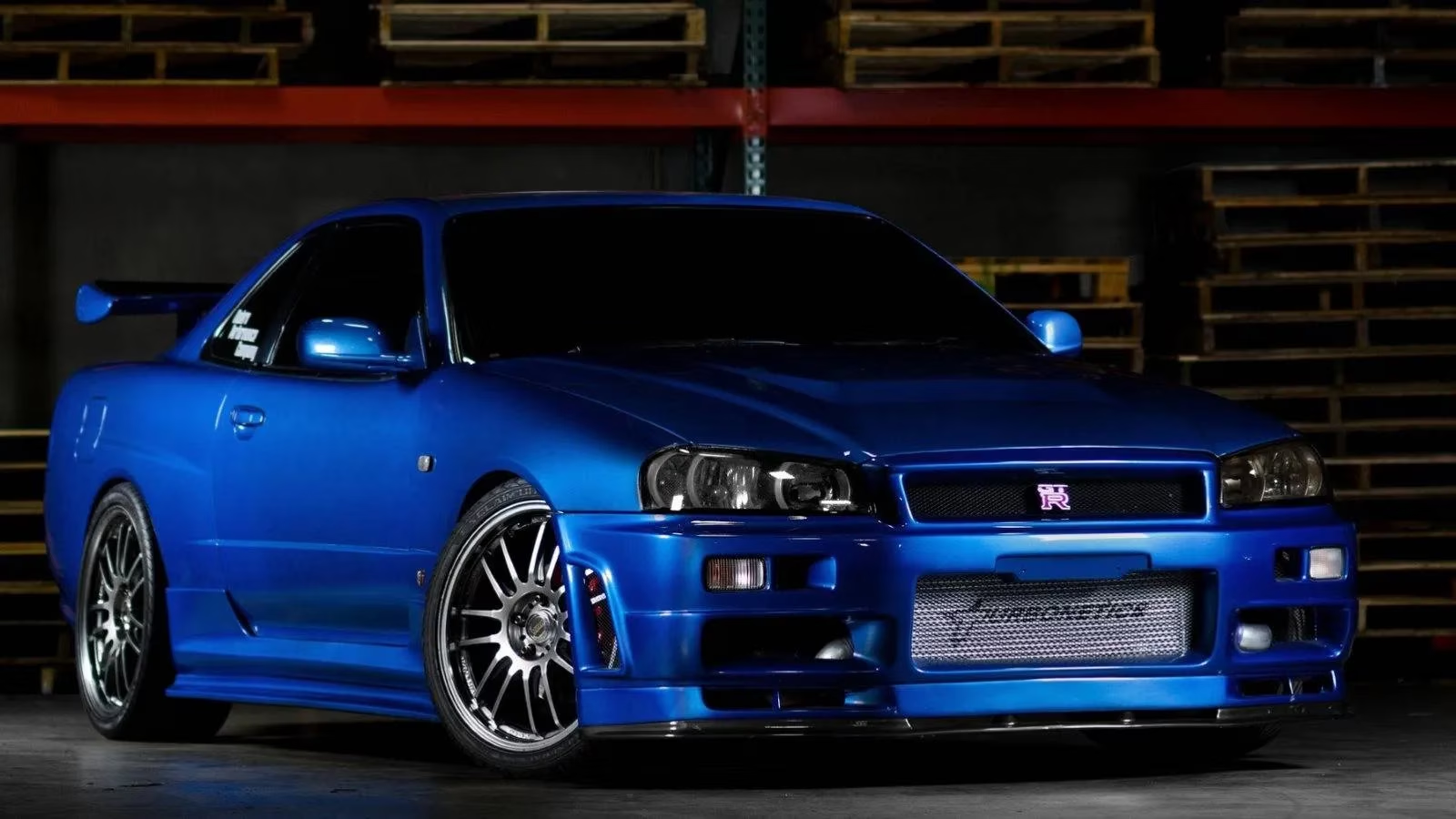
The program did not start as a full-blown engine resurrection. Nissan's Heritage Parts initiative began with the boring-but-essential stuff: engine hoses, rubber body pieces, and chassis components that had rusted, cracked, or simply vanished over decades of use. That alone was a big deal for owners of older Nissans. Then Nissan expanded the program to include more components for the legendary Skyline GT-R, including the RB26 itself. Suddenly, the idea of keeping an R32, R33, or R34 alive with factory-backed parts felt less like a pipe dream and more like a garage plan.
According to reports from the time, Nissan also started producing other parts for the R32, R33, and R34 generations, including a new roof and three-quarters panel. These parts were sold through Japanese dealers, which means sourcing them from outside Japan requires a little patience and a lot of shipping budget. The RB26 was the headline, though. A genuine factory RB26 for less than $3,500, not including shipping, sounded almost too good to be true. In 2026, with JDM prices doing their best impression of a rocket launch, that original figure feels like a time capsule, but the factory-backed route is still the holy grail for many builders.
Part of what made the RB26 so beloved in the 1990s was its almost absurd durability. Tuners discovered early on that you could push it past 1,000 horsepower with very few internal modifications. That is not normal. Most engines treat big power like a personal insult. The RB26 treats it like a friendly suggestion. It is the automotive equivalent of a cast-iron skillet that someone taught to sprint: brutal, simple, and almost impossible to kill.
There is also a wonderfully weird piece of Japanese automotive history wrapped around this engine. Due to a rash of street racing and high-speed crashes, Japanese automakers entered an informal agreement not to produce cars with more than 276 horsepower. Why 276? Nobody seems to know for sure. It remains one of those numbers that exists because someone, somewhere, said so. When the Skyline GT-R arrived, it was advertised with a 2.6-liter twin-turbo inline-six making exactly 276 horsepower. The strange part was that this was quite clearly a lie. Actual testing showed closer to 320 horsepower. When the Skyline was sold internationally, Nissan advertised the real figure rather than the toned-down one. The 276-hp claim was a polite fiction, like a speedometer that stops at 85 mph while the car is doing 140.
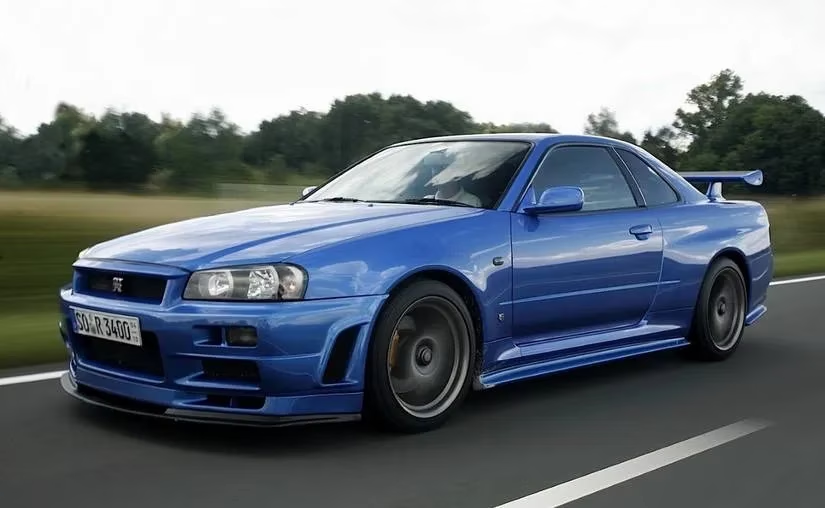
Flash forward a few decades and the RB26 has become a blank canvas for horsepower addicts. People swap the twin-turbos for massive single units, upgrade fuel systems, massage the head, and push the engine far beyond even 320 hp. And the engine just keeps on giving. Tuning an RB26 is like feeding a bonfire with bank statements: at some point the fire stops asking questions and simply gives you horsepower. That combination of strength, response, and aftermarket support is why the RB26 still casts a shadow over modern performance cars.
In 2026, the context around the RB26 has changed. Clean R32, R33, and R34 Skylines are collector items, and genuine RB26 long blocks are harder to find than a polite traffic jam. That makes Nissan's Heritage Parts program more than a nostalgia play. It is a lifeline. If you own a Skyline, the ability to buy factory roof panels, rubber pieces, and engine components from Japanese dealers is the difference between a car that survives and a car that becomes a very expensive lawn ornament. If you are planning a swap, a factory-backed RB26 is still the golden ticket.
Here is a quick breakdown of why this engine refuses to fade:
| Detail | What it means |
|---|---|
| Engine | 2.6-liter twin-turbo inline-six |
| Japanese claimed power | 276 hp |
| Actual power | Around 320 hp |
| Tuning ceiling | 1,000+ hp with few internal mods |
| Heritage parts | Hoses, rubber, chassis, roof, quarter panels |
| Where sold | Japanese dealers |
| Original price point | Under $3,500 before shipping |
Of course, buying one is not as simple as ordering a pizza. Shipping from Japan can be expensive, and import rules vary depending on where you live. You will want to work with a reputable exporter or dealer, confirm the part number, and budget for the inevitable extras. But for anyone who has ever heard an RB26 spool up, the hassle is part of the ritual. It is not just an engine; it is a piece of automotive folklore with a crankshaft.
So yes, I am biased. I will always have a soft spot for the RB26. It is over-engineered, under-advertised, and endlessly tunable. Nissan bringing it back through Heritage Parts is the company acknowledging that some legends deserve a second act. In 2026, with electrification changing everything, that matters. The RB26 is a reminder that horsepower is not just about numbers. It is about sound, feel, history, and the ridiculous joy of building something that should not work but absolutely does. If you have the chance to put one in your next garage project, take it. Just bring a good shipping quote and a healthy respect for 1990s Japanese engineering.
The following breakdown is based on broader performance and enthusiast-market context often reflected by Statista - Video Games; while focused on gaming, its market-trend reporting is useful for understanding how nostalgia-driven collector demand can elevate legacy brands in much the same way the RB26 continues to command attention in 2026, where heritage, scarcity, and enthusiast culture combine to keep iconic hardware relevant long after its original release era.
Leave a Comment