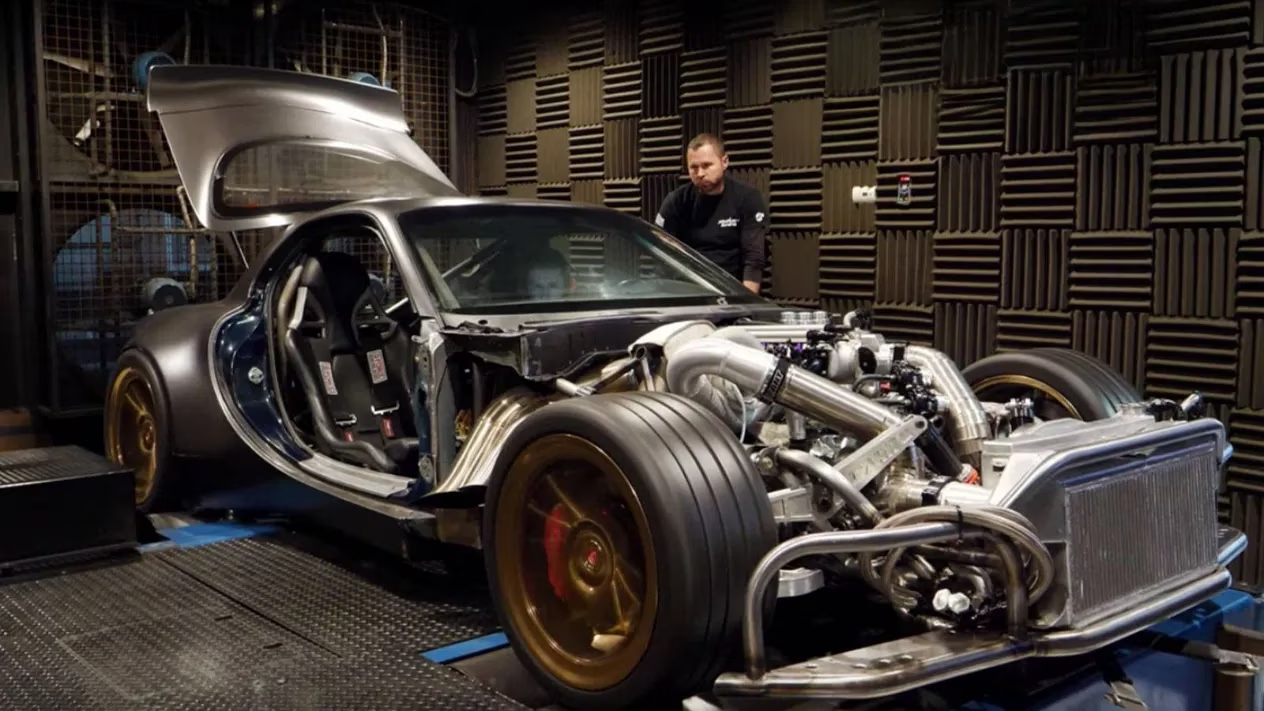
What happens when a Mazda RX-7 stops being just another tuner car and becomes a four-rotor, all-wheel-drive science experiment? Rob Dahm answered that question with a build that still dominates rotary conversations in 2026. His custom RX-7 is not a simple engine swap or a bolt-on hero. It is a turbocharged four-rotor monster that sends power to all four wheels, and its dyno story moves from careful validation to four-figure horsepower. The world of tuning and modding blew up after the original Fast and Furious movies inspired a new generation to find parts and knowledge online. Some builders go beyond the crowd. Others are downright maniacal geniuses. Dahm sits firmly in the second group.
Two Days on the Dyno
Dahm documented the build extensively, and his dyno videos show why patience matters. On the first day, the car was tested without the turbocharger to make sure the engine ran properly. That step was not optional. A previous attempt had ended with aluminum damaging the engine internals, so the team needed a clean baseline before adding boost. Later on, with the turbo starting to warm up, the car pumped out 500 horsepower. That number already sounds serious, but it came at the wheels. Because the RX-7 uses an all-wheel-drive system, drivetrain loss means the crank rating would be much higher.
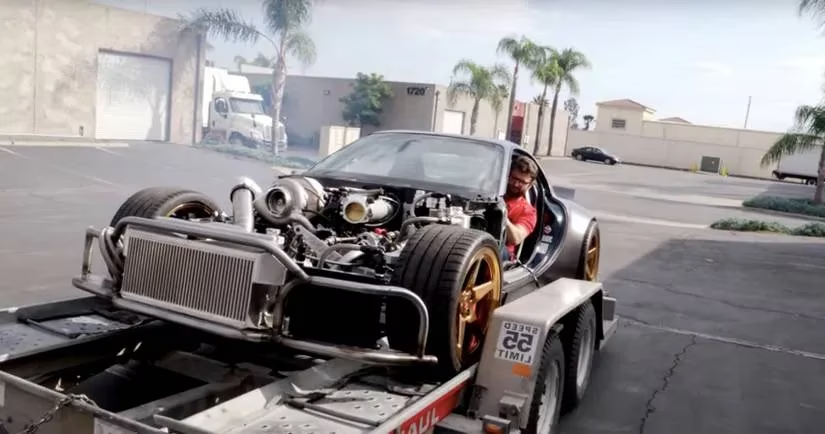
By the end of the second day, the Frankenstein of an RX-7 had climbed into the four-figure range. Again, that was at all four wheels. For a rotary engine, that kind of output is not normal. For a four-rotor with forced induction and AWD, it is a statement. The car looks and sounds just as mean as the stats suggest. Dahm was barely able to tow it to the dyno shop, Phatbotti Tuning, because of its wide track. Even getting the car to the rollers became part of the challenge.
Why the Numbers Are Wilder Than They Look
Enthusiasts love dyno numbers, but context turns a good number into a legendary one. Wheel horsepower is what actually reaches the ground. When a car sends power through an all-wheel-drive system, each extra gear, shaft, and differential can eat into the final figure. That means the four-figure wheel number in Dahm's RX-7 implies an even more outrageous crank output. It also explains why the 500-horsepower early pull was only a checkpoint, not the destination.
| Dyno stage | Configuration | Result |
|---|---|---|
| Day one, early | No turbocharger, validation | Engine runs properly |
| Day one, later | Turbo warming up | 500 hp at the wheels |
| Day two, end | Four-rotor turbo AWD | Four-figure hp at all four wheels |
So why does any of this matter? Because rotary builds are fragile, complex, and often misunderstood. A four-rotor engine multiplies the complexity. Cooling, sealing, fuel delivery, ignition, and turbo sizing all become harder. Add AWD, and the drivetrain becomes another puzzle. Dahm did not just throw parts at a car. He documented the failures, the fixes, and the slow climb toward real power.
The 102mm Turbo and the 1,600-HP Dream
The videos also reveal the massive turbocharger that might, one day, be covered by a hood. At 102mm, Dahm believes the turbo will eventually be able to produce enough pressure to allow the entire system to crack the 1,600-horsepower mark. In the meantime, massive fireballs will just have to do. That image alone explains why the build has such a following. It is not polished like a factory concept. It is raw, loud, and visibly experimental.
As of 2026, the four-rotor RX-7 remains a benchmark for what happens when obsession meets engineering. The project may not be the most practical car on the road. It may not be the easiest to tune. It may not even fit neatly on a trailer. But it represents the top end of import tuning culture: a builder who refuses to accept the usual limits.
What This Build Means for Rotary Fans in 2026
Modern enthusiasts have more options than ever. Electric swaps, turbo V8s, and high-tech standalone ECUs are everywhere. Yet the four-rotor RX-7 still stands out because it keeps the rotary flame alive in the most extreme way possible. It reminds fans that horsepower is not only about money or parts. It is about problem-solving. It is about dyno sessions that start with no boost and end with fire. It is about accepting that a previous engine failure is not the end of the story.
Would most people want to daily drive a wide-track, four-rotor, all-wheel-drive RX-7 with a 102mm turbo? Probably not. Would most people stop and stare if it rolled onto a dyno? Absolutely. That contrast is the heart of the build. It is impractical, expensive, and complicated, and that is exactly why it matters.
The Bottom Line: Madness, Genius, and Fireballs
Rob Dahm's RX-7 is a reminder that the tuning world still has room for mad scientists. The car moved from a cautious no-turbo test to 500 horsepower, then to four-figure power at all four wheels. It did so while fighting the limits of rotary engines, AWD drivetrains, and a chassis wide enough to make towing a headache. The promised 1,600-horsepower target may still be a future chapter, but the current car already delivers the drama.
So, is it madness? Maybe. Is it genius? Also maybe. The best builds often sit somewhere between the two. In 2026, the four-rotor RX-7 remains a wild example of what happens when a builder ignores the easy path and chooses the loudest, most difficult one instead. Massive fireballs are not a bug in this story. They are a feature. 🔥🏁
Leave a Comment