SUVs have long been marketed as rugged, all-terrain vehicles, but the reality in 2025 is that many are as useless off-road as a sports car on a muddy trail. These machines, once symbols of adventure, now often prioritize asphalt performance over dirt conquests. Let's dive into why some popular SUVs fail miserably when the pavement ends, told through a conversational lens with a touch of humor.
Take the Volkswagen Touareg, for instance. This SUV has been around since 2002, and boy, does it have a story to tell. Early models were notorious for reliability issues that made buyers think twice. Even today, with improvements, it's like that friend who promises to help you move but shows up with a tiny sedan—it just can't be trusted off-road. Imagine taking it on a rocky path; it'd probably whimper and beg for mercy. Oh, the drama!
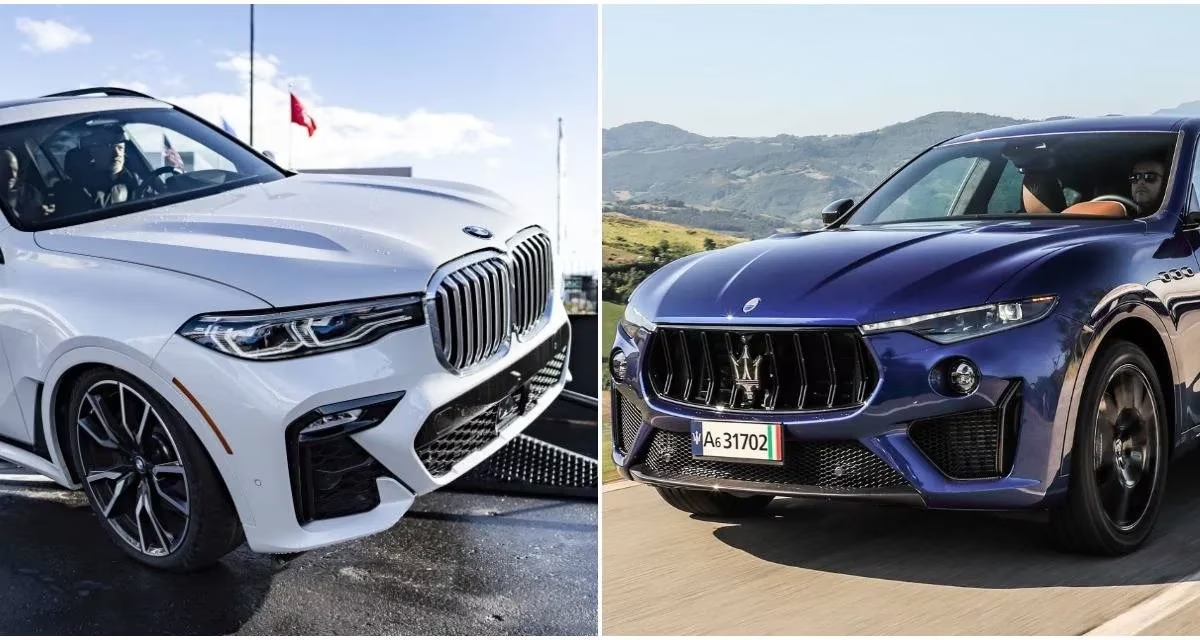
Then there's the BMW X7, the big daddy of luxury SUVs. It's all about swanky interiors and bragging rights, with a price tag starting at over $92,600. But off-road? Forget it! It's as out of place as a penguin in the desert. Most owners would shudder at the thought of scratching that glossy paint on a dirt track. In 2025, with SUVs becoming more tech-heavy, the X7 focuses on lane assist and quilted leather, not mud-plugging adventures. What a letdown!
Porsche's Cayenne is another culprit. Since its debut in 2002, it has won hearts with its balance of luxury and performance. But off-road capability? Nah, Porsche says, 'We're road specialists, not dirt devils.' It's like a racehorse forced to pull a plow—just doesn't work. In today's market, where SUVs are expected to do it all, the Cayenne sticks to its asphalt roots, leaving越野 enthusiasts scratching their heads.
The Ford Explorer, a best-seller, is great for hauling families and groceries. But off-road? It's as useless as a screen door on a submarine. Ford never intended it for serious trails, so it lacks the necessary gear. In 2025, with more buyers seeking adventure, the Explorer remains a pavement princess, highlighting how mass-market compromises can backfire.
Mercedes-Benz GLS? Oh, it's a smooth operator on highways, with all the bells and whistles for comfort. But take it off-road, and it's like sending a butler to a brawl—utterly unprepared. The focus on luxury means no rugged features, making it a no-go for rough terrain. As SUVs evolve, the GLS embodies the shift toward urban sophistication over wilderness readiness.
Jeep's Trackhawk packs a monstrous 707hp engine that screams on straightaways. However, off-road, it's all bark and no bite. Without proper off-road aids, it'd likely spin its wheels in mud, proving that power isn't everything. In 2025, this serves as a reminder that true越野 prowess requires more than just horsepower.
Maserati's Levante was meant to revive the brand, but it blends into the crowd of pavement-focused SUVs. With low ride height and highway gearing, it's as越野-capable as a limousine. Today, it struggles to stand out, showing that without越野 chops, even luxury can fall flat.
Cadillac's Escalade is a favorite for its imposing presence and comfort. But off-road? The soft suspension and large wheels make it a rollover risk. It's like a giant pillow on wheels—great for naps, not for bumps. In 2025, this highlights how design choices can limit utility.
The Mercedes ML350 is a suburban staple, reliable but mediocre off-road. With sedan-like clearance, it's not meant for trails. As families prioritize safety over adventure, the ML350 remains a road warrior, not a dirt conqueror.
Lastly, Lamborghini's Urus wowed with its speed and style, but off-road, it's a fish out of water. The high-performance setup is useless on dirt, emphasizing that some SUVs are just posers. In 2025, it's a cautionary tale of style over substance.
In summary, these SUVs prove that not all are created equal. As technology advances, the gap between road kings and越野 champions widens. So, if you're planning an off-grid adventure in 2025, think twice before trusting these pavement lovers!
Leave a Comment