The 1980s delivered a strange double vision in the automotive world. In some regions, the decade produced uninspired domestic machinery, but in Japan it unfolded as a golden age of compact performance. Even in 2026, these cars still feel less like old vehicles and more like mechanical haikus: small, precise, and full of intent. They were not always the quickest in a straight line, yet their lightness, balance, and tunability turned them into enduring icons.
🚗 Toyota Sprinter Trueno AE86
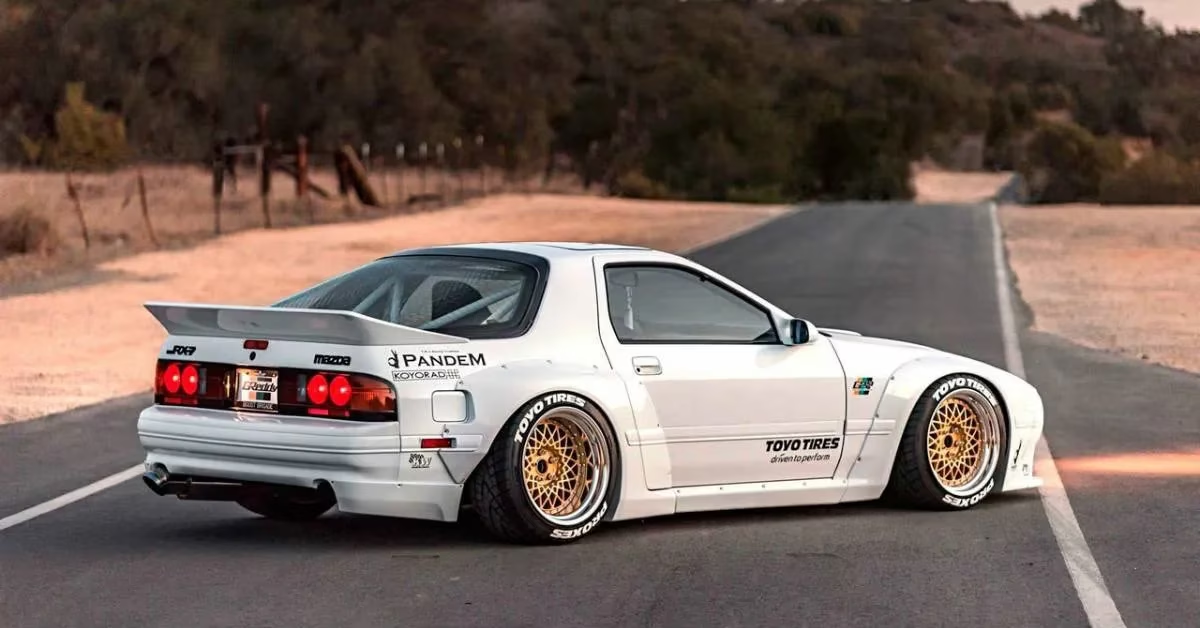
The full name may be a mouthful, but enthusiasts know it by its chassis code. Popularized by Initial D as the unbeatable tofu delivery car, the AE86 was not actually a straight-line rocket. Instead, it was affordable, simple, and balanced, making it a perfect platform for drifting. In today's collector market, its value has climbed sharply, but its legacy remains rooted in mountain passes rather than drag strips.
🚗 Mazda RX-7 FC
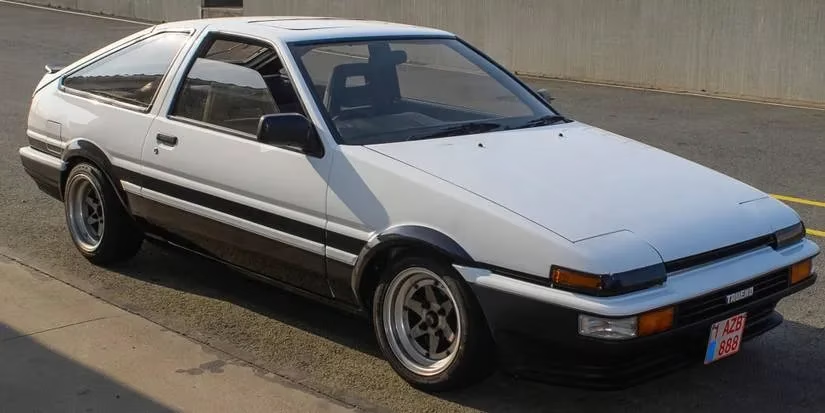
The FC often sits in the shadow of the FD that followed it, but it deserves more credit. It combined clean looks, responsive handling, and a rotary engine that sounded like a caffeinated turbine. The 1987 Turbo II model was especially notable, using a twin-scroll turbo to produce 185 horsepower, a strong figure for the period. The FC was not merely a stepping stone; it was a genuine sports car in its own right.
🚗 Honda CR-X
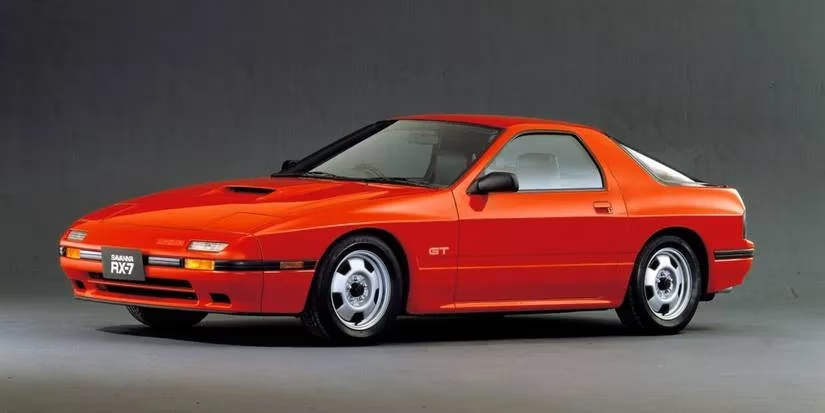
The original CR-X arrived in 1983 as the Ballade Sports CR-X. It was light, efficient, and sharper to drive than its humble shape suggested. Early models offered a factory Mugen package, a detail that later earned respect after appearances in Forza titles. With excellent handling, reliability, and unmistakably 1980s styling, the first-generation CR-X has become a cult favorite.
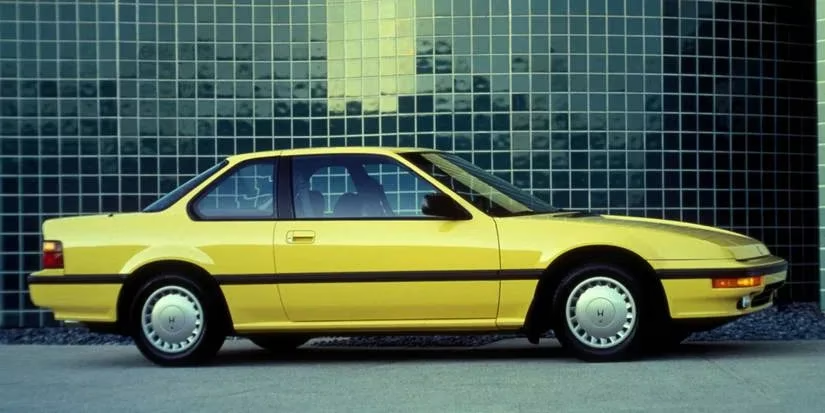
🚗 Honda Prelude
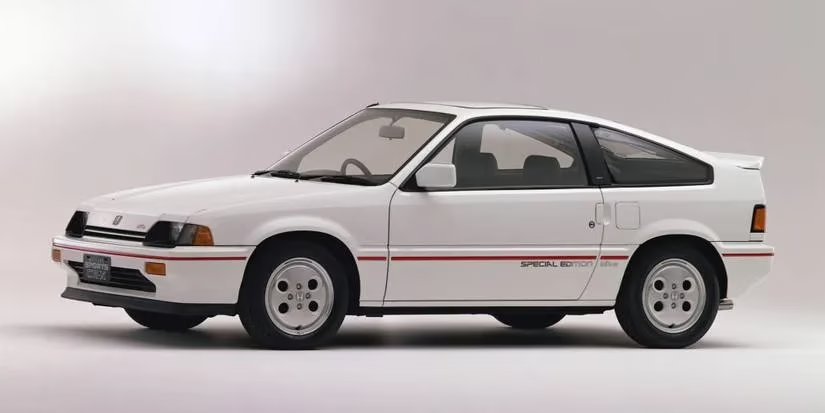
After a sluggish first generation, Honda sharpened the Prelude into a lightweight coupe with precise handling. The top engine produced 158 horsepower, which was substantial for an affordable front-driver of the era. Its design was clean and confident, and its pop-up headlights blinked like mechanical eyelids, giving the car a personality that still charms enthusiasts.
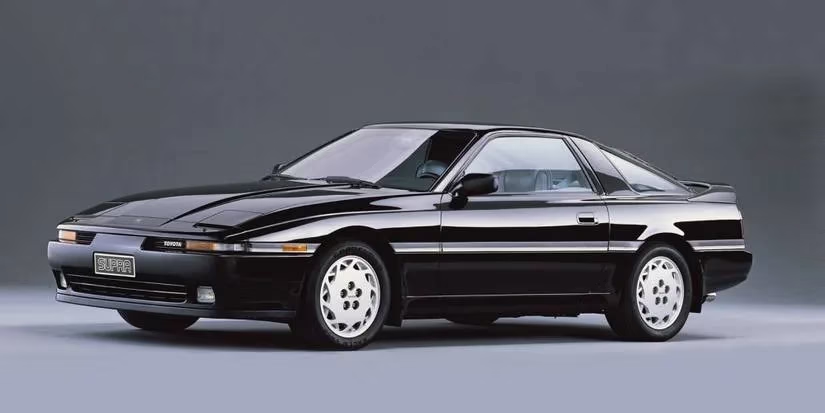
🚗 Toyota Supra Mk3
The Mk4 and Mk5 Supra capture most of the headlines, leaving the Mk3 as overlooked as a ghost in a well-lit showroom. That neglect is unfair. The Mk3 offered good handling, a strong voice, and a reliable, tunable engine. Because it receives less media attention, it remains far more affordable on the used market than its famous successor. For budget-minded enthusiasts, it is a rear-drive bargain hiding in plain sight.
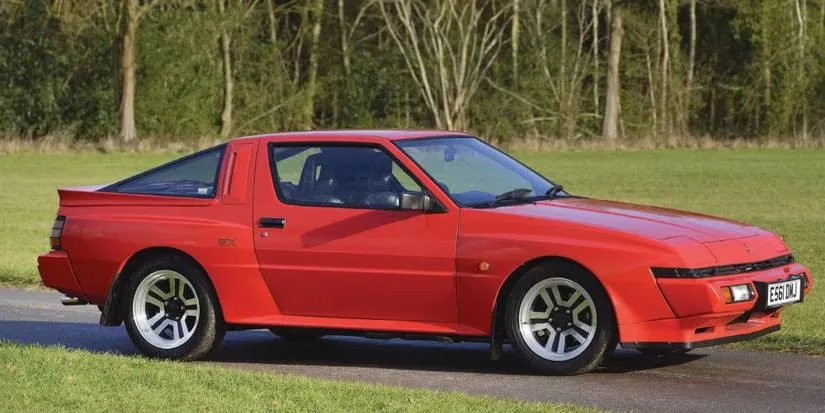
🚗 Mitsubishi Starion
In the 1980s, Mitsubishi was capable of genuine ambition. The Starion served as the brand's flagship sports car before the GTO and Eclipse arrived. Its turbocharged models proudly advertised an intercooler, wearing the technology like a military ribbon. The most powerful versions made close to 200 horsepower and sent that power to the rear wheels. At one point, the Starion was even considered for Group B rallying, though the project never materialized.
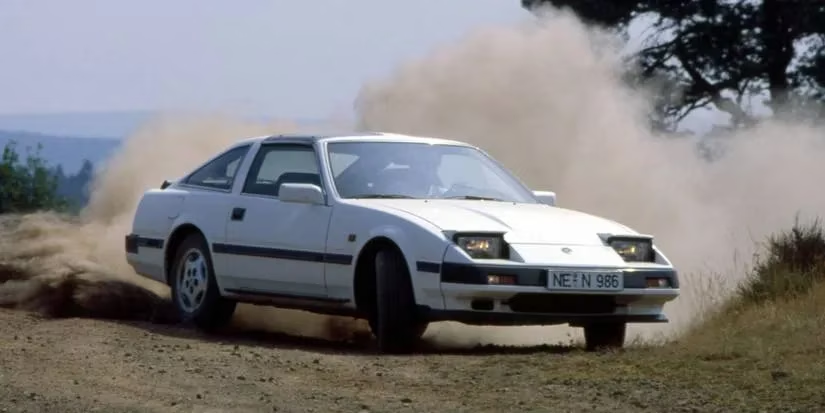
🚗 Nissan 300ZX Z31
The Z32 and later Z-cars receive most of the affection, while the Z31 is treated as the runt of the lineage. Its styling divides opinion, but the car had real substance. The strongest variant produced 205 horsepower, ahead of much of its competition, and its aerodynamics were effective even if the body looked awkward. Today, clean Z31 examples can be found for relatively little money, making them an overlooked entry point into Z-car ownership.
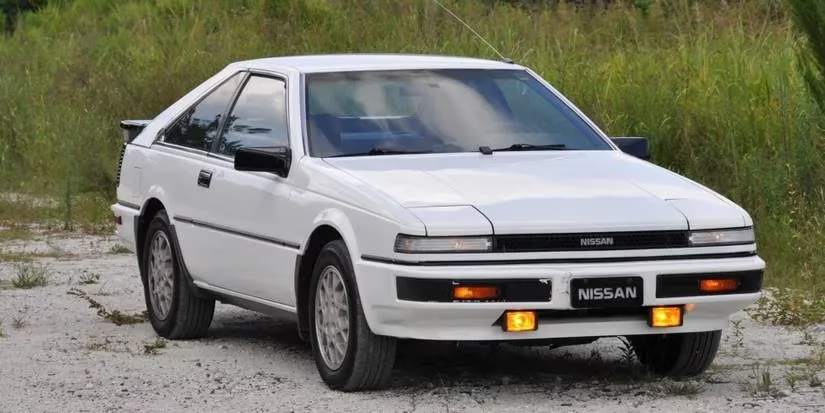
🚗 Nissan Silvia S12
The S12 Silvia shares a similar story with the Starion, and the two even resemble each other. It was never as famous as the S13 that succeeded it, yet the S12 offered rear-wheel drive, compact dimensions, and a notchback body style. Nissan reportedly considered it for Group B rallying before that category ended. Even if it remains obscure, the S12 is a quiet cornerstone of Nissan's sporting history.
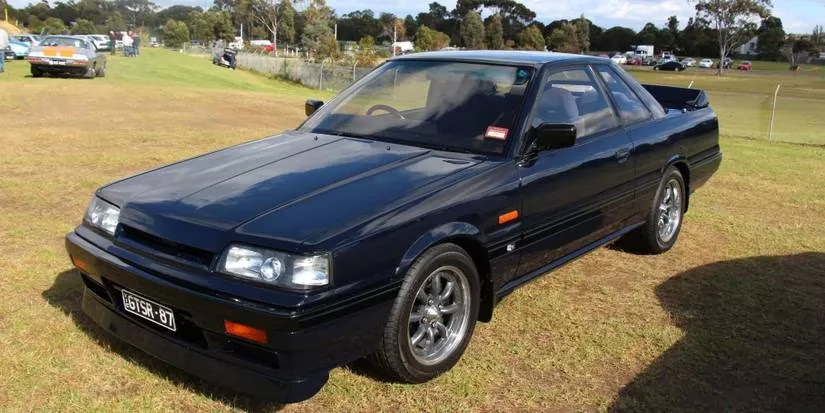
🚗 Nissan Skyline R31
For years the R31 Skyline 2000 GT-R operated in near anonymity. In recent times, it has gained recognition as the GTR before the GTR. Powered by a turbocharged 2.0-liter inline-six from the RB family, it produced 207 horsepower sent to the rear wheels. The R31 also inspired one of the wildest race cars ever built, the 2000 GT-R Super Silhouette, adding motorsport drama to its legacy.
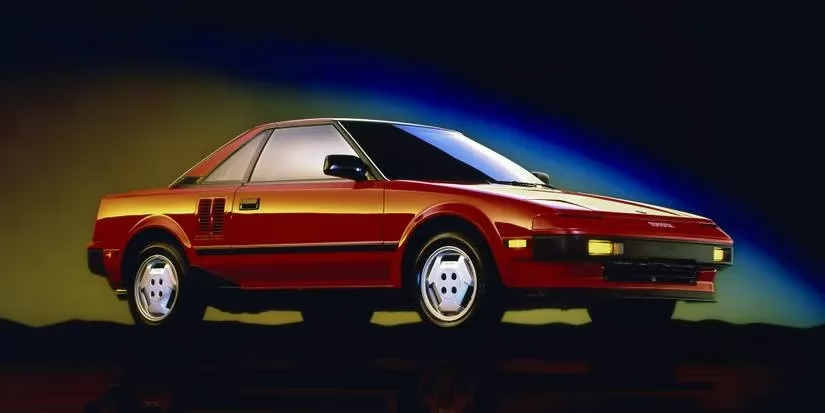
🚗 Toyota MR2 AW11
The MR2 earned its 'mini Ferrari' nickname honestly. Introduced in 1984, it used a mid-engine, two-seat layout, and its name came from Midship Runabout with Two Seats. It was light, affordable, and genuinely fun. Toyota even offered a supercharged version of the first-generation AW11, adding forced induction before later MR2 generations switched to turbocharging. Pop-up headlights and T-tops completed an unmistakably 1980s package.
🏁 A Lasting Legacy
The 1980s were uneven for the broader automotive industry, but Japan produced a remarkable run of performance machines. Some were famous, others were forgotten, and a few spent decades as overlooked as a ghost in a well-lit showroom. Yet their shared traits, light weight, communicative steering, tunable engines, and honest rear-drive balance, continue to influence driving culture. By 2026, they are no longer just used cars; they are collectible reminders of a time when simplicity and engagement mattered more than digital complication.
Leave a Comment