The muscle car era of the late 1960s and early 1970s ignited a horsepower war that still echoes across auction halls in 2026. Among the legendary machines born in that time, the 1969 Chevrolet Camaro ZL1 stands alone as a perfect storm of rarity, factory-backed racing intent, and raw performance. Decades after its limited production run, the all-aluminum beast has transitioned from a track weapon to a blue-chip collector asset, with values climbing steadily toward the seven-figure mark.
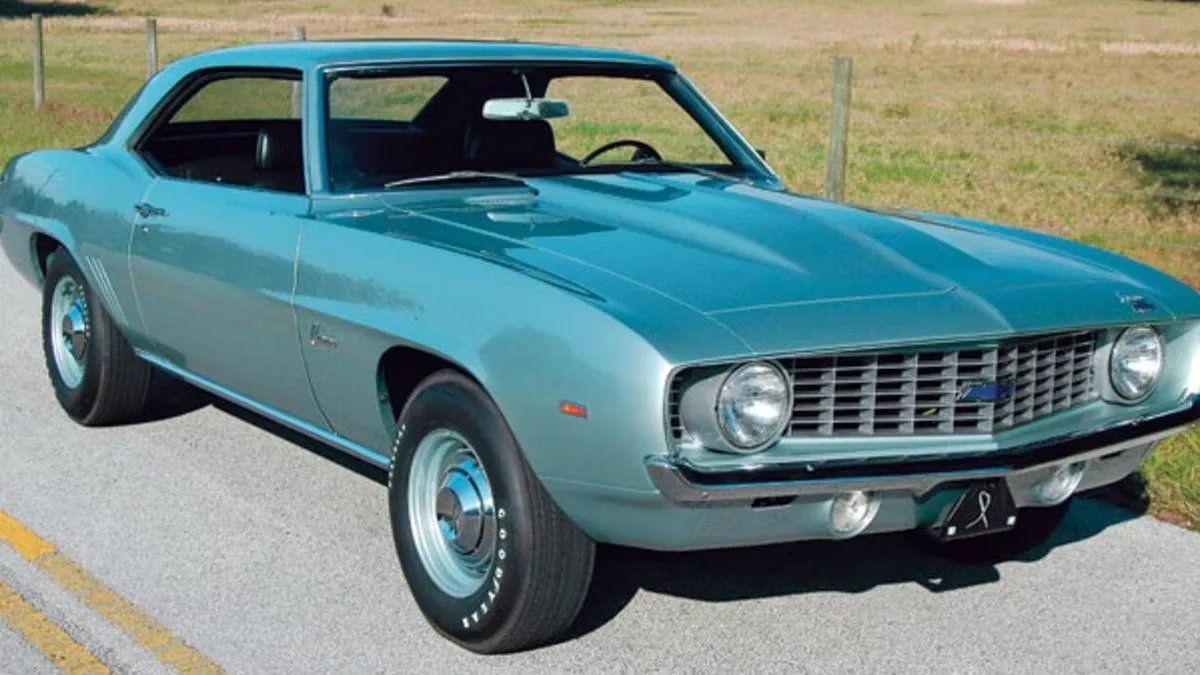
While Chrysler ruled the strips with the Hemi ‘Cuda and Ford unleashed the 427 Thunderbolt, General Motors quietly prepared its own ultimate secret weapon. The ZL1 Camaro was not a car you could simply browse on a dealer lot. It existed entirely because of a rule-bending loophole: GM’s corporate edict prohibited engines larger than 400 cubic inches in mid-size and compact vehicles, yet racers demanded more. The solution came through the Central Office Production Order, specifically COPO 9560. Drag racing icon Dick Harrell and Fred Gibb Chevrolet in La Harpe, Illinois, orchestrated the order to create an NHRA Super Stock contender that would rewrite the record books.
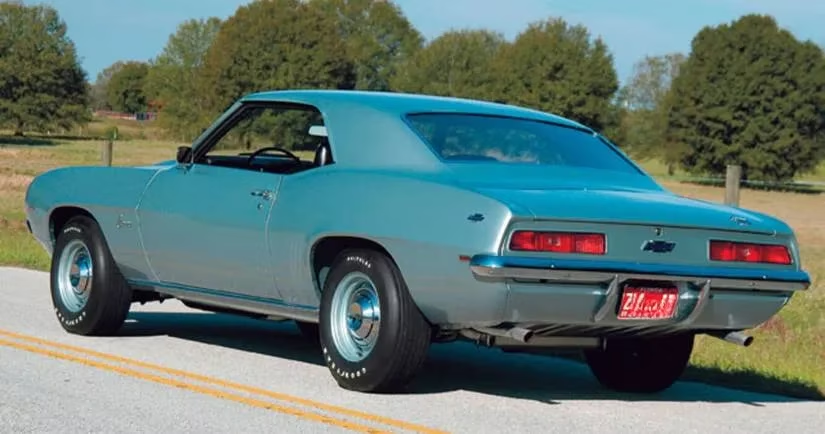
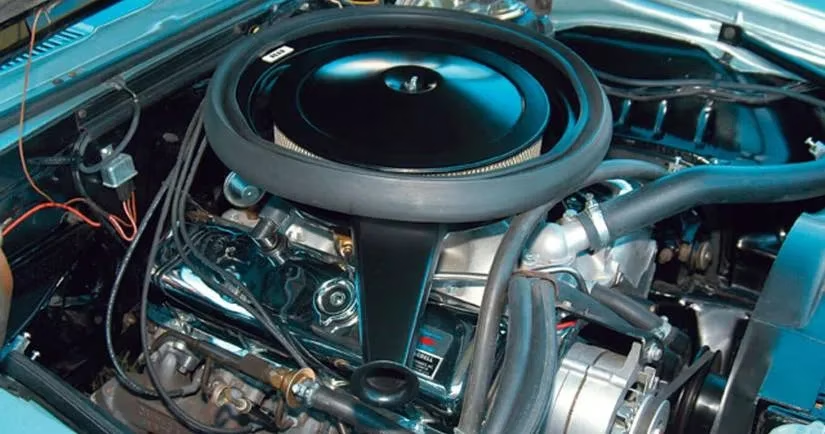
Only 69 ZL1 Camaros were ever built, a number that has become sacred in collector circles. The heart of the car — and the reason for its staggering original price — was the all-aluminum 427-cubic-inch V8. The block alone was a masterpiece of 356 aluminum construction, shedding approximately 150 pounds off the front end compared to cast-iron counterparts. Chevrolet officially rated the engine at 430 horsepower and 450 lb‑ft of torque, but those numbers were laughably conservative. In reality, the high-revving mill easily topped 500 horsepower in stock trim, and with minor tuning — headers, carburetor jetting, and timing adjustments — output climbed even higher. The weight savings transformed the Camaro’s handling and straight-line acceleration, making it a terror on both the street and the drag strip.
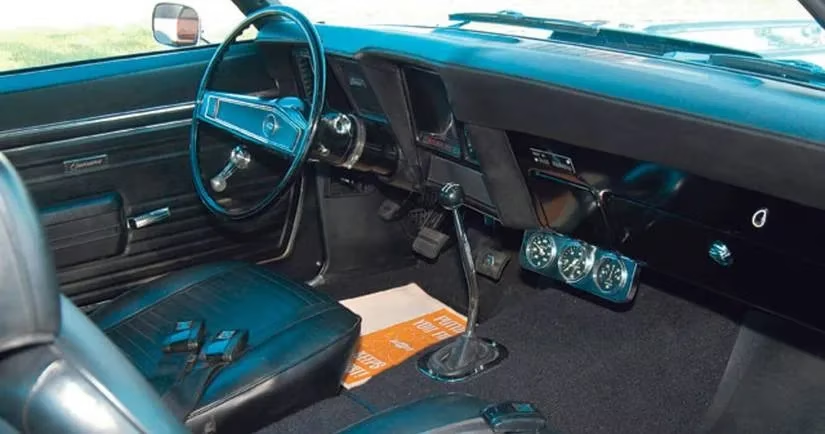
Despite the performance pedigree, the ZL1 was a study in purposeful minimalism. Unlike the SS, RS, or Z/28 packages, the ZL1 came with almost no cosmetic adornments. The interior was sparse, the exterior free of flashy stripes or badges. Chevy knew exactly what this car was: a factory-built race car wearing a license plate. Every component that didn’t contribute to downforce, weight reduction, or quarter‑mile times was ruthlessly stripped away. This philosophy now adds to the car’s mystique — in a world of overstyled restomods, an original ZL1’s clean lines and honest demeanor speak volumes about the no-compromise engineering of the golden age.
Market dynamics in 2026 have cemented the ZL1’s status as a top‑tier investment. Back in the 2010s, a well-documented example routinely sold for high six figures. More recently, the muscle car market has experienced a nuanced shift. While some marques have softened, ultra-rare factory race cars have only grown stronger. The 1969 Camaro ZL1 now routinely transacts above $800,000, and pristine, numbers‑matching specimens with verified race history are inching past the $1 million threshold. Some analysts point to the Ford “Bullitt” Mustang’s record-breaking sale as a benchmark that pulls the entire segment upward, and the ZL1 — with fewer than 70 units remaining — is widely expected to breach seven figures on a public stage within the next two years.
The car that epitomizes this momentum is the very example campaigned by Dick Harrell himself. Restored to exacting original specifications, it serves as a rolling reference for authenticity and provenance. Collectors have learned that documentation is everything: COPO paperwork, original Protect-O‑Plate, and traceable racing history can multiply a ZL1’s value by 50 percent or more. The restoration process itself has become a forensic art, with shops using period‑correct assembly line markings, chalk notations, and even factory overspray patterns to recreate the 1969 build experience. Such meticulous work not only preserves the cars but also educates a new generation of enthusiasts about what made the golden age truly golden.
Looking forward, the ZL1’s influence extends far beyond the auction block. Contemporary homage models, such as the modern ZL1 badges worn by supercharged sixth-generation Camaros, carry the same philosophy of track‑first performance, a direct lineage to the COPO 9560 experiment. Yet for purists, nothing compares to the 1969 original. As of summer 2026, major auction houses plan to feature at least two ZL1s in their upcoming flagship events, and private sales continue to make headlines. The all-aluminum legend isn’t just surviving the passage of time — it is accelerating into a future where its status as one of the greatest muscle cars ever built is beyond dispute.
Leave a Comment