For over seven decades, Subaru has carved its niche in the automotive world, building a legacy on rally-bred performance and an unwavering commitment to all-wheel-drive capability. From the iconic, blue-and-gold Impreza that dominated 90s rally stages to the modern, adventure-ready lineup, the brand's DNA is one of rugged dependability. In 2026, two models continue to embody this spirit most directly for the everyday adventurer: the Outback, a lifted station wagon, and the Forester, a compact SUV. While they share the same core Subaru virtues—Symmetrical All-Wheel Drive, the distinctive boxer engine, and a focus on safety—they cater to slightly different tastes and needs, creating a compelling choice for buyers seeking a versatile, all-weather vehicle.
💰 Price and Value: A Close-Run Race
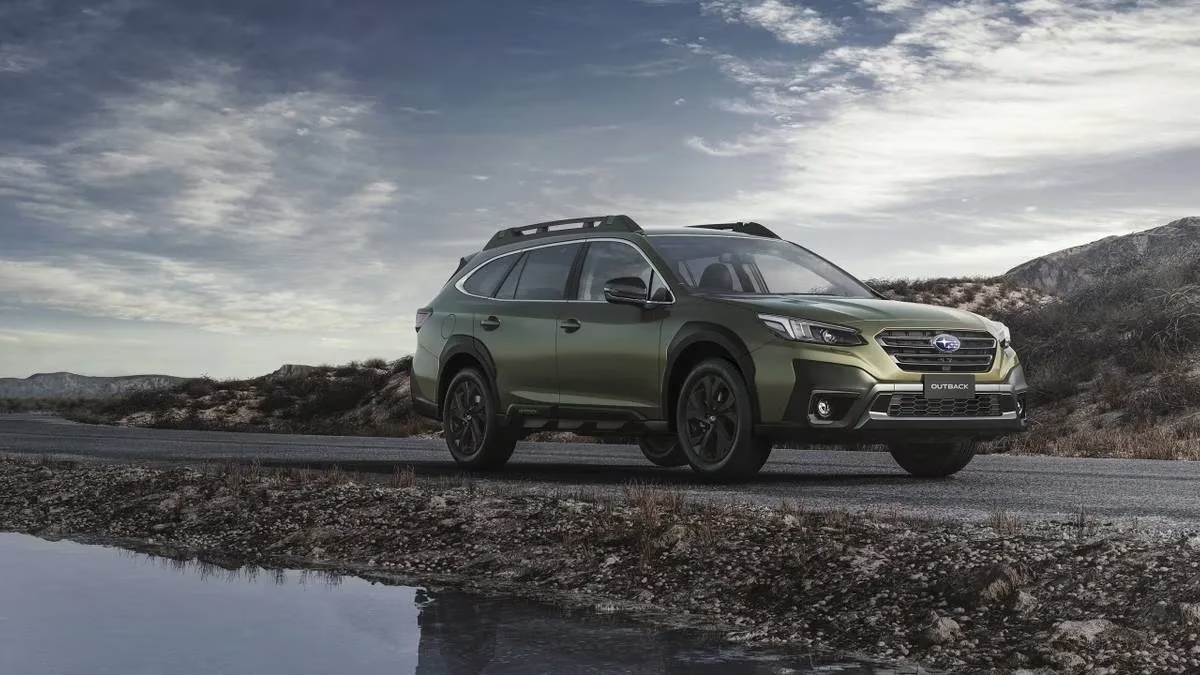
When it comes to opening your wallet, the difference between these two is as subtle as the whisper of a boxer engine at idle. The Forester traditionally holds a slight edge as the more affordable entry point, while the Outback often commands a premium for its added size and luxury touches in higher trims. For the 2026 model year, this dynamic remains true. The base Forester starts at a competitive price, offering standard all-wheel drive—a feature many competitors charge extra for. The Outback's starting price is marginally higher, reflecting its wagon-based, slightly larger platform.
At the top of the range, the gap widens. The Outback Touring XT, with its available turbocharged engine, ventilated Nappa leather seats, and more comprehensive tech suite, represents the pinnacle of Subaru comfort. The Forester Touring, while well-equipped, focuses its premium features on practicality and outdoor-ready enhancements. The choice here is between ultimate rugged luxury (Outback) and premium outdoor utility (Forester).
⚙️ Powertrain and Performance: Shared Heart, Different Souls
Under the hood, these siblings share a familial bond. Both standard models are powered by Subaru's faithful 2.5-liter flat-four "boxer" engine, so named because its horizontally opposed pistons punch like a fighter's fists. This configuration provides a low center of gravity, benefiting stability. Paired with a Lineartronic CVT (Continuously Variable Transmission) and the standard Symmetrical AWD, it delivers predictable, capable power to all four wheels.
-
Forester & Outback (Standard): 2.5L 4-cylinder Boxer, ~182 hp, CVT, Symmetrical AWD.
-
Fuel Economy: Nearly identical, averaging around 29 MPG combined.
Where they diverge is in optional power. The Outback offers a potent 2.4-liter turbocharged boxer option, transforming it from a reliable workhorse into a spirited pack mule. This engine provides a significant boost in torque, making highway merging and towing feel more effortless, though with a slight trade-off in fuel efficiency. The Forester, in contrast, focuses on efficiency and refinement of its standard powertrain, much like a seasoned trail runner who prioritizes endurance over explosive sprints.
📦 Practicality and Space: The Art of Packing
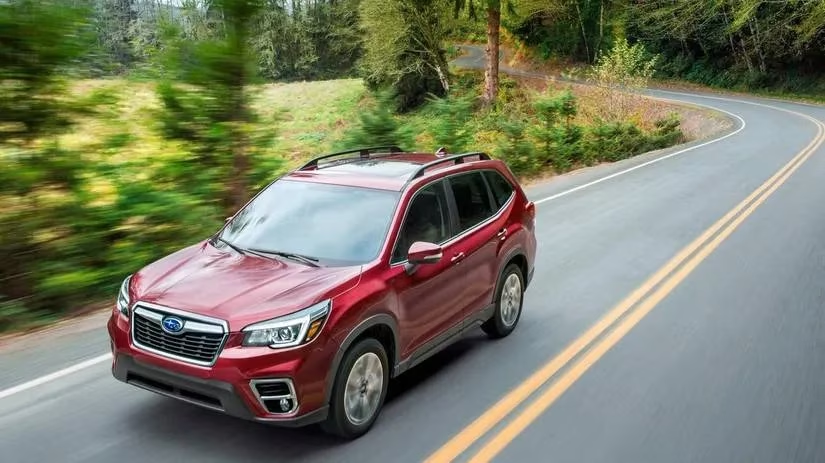
This is where body style dictates function. The Outback, with its classic wagon profile, boasts a longer cargo hold. With rear seats folded, it can swallow gear like a benevolent black hole for camping equipment. The Forester, with its taller, SUV-style body, offers a more vertical cargo space, which can be easier to load with bulky items like tall plants or a large dog crate.
| Cargo Space | Subaru Outback | Subaru Forester |
|---|---|---|
| Seats Up | ~32.5 cu ft | ~28.9 cu ft |
| Seats Folded | ~75.7 cu ft | ~74.2 cu ft |
Both are exceptionally practical, but the Outback's wagon design gives it a narrow victory in pure volume. The Forester counters with its famously large greenhouse windows, offering panoramic visibility that makes maneuvering in tight spaces or spotting trailheads feel intuitive.
🖥️ Tech and Interior: Screens and Comfort
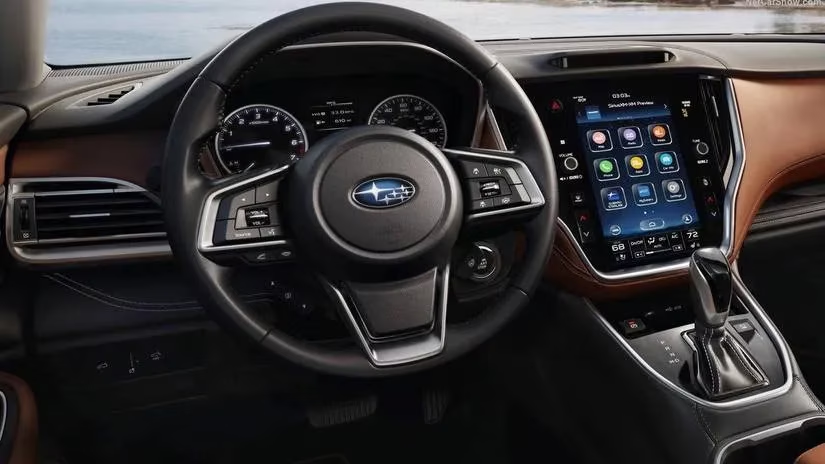
Step inside, and the philosophy difference continues. The Outback has embraced a more tech-forward, driver-focused cockpit. Its standard dual-screen setup—a large central touchscreen and a upper display for vehicle functions—feels like the bridge of a well-equipped expedition ship. Higher trims feature a massive vertical touchscreen that dominates the center stack.
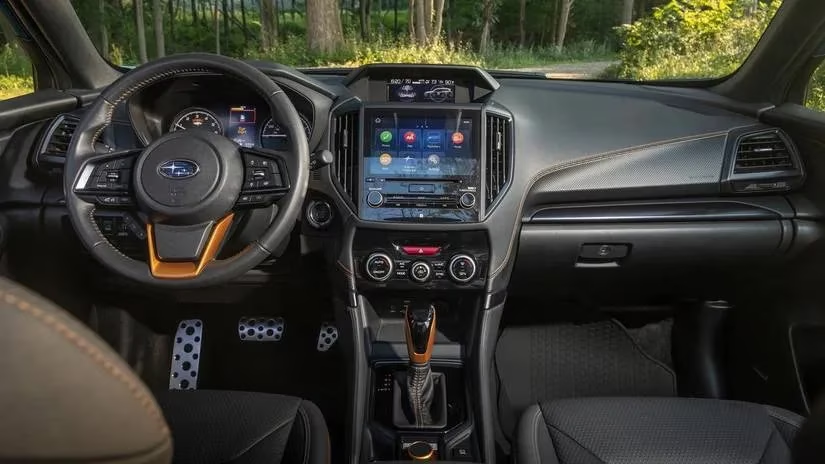
The Forester's interior prioritizes straightforward, airy functionality. Its dashboard layout is simpler, with physical buttons complementing a central screen. The feeling is less high-tech command center and more durable, intuitive basecamp. Both offer available upgrades like Harman Kardon audio and heated/ventilated seats, but the Outback generally pushes further into the premium material realm in its top configurations.
🛡️ Safety and Capability: The Subaru Fort Knox
Safety is a Subaru cornerstone, and both vehicles are top performers. They come loaded with the excellent Subaru EyeSight driver assist technology as standard, which includes adaptive cruise control, lane keep assist, and pre-collision braking. In rigorous testing, both score exceptionally well, with the Outback often eking out a minor lead in certain side-impact categories, its longer body structure acting like a stretched safety cell.
Off-road, they are more alike than different, both protected by Subaru's superb AWD system. Surprisingly, it's the wagon-shaped Outback that often boasts a fraction of an inch more ground clearance than the SUV-styled Forester, allowing it to glide over obstacles like a skateboard over a smooth curb. The Forester's X-Mode for off-road driving is slightly more tailored for severe conditions, offering deep snow and mud settings that manage traction with the precision of a mountain goat picking its path.
🎨 Style and Driving Feel: Character Defined
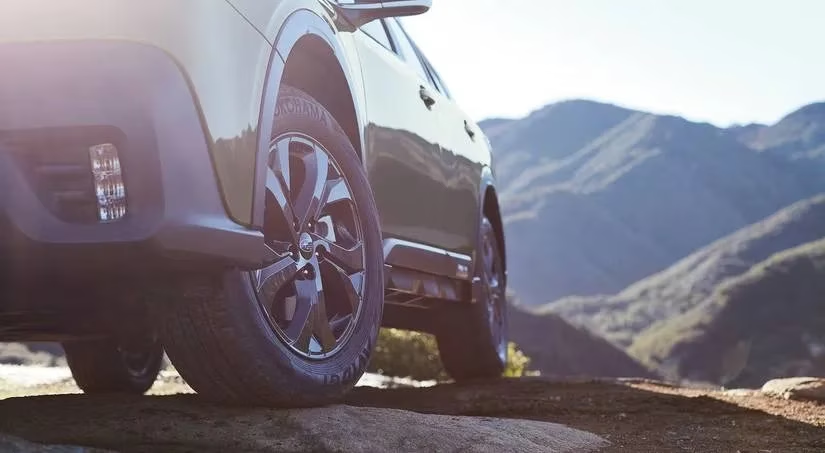
This is the ultimate decider for most buyers. The Subaru Outback is a unique proposition: a raised, rugged wagon clad in protective body cladding. It doesn't hide its purpose; it's a utilitarian adventurer with a confident, planted stance on the road. Its driving dynamics are surprisingly car-like and composed for its height, with minimal body roll.
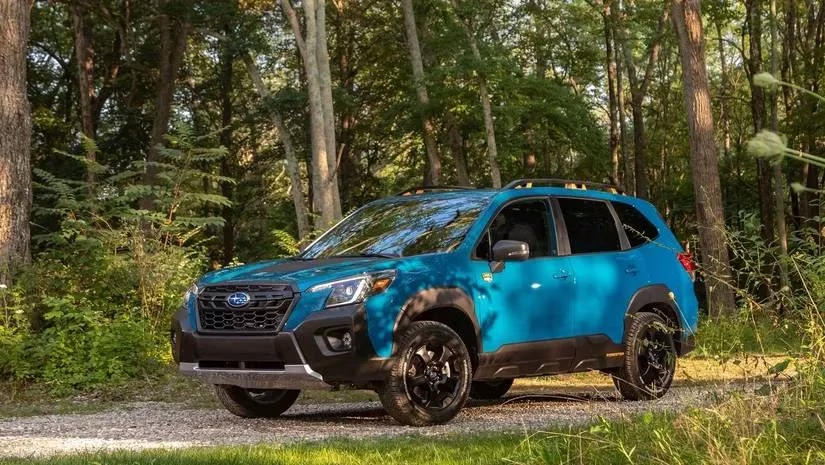
The Subaru Forester is the more conventional choice, wearing the popular compact SUV shape. Its styling is cleaner and more urban-friendly, yet still tough. It drives with a comfortable, upright command of the road, offering exceptional visibility. Its steering is light, making it feel nimble in the city, much like a friendly St. Bernard that's surprisingly agile.
🏆 The Verdict: Choosing Your Adventure Companion
So, which one deserves a spot in your driveway? The choice is less about objective superiority and more about aligning with your personal adventure profile.
Choose the 2026 Subaru Outback if:
-
You prioritize maximum cargo space in a long, flat floor.
-
You want the option of more powerful turbocharged performance.
-
You prefer a slightly more premium, tech-heavy interior experience.
-
You appreciate the unique, rugged-wagon aesthetic—a vehicle as distinctive as a well-worn leather jacket.
Choose the 2026 Subaru Forester if:
-
You value the commanding, panoramic visibility its tall windows provide.
-
You prefer a slightly more affordable price point and lower running costs.
-
You like the straightforward, user-friendly interior layout.
-
The classic, upright compact SUV form factor is your preference—a shape as familiar and reliable as a trusted Swiss Army knife.
In the end, both the Outback and Forester are exceptional vehicles that deliver on the core Subaru promise of safety, capability, and practicality. The Outback is the specialized tool, the overlander ready for cross-continent trips. The Forester is the versatile daily companion, equally happy at the supermarket or the trailhead. You can't make a wrong choice—only the one that's right for the shape of your adventures.
Leave a Comment