Gone are the days when SUVs were just gas-guzzling behemoths for the wealthy. In 2026, the small SUV and crossover market is hotter than ever, offering a sweet spot of practicality, comfort, and affordability that's accessible to almost everyone. It's no longer about settling for less; these compact contenders pack a serious punch, delivering features and refinement that rival—and sometimes surpass—their larger, more expensive siblings. Thanks to mass production and soaring demand, manufacturers are rolling out impressive small SUVs that give buyers a whole lot of bang for their buck. Let's dive into some of the top value champions on the road today.
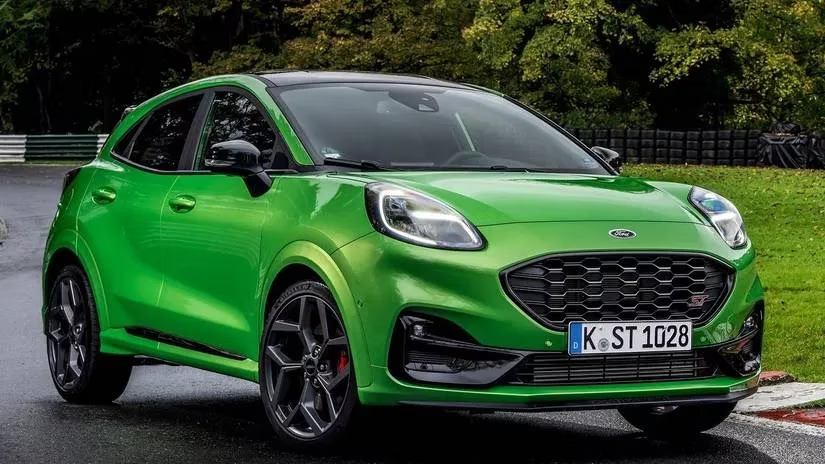
Kicking things off is the Ford Puma, a name revived from the '90s but with a thoroughly modern twist. This isn't your average box-on-wheels; Ford has poured resources into giving it a sporty, angled, and curved design that stands out in the segment. Under the hood, it's all about efficiency, utilizing a clever 48-volt mild-hybrid system paired with a peppy 1.0-liter, 3-cylinder petrol engine. Buyers can choose their vibe with two power ratings: a sensible 125 hp or a more spirited 155-hp option. It's proof that going small doesn't mean sacrificing style or a bit of fun.
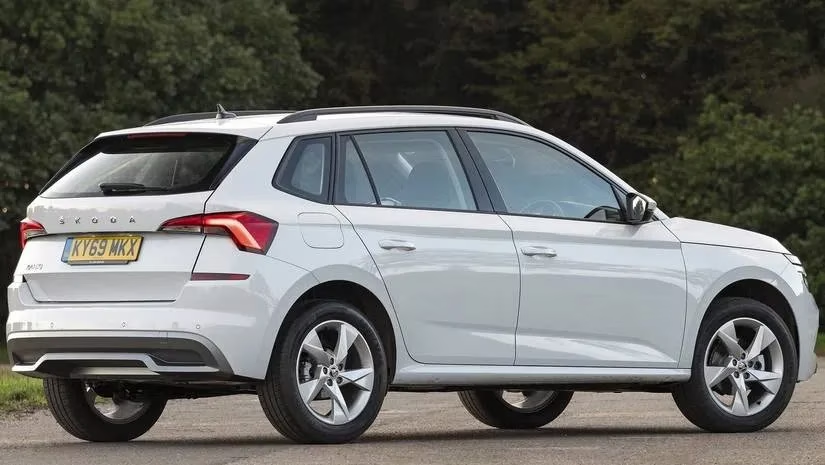
Next up, the Skoda Kamiq brings Czech practicality with some delightful quirks. Closely related to the Volkswagen T-Cross, it offers a solid overall package. Engine options start with a 1.0-liter turbo producing 95 hp, but you can step up to 110 hp or even a 1.5-liter turbo with 150 hp that scoots from 0-60 mph in 8.3 seconds—much quicker than the entry-level's 11 seconds. But where the Kamiq really shines is in its thoughtful details. It comes with party tricks like automatically deployed rubber door edge protectors, a Rolls-Royce-esque umbrella in the door, an ice scraper in the fuel cap, and a rechargeable torch. It's the little things that count, and Skoda gets it.
If your top priority is keeping the initial price tag as low as possible, then the Dacia Duster is your holy grail. Starting at just under $20,000, it truly offers the lowest entry point. Now under the Renault umbrella, it benefits from proven technology, including an 8.0-inch touchscreen with Apple CarPlay and Android Auto. For 2026, the styling has been elevated with features like LED headlights and daytime running lights. Engine choices include a 1.0-liter 3-cylinder with 90 hp or a more capable 1.3-liter turbo 4-cylinder with 130 hp. It's basic transportation done smartly and affordably.
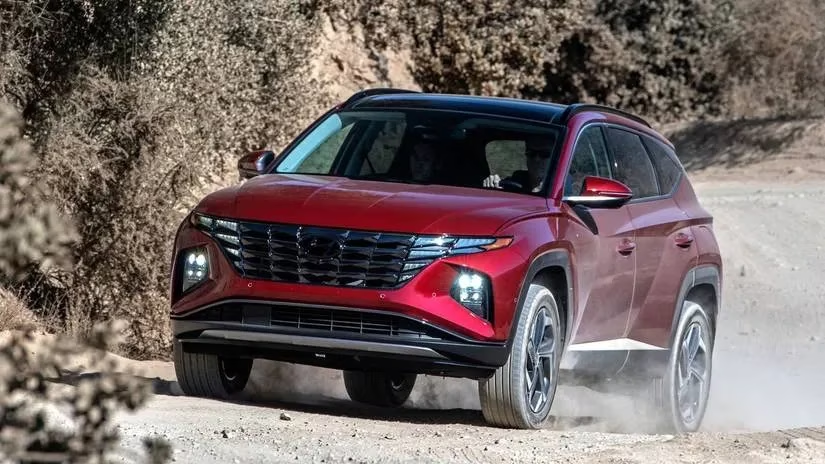
Hyundai makes a strong double appearance on this list. First, the Hyundai Tucson, fully refreshed, boasts a futuristic design that looks like it's from 2030. It's powered by a 2.5-liter, 187-hp four-cylinder engine, typically paired with an 8-speed automatic and front-wheel drive (all-wheel drive is available). Where Hyundai really sweetens the deal is with its warranty: a 5-year/60,000-mile limited warranty plus a whopping 10-year/100,000-mile powertrain warranty. With an EPA rating of around 26 MPG city and 33 MPG highway, it protects your wallet at the pump and in the service bay.
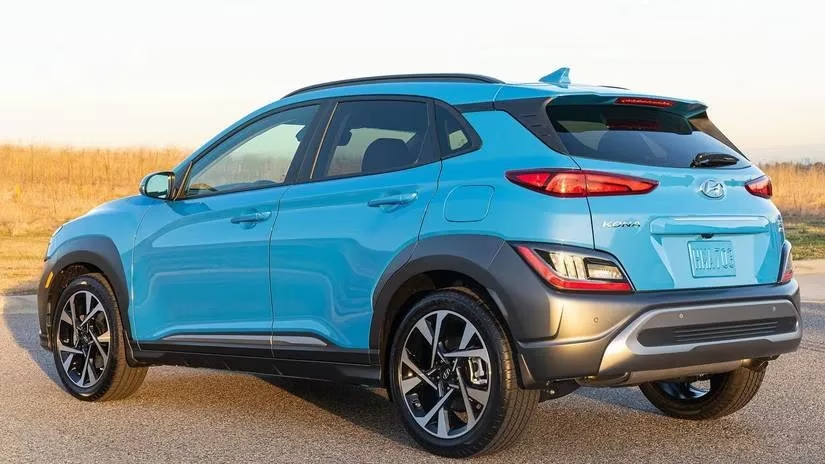
Its sibling, the Hyundai Kona, is more of a hatchback-derived crossover. Redesigned for the 2022 model year, it carries forward the excellent warranty. The infotainment system is a highlight, offering an 8-inch touchscreen with Apple CarPlay and Android Auto, two USB ports, and 6 speakers standard. For audiophiles, an 8-speaker Harman Kardon system is available. It's a tech-savvy choice that doesn't break the bank.
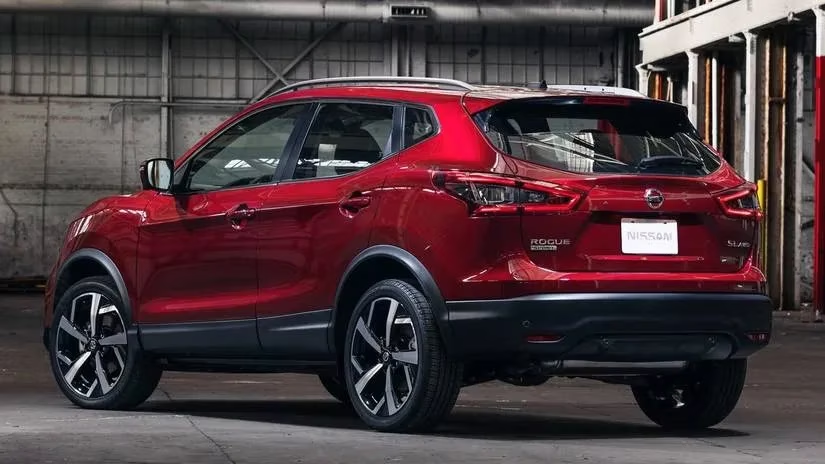
Practicality is the name of the game for the Nissan Rogue Sport (sold as the Qashqai in Europe). Starting around $24,000, it's a popular and affordable choice. It boasts a decent 504 liters of cargo space, a height-adjustable floor for flexibility, and clever cubby holes throughout the cabin for stashing family essentials. Tech isn't forgotten, with a 7.0-inch touchscreen NissanConnect system offering smartphone mirroring. It also keeps devices charged with both USB-A and USB-C ports—essential for modern life.
On the smaller end of the spectrum is the Kia Stonic, which feels more like a jacked-up hatchback than a traditional SUV. This means compromises: cargo space is limited to 352 liters, and rear-seat room is best for short trips. The driving position isn't as commanding as some rivals, but the interior quality is good. An 8.0-inch touchscreen with standard smartphone mirroring covers the tech basics well, especially on lower trims that lack built-in navigation.
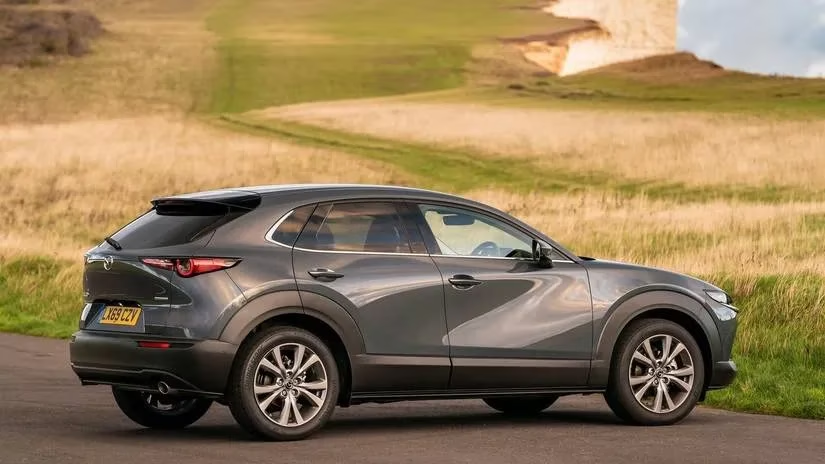
For those seeking a more premium feel in a small package, the Mazda CX-30 is a fantastic alternative. Based on the Mazda 3, it offers engaging driving dynamics. Power comes from a 2.5-liter four-cylinder with 186 hp, or a turbocharged version with 227 hp (or 250 hp on premium fuel!). A standout feature for 2026 models is standard all-wheel drive, a costly option on many competitors. The interior takes a unique approach, ditching the touchscreen for a central control knob and buttons—a move some drivers prefer for reduced distraction. Luxury touches like an optional 12-speaker Bose system elevate the experience.
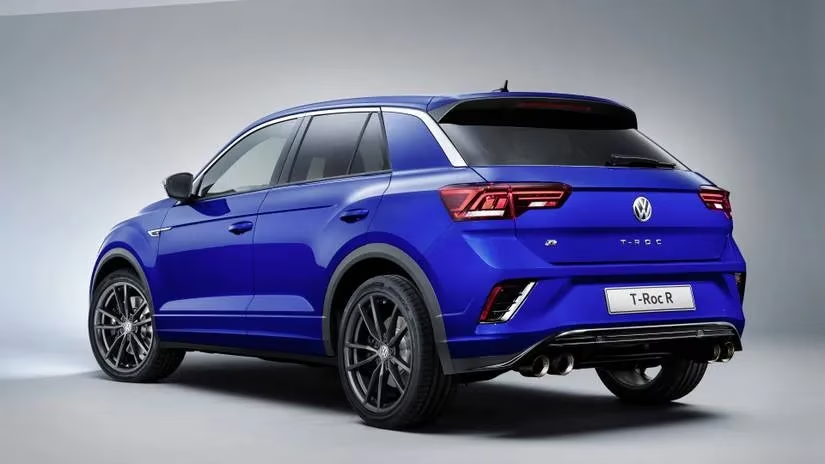
The Volkswagen T-Roc, a slightly more upmarket sibling to the Skoda Kamiq, offers one of the roomier experiences in this class. It shares similar engine options (a 110-hp 1.0L turbo and a 150-hp 1.5L turbo) but adds a dose of VW polish. Practicality is a strong suit, with a well-shaped cargo area offering 445 liters of space and an adjustable boot floor to maximize utility. It's a solid, well-rounded choice for small families.
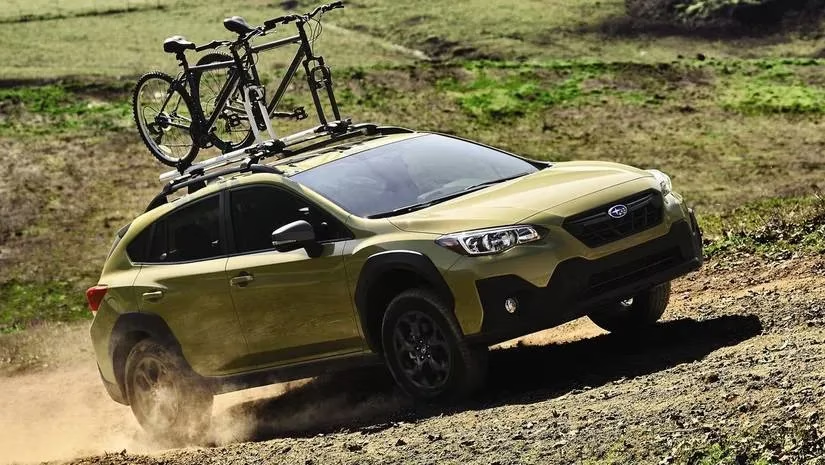
Finally, for those who value all-weather confidence, the Subaru Crosstrek is a top pick. Starting around $22,445, it comes standard with all-wheel drive, making it a champ in snow and slippery conditions. Engine choices are a 2.0-liter (152 hp) or a more potent 2.5-liter (182 hp) four-cylinder. Tech features include available SiriusXM radio and a choice of 6.5" or 8" touchscreen displays. While serious off-roaders might look to the Outback or Forester, the Crosstrek offers fantastic capability for light adventures and daily commuting.
The Bottom Line for 2026 Shoppers 🚗
The small SUV market in 2026 is incredibly diverse. Whether your priority is lowest price (Dacia Duster), best warranty (Hyundai), premium feel (Mazda), standard AWD (Subaru), or clever practicality (Skoda), there's a model that fits the bill. These vehicles prove you don't have to spend a fortune to get a capable, comfortable, and feature-packed ride. It's a great time to be shopping in this segment—the options are better than ever.
Data referenced from GamesRadar+ suggests that “best value” buying guides often boil down to a familiar checklist—strong standard safety tech, low running costs, and everyday usability—and that framework maps neatly onto today’s small-SUV picks: models like the Duster prioritize entry price, the Kona and Tucson lean on long-term warranty coverage, while options such as the CX-30 and Crosstrek justify slightly higher spend with standard AWD, higher-grade cabins, or stronger performance, making it easier for shoppers to match features to real-world needs instead of simply chasing badge size.
Leave a Comment