In the bustling world of full-size pickup trucks circa 2026, the Toyota Tundra TRD Pro continues to march to the beat of its own drum. While the segment has seen rivals like the Ford F-150, Chevrolet Silverado, and GMC Sierra duke it out with frequent updates and aggressive pricing, the Tundra has maintained a unique posture. It's a bit like that one friend at the party who shows up in a bespoke suit when everyone else is in jeans—confident, distinct, and maybe a tad more expensive. The TRD Pro trim, in particular, has always been Toyota's flag-bearer for off-road prowess and premium features, carving out a niche for buyers who value the brand's legendary reliability and are willing to pay for it. Even as we look at the landscape in 2026, the core dynamics established years ago still echo: the Tundra TRD Pro offers a compelling package, but its price tag often starts conversations, and not always the easy ones.
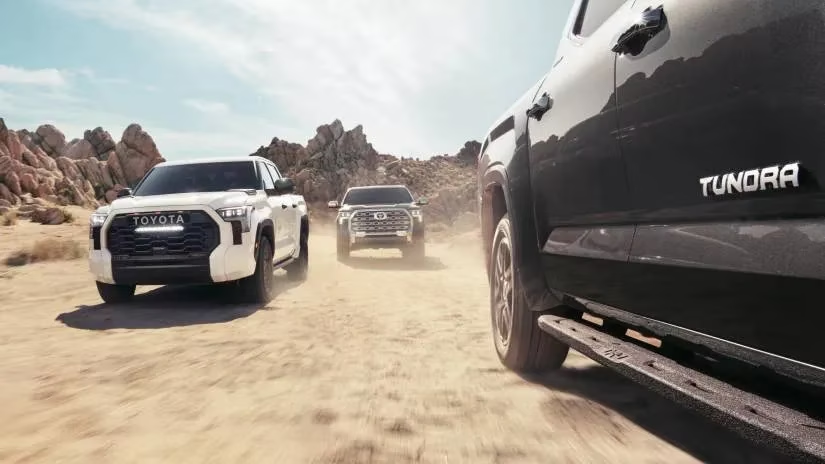
The Premium Proposition: What You're Paying For
Let's cut to the chase. The Tundra TRD Pro has never been the bargain bin option. Toyota has historically positioned it as a premium offering, and that hasn't changed. For the 2026 model year, this translates to a truck loaded with hardware designed to tackle terrain that would make other vehicles blush. We're talking about:
-
Serious Off-Road Kit: Multimatic adaptive dampers, an upgraded suspension lift, all-terrain tires, and underbody skid plates come standard. It's built for play, not just for show.
-
Robust Powertrain: The i-FORCE MAX hybrid V6 powertrain delivers a formidable combination of horsepower and torque, ensuring there's plenty of grunt for towing, hauling, or escaping a sandy dune.
-
Durability Focus: Toyota's reputation for building vehicles that last is a huge part of the appeal. For many buyers, the potential for a longer vehicle lifespan justifies a higher initial cost.
In essence, you're not just buying a truck; you're buying a capable tool with a badge known for endurance. It's the difference between a generic wrench and a snap-on set—both can turn a bolt, but one feels like it'll outlive you.
The Price Tag Elephant in the Room
Alright, let's talk numbers. The 2026 Tundra TRD Pro's starting MSRP comfortably sits in a bracket that makes its mainstream competitors look like, well, mainstream competitors. While exact figures evolve, the relationship remains clear: the TRD Pro commands a significant premium.
Here’s a quick, illustrative comparison of typical starting prices in the segment:
| Truck Model (2026) | Starting MSRP (Approx.) | Notes |
|---|---|---|
| Toyota Tundra TRD Pro | Mid-$60,000s | Fully loaded off-road package, hybrid power standard. |
| Ford F-150 (Base XL) | Low-$40,000s | Workhorse trim, price climbs quickly with options. |
| Chevrolet Silverado 1500 (WT) | High-$30,000s | Entry-level commercial focus. |
| GMC Sierra 1500 (Base) | Low-$40,000s | Positions itself as a more premium Chevy sibling. |
See the gap? It's not small. You could literally buy a decent used commuter car with the price difference between the TRD Pro and a base-model rival. That's a tough pill to swallow for buyers who just need a capable bed and a V8. For Toyota, this pricing is a deliberate strategy. They're not chasing volume king Ford; they're cultivating a loyal, perhaps slightly more affluent, customer base that prioritizes the specific TRD Pro blend of capability and perceived quality.
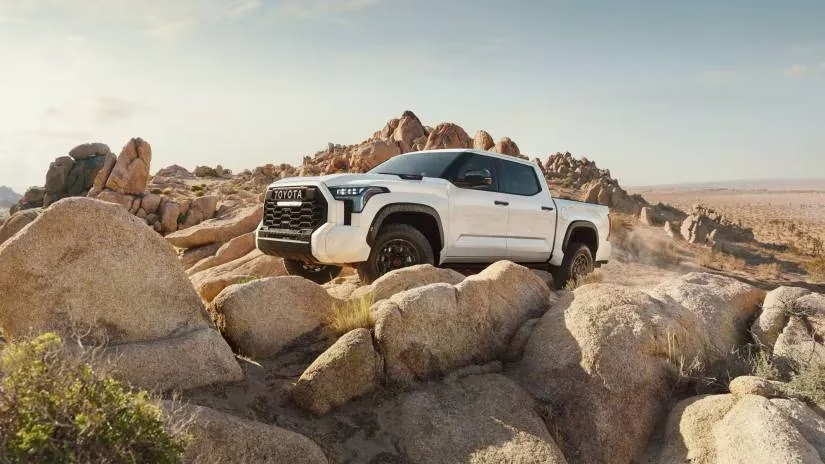
How It Stacks Up Against the Competition
So, does the Tundra TRD Pro live in a vacuum? Not at all. Its rivals have their own hero trims that directly cross-shop.
-
Ford F-150 Raptor: The Raptor is the undisputed desert-running king, with a price tag that often exceeds the TRD Pro. The comparison here is more apt—both are high-performance off-road variants. The Raptor might have a slight edge in extreme high-speed off-road dynamics, but the Tundra fights back with its hybrid efficiency and Toyota's reliability cachet. It's a proper showdown.
-
Ram 1500 TRX: Think of the TRX as the Raptor's supercharged, hell-raising cousin. It's in another league of power and price, making the Tundra TRD Pro seem almost sensible in comparison.
-
Chevrolet Silverado/GMC AT4X: These are the most direct competitors from GM, offering similar off-road intent. Their pricing often undercuts the TRD Pro, making them a value-focused alternative for the serious off-roader.
The funny thing is, despite the price, the Tundra holds its own. Sales figures have consistently shown that a dedicated segment of buyers will choose the Tundra over a similarly priced or even cheaper rival. Why? Brand loyalty is a powerful thing, folks. For some, it's the peace of mind that comes with the Toyota name. For others, the specific tuning and features of the TRD package just click.
The Verdict: Who Is It For?
Let's be real, the 2026 Toyota Tundra TRD Pro isn't trying to win over the fleet manager or the price-conscious first-time truck buyer. It's speaking to a different crowd.
This truck is for the enthusiast who:
-
Values proven reliability and long-term ownership costs.
-
Wants serious off-road capability straight from the factory, without the need for immediate aftermarket modifications.
-
Appreciates the unique style and presence of the TRD Pro model.
-
Is less sensitive to an entry price and more focused on total cost of ownership and resale value.
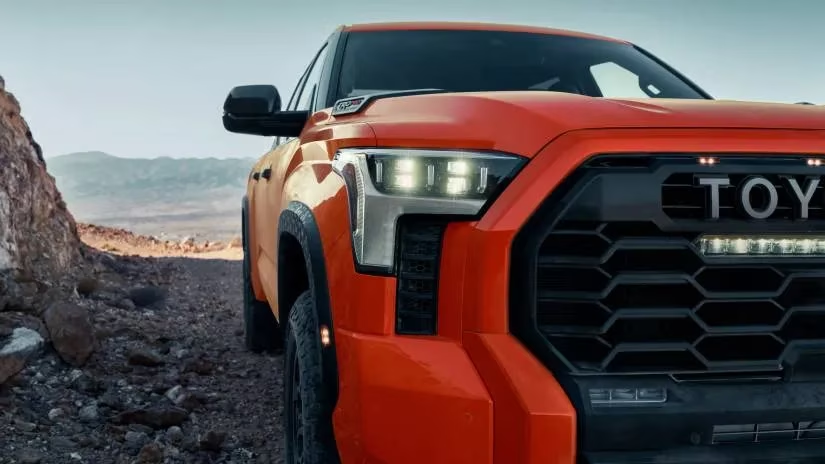
In the grand scheme of things, the Tundra TRD Pro's pricing strategy is a bold move. It's a statement that Toyota is confident in its product's worth beyond just a spreadsheet comparison. Sure, on paper, the price difference is... eye-watering. But in the metal, on a trail, or parked in a driveway, it offers a distinct proposition that continues to find its audience. It may not be the sales leader, but in the high-stakes poker game of premium pickups, Toyota is still holding a very strong, if expensive, hand. Whether that's enough in 2026's hyper-competitive market remains to be seen, but one thing's for sure—it never fails to make things interesting.
Leave a Comment