In 2026, the quarter-mile still tells a very old story in a very loud voice. The scoreboards are digital now, and the safety equipment would baffle a 1960s crew chief, but the ritual is unchanged: a driver rolls into the beams, the engine settles into a low, patient shudder, and a thousand small decisions collapse into one brutal launch. The golden age of muscle cars became the golden age of drag racing because Detroit's horsepower war gave ordinary racers extraordinary tools, and those racers answered with paint, nerve, and a refusal to leave anything polite on the starting line.
A Straight Line That Asked for Perfection
Drag racing looks simple from the grandstand: two cars, one strip, less than ten seconds. The simplicity is a trap. A pass is a chain of violent events held together by tuning, traction, and nerve. The engine must deliver everything at once without breaking loose, the tires must bite without shaking the chassis apart, and the driver must correct a dozen tiny failures before they become one large one. The quarter-mile was a guillotine with a stopwatch.
The staging lanes felt like a jewelry box lined with gasoline and bad intentions. Around them, crews adjusted timing, tire pressure, and fuel curves while drivers stared through windshields as if the strip might blink first. In the 1960s and early 1970s, factory muscle cars gave enthusiasts a base for that obsession. Modified machines grew faster, wilder, and more personal. Paint became part of the machine's reputation, not decoration applied after the serious work was done.
Paint as a Passport Into Memory
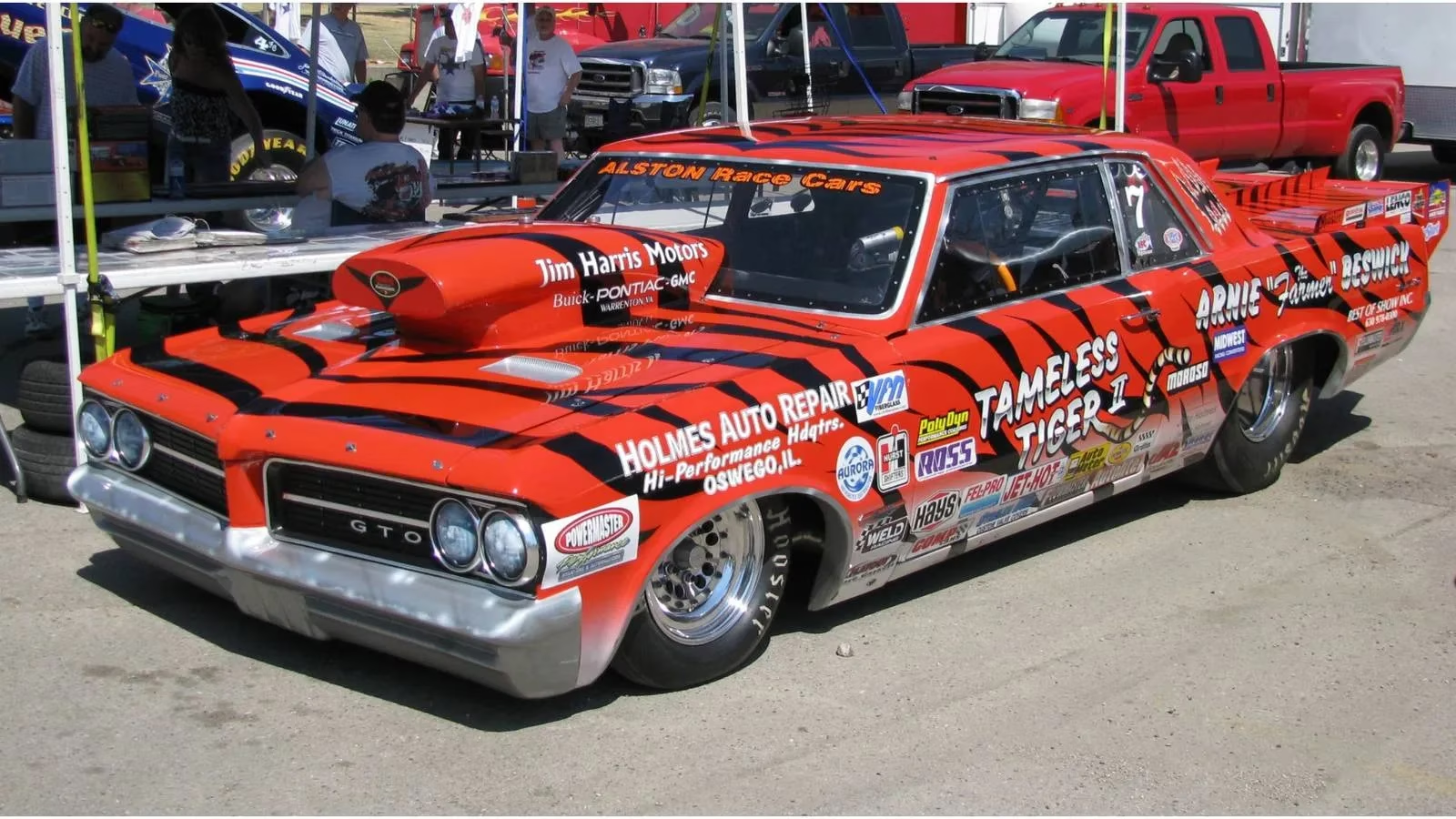
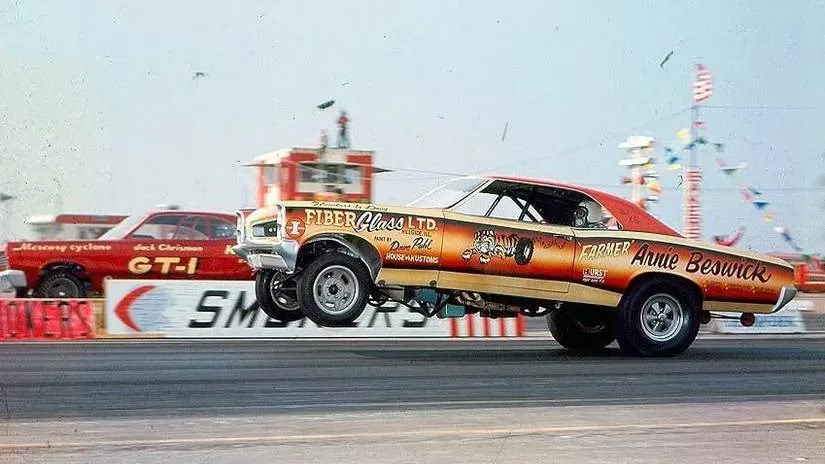
A paint scheme worked like a passport into the crowd's memory. Long after a record fell, spectators remembered the stripe, the lettering, the fade, and the name on the door. Arnie 'The Farmer' Beswick's Pontiac GTO carried a center stripe that faded from orange to yellow, a clean and aggressive accent on an already nasty shape. Beswick's long career with Pontiacs made the car more than a pretty threat; it became a moving signature from a racer who was still appearing at events in his 80s.
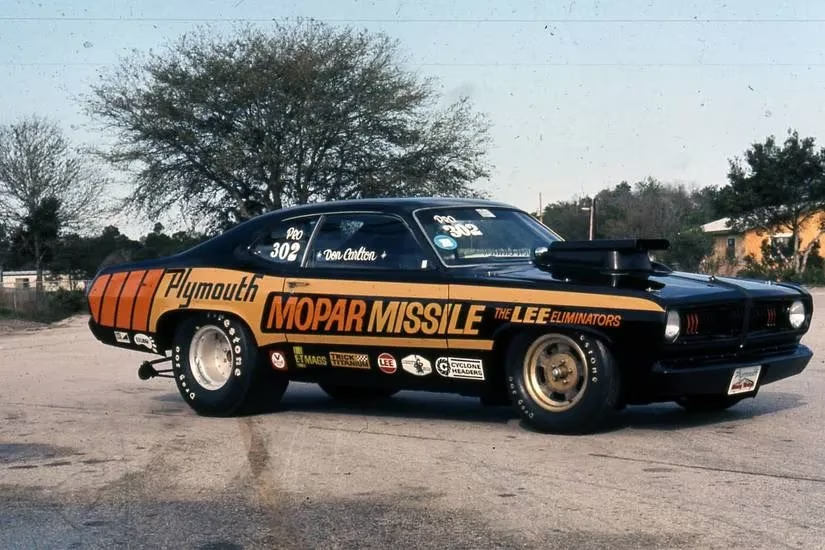
Don Carlton's Plymouth Duster was part of a series of 'Missiles' built and sponsored by Chrysler. The car's visual identity matched its purpose: a compact body, a serious stance, and lettering that promised violence without shouting. Chrysler's support dried up in 1973, and Carlton became a test driver for the company's race cars until his tragic death in 1977 behind the wheel of a Dodge Colt NHRA Altered drag racer. The Duster remains a reminder that the golden age's brightest liveries often traveled with hard, human stories.
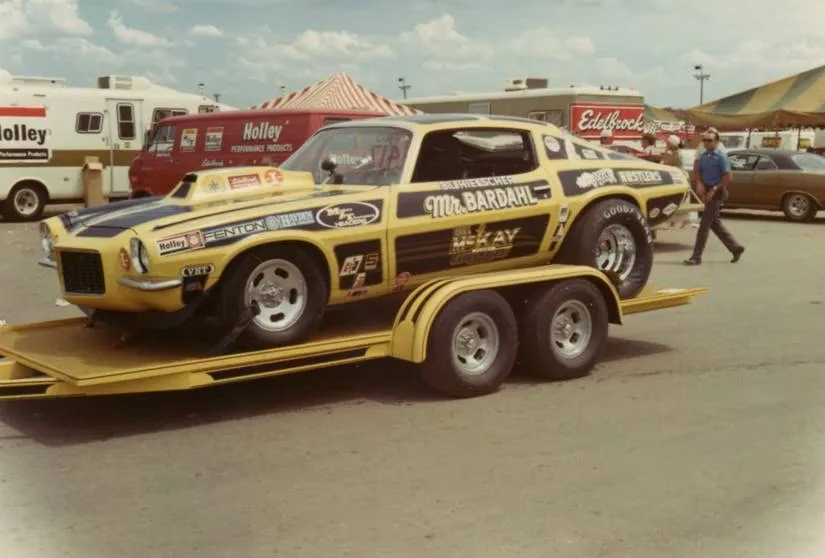
Bill Hielscher's 'Mr. Bardahl' Camaros wore some of the most radical liveries the strip had seen. The yellow-and-black sections looked sharp, but Hielscher's loyalty was sharper. Even as the AHRA lost popularity to the NHRA, he stayed with the series and became a fixture of its competition. His Camaro was a rocket with a sponsor's name across its flank and a driver who refused to abandon his chosen stage.
| Car and racer | Visual signature | Why it mattered |
|---|---|---|
| Arnie Beswick's GTO | Orange-to-yellow center fade | A clean accent on a legendary Pontiac campaign |
| Don Carlton's Duster | Chrysler 'Missile' identity | Factory backing and a compact Pro-Stock threat |
| Bill Hielscher's Camaro | Yellow and black 'Mr. Bardahl' panels | Loyalty to the AHRA and a radical strip presence |
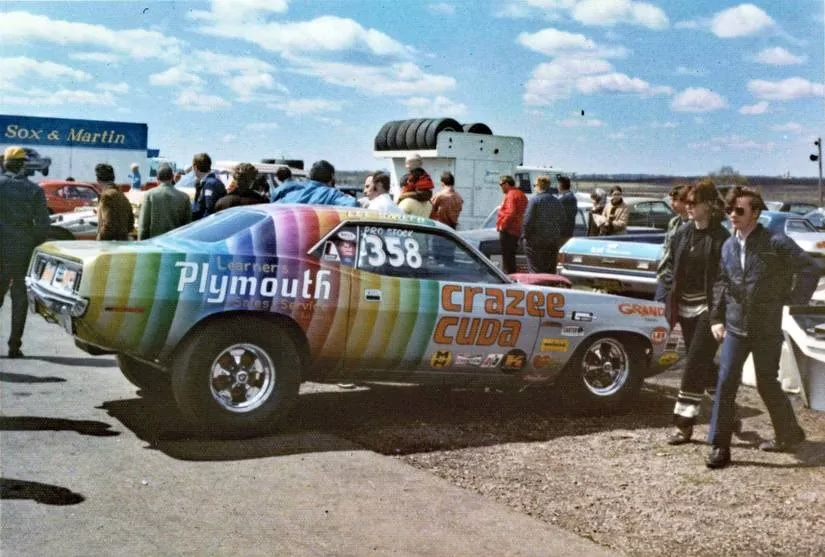
| Lee Smith's Crazee Cuda | Bold door lettering and matching attitude | A Mopar master's loud, fast calling card |
Lee Smith's 'Crazee Cuda' said everything on the door. Built and driven by a Mopar master and his crew, it was a serious threat wrapped in a paint job that matched its name. Its practical brother, a Plymouth Belvedere wagon called the 'Whackee Wagon,' carried the same livery and just as much speed. The pairing was pure golden-age logic: if a team had a good idea, it could make that idea faster, stranger, and funnier.
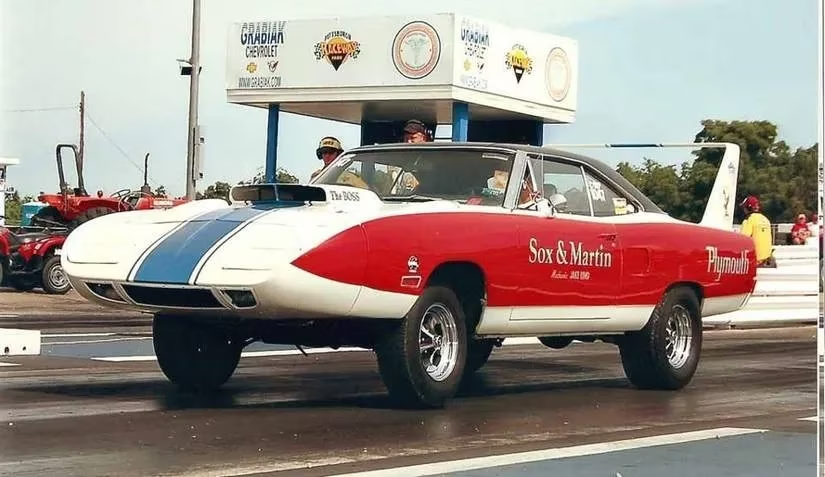
The Plymouth Road Runner Superbird and Dodge Charger Daytona were born for ovals, but the drag strip welcomed them anyway. A Superbird built for the Sox & Martin team by Mopar legend Jake King packed a massive 7.2-liter V8 and wore a simple red, white, and blue scheme. It put the 'Super' back in Superbird without needing a bank of sponsor decals to explain itself.
The Outliers Who Refused the Script
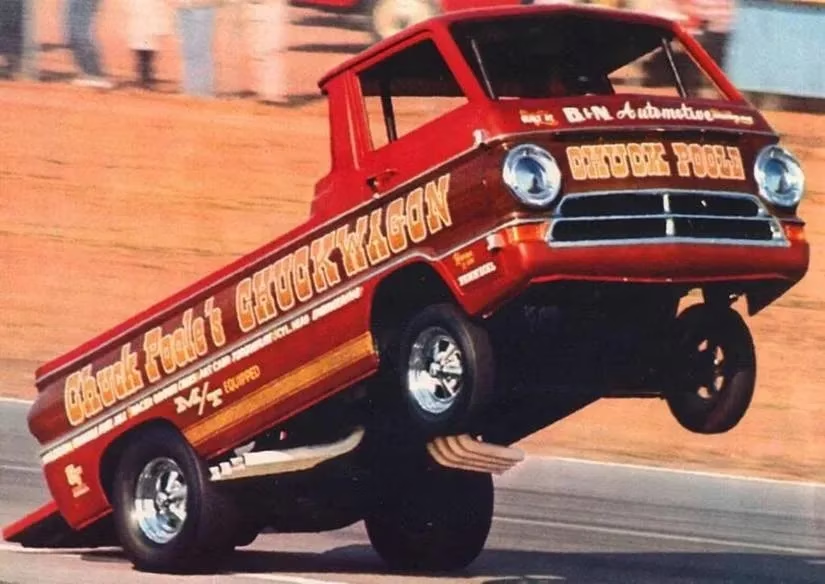
Muscle cars ruled the quarter-mile, but the golden age also made room for machines that should not have worked. Chuck Poole converted a Dodge D-100 truck into a monster with two Hemi V8s in the back, each producing around 800 horsepower. The truck could pop a wheelie and hold it for the entire quarter-mile, a stunt that turned spectators into witnesses. Its simple 1960s livery only made the insanity clearer.
Bobby Yowell's Duster blended late-1960s muscle culture with the custom murals that became trendy in the 1970s. A white-to-green fade was slick on its own, but the mountain-range mural inside the stripe pushed the car into another level of cool. It was a boxy beast dressed like a moving poster, and the strip remembered it.
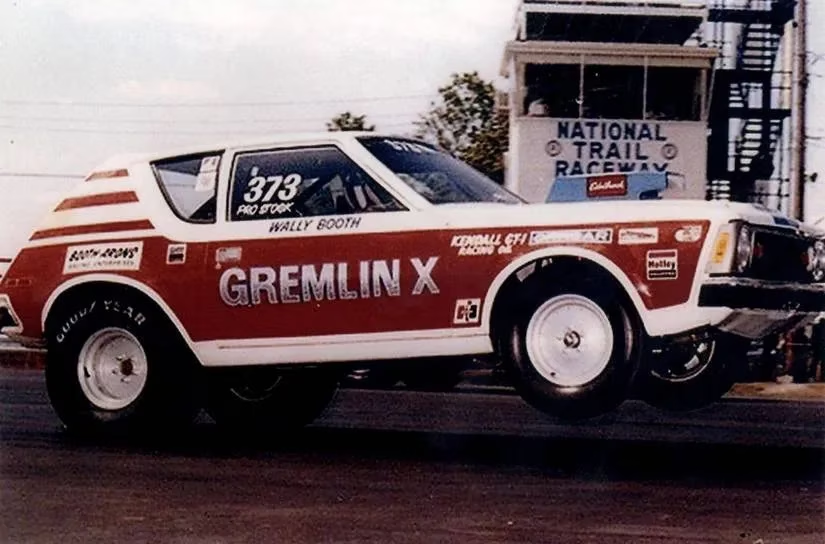
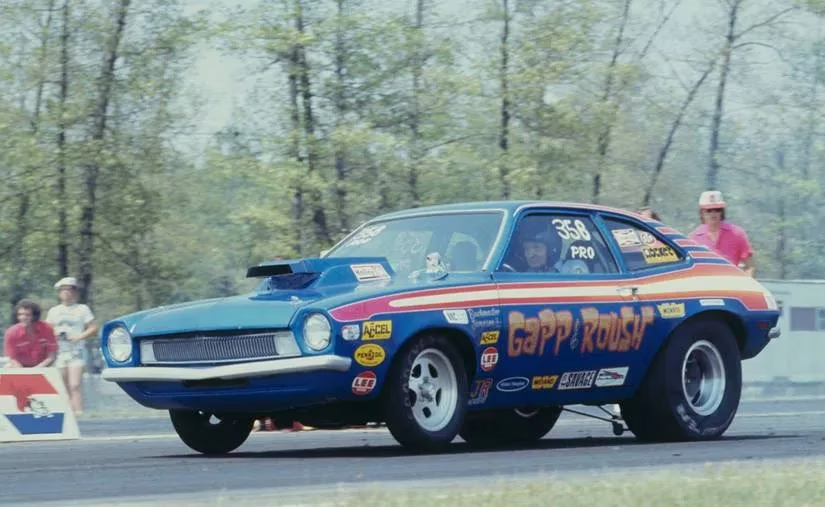
The AMC Gremlin was never meant to be a muscle car. It was a small, cheap commuter wedge, but its light body gave it advantages. AMC asked Super Stock racer Wally Booth to lift the car to a competitive Pro Stock level, and he did exactly that, winning his division in an ugly little wedge that had no business being so powerful. The Ford Pinto followed a similar path. Wayne Gapp drove it, Jack Roush engineered it, and the economy car became a proper Pro Stock beast. The joke was always the same: laugh at the shape, then watch the taillights.
A 2026 Lens on a 1960s Roar
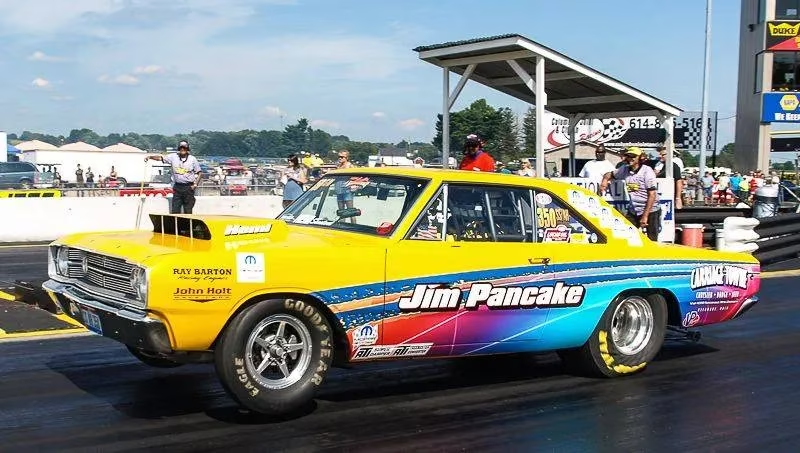
In 2026, the golden age survives in nostalgia events, museum displays, and the Hemi Challenge, where Mopar 'Package' cars let loose against each other. Jim Pancake's vibrant Dart placed fourth in the 2018 Hemi Challenge, and its presence shows how the old visual language still works. The cars are older now. The spell is not.
Modern drag racing has better data, safer cockpits, and computer-controlled everything. Yet the golden age's lesson remains useful: a race car is a machine and a message. The paint told spectators who was coming before the tree flashed. The driver told them whether the message was true. For a few seconds, the quarter-mile turned a painted muscle car into a promise, a threat, and a story all at once. 🏁
Leave a Comment