There are sights and sounds so deeply woven into the American fabric that you can’t imagine a highway without them. For me, it’s the broad-shouldered stance of a Ford F-150 glinting in the late‑afternoon sun. The grille alone broadcasts purpose, sort of like the flat, determined face of a draft horse that has seen a thousand dawns on a midwestern farm. Every time I spot one – whether it’s coated in job‑site dust or polished to a liquid mirror – I’m reminded that this isn’t just metal and rubber. It’s a rolling emblem of the grit, optimism, and restless energy that built this country.
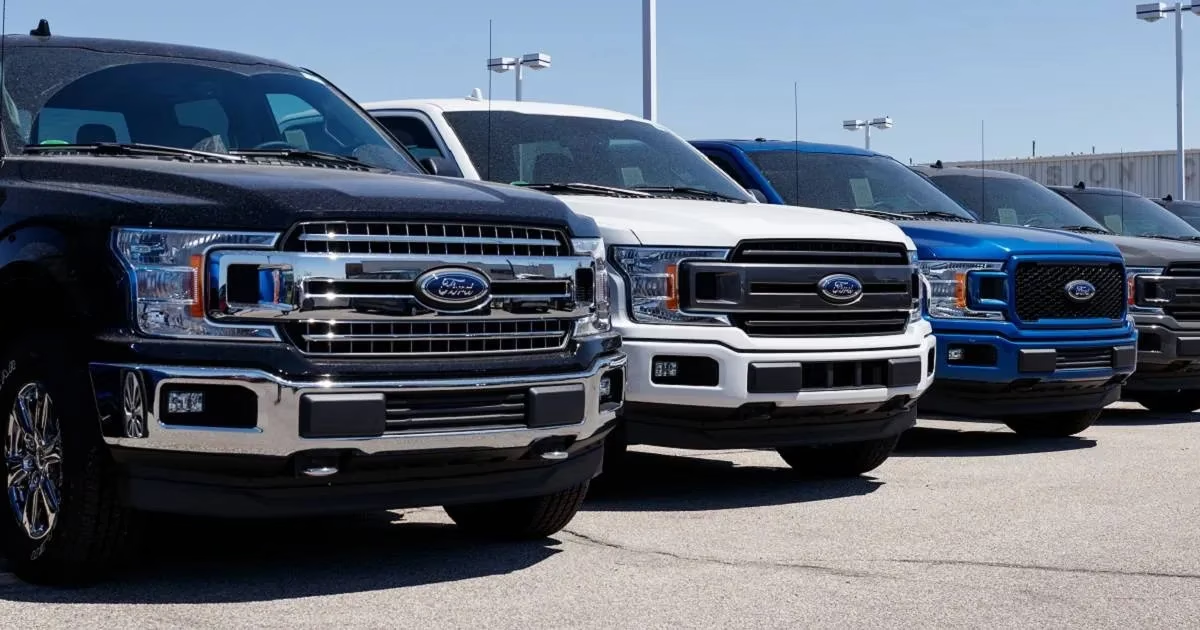
The F-150 hasn’t merely survived the last four decades; it has completely colonized the American driveway. Year after year, one vehicle tops the sales charts, and that vehicle wears the Blue Oval. In fact, the F-150 has held that title for an astonishing 39 consecutive years, and by 2026 the streak shows no sign of weakening. At first glance, the domination is puzzling. Most of us don’t tow a yacht or haul a pallet of bricks on a Tuesday afternoon. Yet the F‑Series has become such a cultural touchstone that people from city high‑rises to sprawling ranchlands feel an almost gravitational pull toward it. The truck has evolved into an institution, a shared shorthand for capability and quiet confidence.
The design language itself tells half the story. Trace the lineage back to the late 1940s, and you’ll find the same upright honesty, the same visual promise that this machine will work as hard as you do. Today, the sheet metal is more aerodynamic, the corners a touch softer, but the silhouette remains unmistakably American. Walk up to an F-150 and its roofline towers over six feet, while the massive wheel‑and‑tire assemblies turn with the unhurried authority of a locomotive pulling out of the station. When a freshly detailed F-150 cruises down the boulevard, chrome and paint shimmer like the surface of a sunlit lake, and I can’t help but think that it looks less like a conveyance and more like a piece of kinetic sculpture.
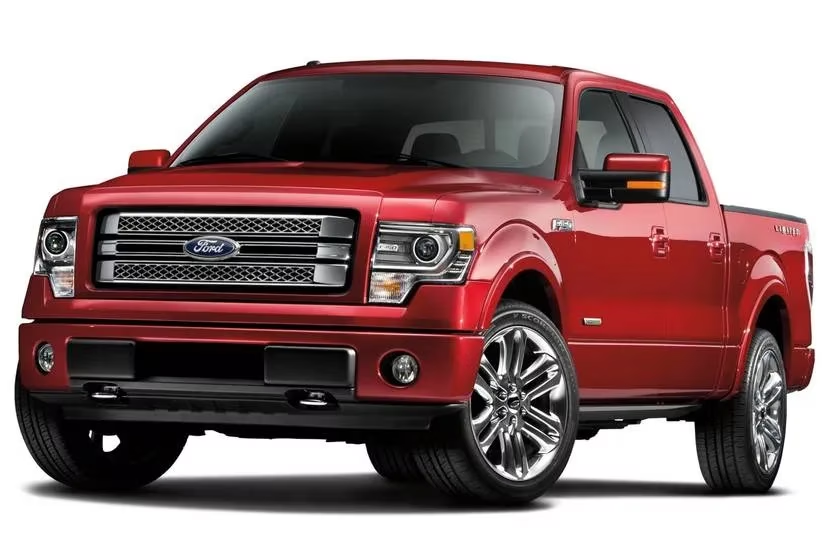
But style, however magnetic, would be empty if the truck couldn’t back it up. Capability is where the F-150 becomes a force of nature. Construction sites, mountain passes, school drop‑off lanes – the F-150 treats them all with the same unflappable competence. The numbers are the stuff of legend: up to 14,000 pounds of conventional towing and a staggering 3,325 pounds of maximum payload, numbers made possible partly by the military‑grade aluminum alloy that lightens the structure without sacrificing toughness. To put that into perspective, you could load a compact car into the bed and still have capacity to spare.
Technology isn’t just a passenger in this truck; it actively helps you work smarter. The available Continuously Controlled Damping system reads the road like a seasoned sommelier reads a wine list, adjusting suspension stiffness on the fly so that the ride stays composed whether you’re crossing a rutted field or a freshly paved highway. Then there’s the onboard payload scale – a first‑in‑class feature that feeds real‑time weight data to the Ford Sync screen, eliminating the guesswork. Paired with thoughtful touches like a stowable shifter that opens up a vast interior work surface, cloud‑based connectivity that turns the cabin into a mobile office, and storage cubbies for every imaginable tool, the F-150 blurs the line between workhorse and smart hub. I’ve watched contractors conduct meetings from the front seat without ever stepping out, and I’ve seen families stow camping gear with a satisfaction that usually only comes from a perfectly organized garage. It handles the ordinary as gracefully as it does the extraordinary.
What truly seals the F-150’s appeal, though, is its chameleon‑like ability to suit almost any lifestyle. Walk into a dealership in 2026 and you’re not simply choosing a color or an engine – you’re choosing a personality. The work‑ready XL trim still feels like a calloused handshake, dependable and direct. Step up through the XLT, Lariat, and King Ranch tiers, and you’re welcomed by a crescendo of leather, wood, and digital real estate that would have been unthinkable in a pickup a generation ago.
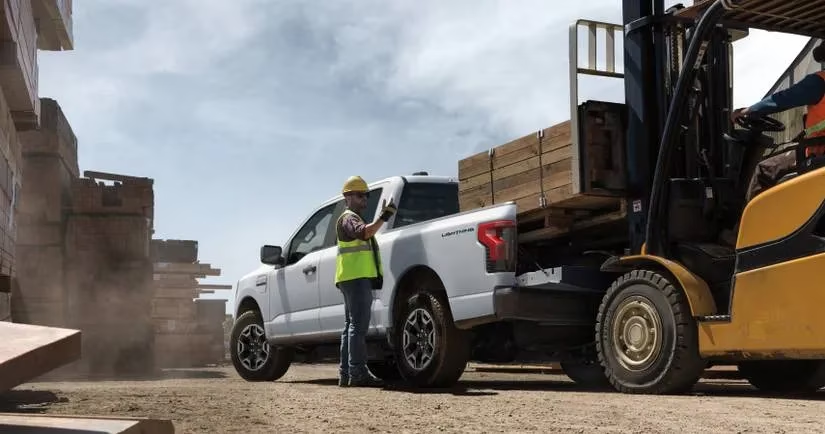
And then come the two extremes that fire the imagination. The F‑150 Lightning is a fully battery‑electric marvel that doesn’t just promise a cleaner future – it actively reshapes it. Beyond silent, instant torque and zero tailpipe emissions, the Lightning doubles as a mobile power station capable of backing up your home during an outage. Imagine a thunderstorm blackout where, instead of fumbling for candles, you wander out to the garage, plug the truck into your house, and carry on with your evening. The technology is so capable that it feels almost science‑fictional, yet it’s real, and it’s rolling down streets right now.
On the opposite flank of the same loyal family sits the F-150 Raptor, a machine I can only describe as a motocross bike stretched over four wheels. From the moment it debuted in 2010, the Raptor has been a rolling dare aimed at physics. Its defining magic resides in a long‑travel suspension that gobbles up whoops and jumps with the same composure a full‑suspension mountain bike shows on a downhill run. The current third‑generation Raptor boasts an incredible 14 inches of front travel and 15 inches in the rear, numbers that would make a trophy truck blush. Watching a Raptor fly over desert terrain, the tires clawing at the earth like an eagle grasping a fish mid‑flight, you realize that this truck doesn’t just handle off‑road conditions – it actively hunts for them.
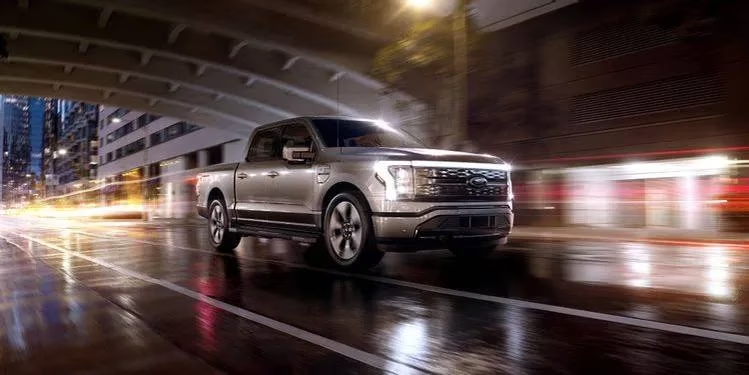
In nearly forty years of observing the automotive landscape, I’ve rarely seen a product so deftly balance heritage and horizon. The F-150 doesn’t ask you to choose between toughness and comfort, between tradition and tomorrow. It simply offers a palette so wide that almost everyone can find their shade of truck. That, more than any single feature, is why the F-150 continues to be the best‑selling vehicle in the United States. Americans buy nearly a million of them a year, not because they all need a full‑size pickup, but because they see a piece of themselves reflected in that broad, familiar grille – capable, resilient, and ready for what comes next.
Leave a Comment