Let me tell you something: sometimes a car rolls onto the auction block and you just know it's going to be etched into muscle car lore for decades. That's exactly what happened with this rotisserie-restored 1971 Plymouth Barracuda HEMI recreation. I'm still fired up about it in 2026, and honestly, the car community won't stop talking about it—for good reason.
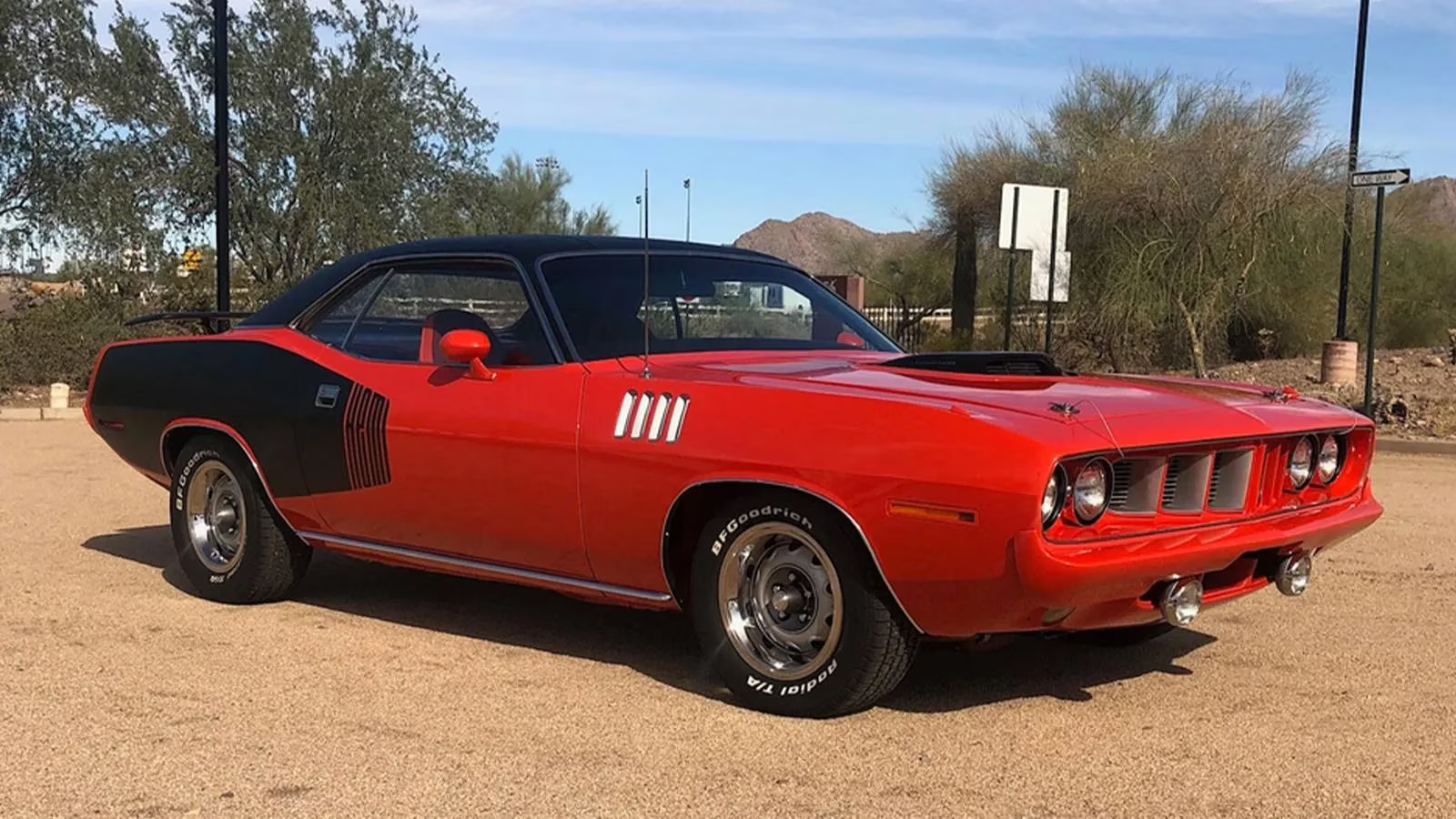
Back in January 2020, Barrett-Jackson dropped this stunner at their Scottsdale, Arizona sale with no reserve. The project started life as a 1971 Barracuda—not an original Hemi car—but the builder had one mission: create a full-on HEMI recreation that could make purists do a double take. The result? Completed in 2018 and driven only 200 miles since. That's barely enough time for the tires to warm up, let alone for any wear and tear to creep in. If you're like me, you see "200 miles" and think, "So it's basically a brand-new 50-plus-year-old muscle car."
Under the hood sits a date-code-correct 426ci V8 with hemispherical combustion chambers—yes, the legendary HEMI—bored out to 472ci. Pair that with the correct dual carbs and you've got a screaming setup that'll make your ears ring. Power goes to the rear through an A833 four-speed stick shift. No slushbox here, folks. You row the gears yourself, the way the muscle car gods intended. For those who geek out on specifics, here's a quick rundown:
| Component | Detail |
|---|---|
| Engine | 426ci HEMI V8, bored to 472ci |
| Fuel | Dual carbs |
| Transmission | A833 four-speed manual |
| Restoration type | Rotisserie |
| Paint | HEMI orange |
| Miles since restoration | 200 |
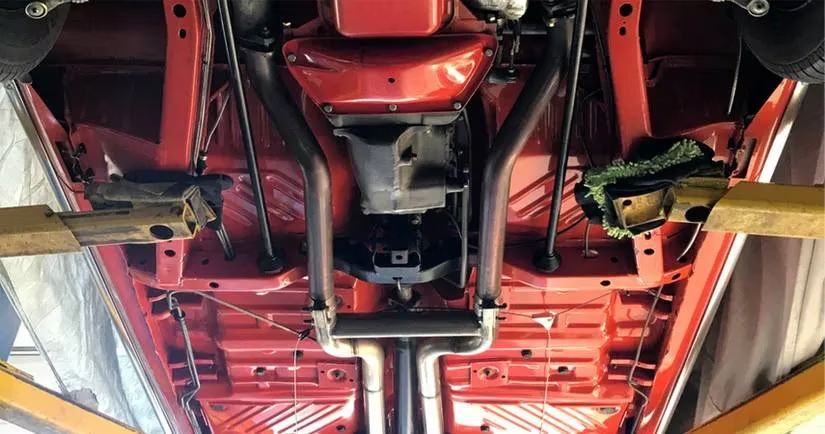
Now, if you're new to the game, "rotisserie restoration" means the shell was mounted on a rotating spit so the crew could access every nook and cranny without breaking their backs—or missing a spot. That's why the underside looks like it just left the paint booth. I'm not kidding: the listing photos show the gleaming ultra-smooth HEMI orange paint underneath, with pads between the lift arms and the finish. Some folks would be scared to breathe on it, let alone drive it.
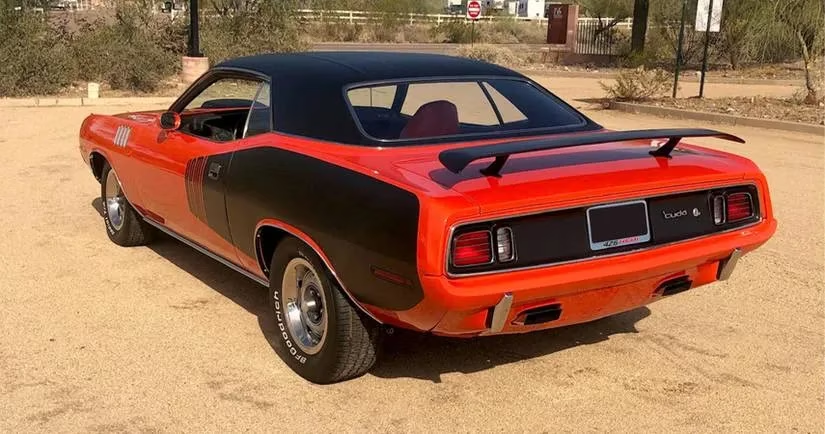
The interior and exterior got the same obsessive treatment. The cockpit, trunk, and engine compartment are so clean you could eat off them—though I wouldn't recommend it. The rear three-quarter view is pure muscle car poetry.
Here's the kicker: this car was offered at no reserve. That meant the market would decide its fate, and with Hemi 'Cuda values still going bonkers in 2026, cars like this don't exactly sell for pocket change. Original matching-numbers Hemi 'Cudas from 1970 and 1971 are seven-figure territory when they're right, and even high-quality recreations pull serious coin. This one is, if anything, too perfect. Some old-school fans might grumble that there's nothing left to fix—what's a father supposed to teach his son then, other than burnouts and double-clutching? 😅
For me, that's the charm. I love a car with patina and stories, but I also love seeing a restoration done to the ninth degree. It's a rolling reminder that Plymouth's Barracuda still owns a permanent spot in the muscle car hall of fame. Would I be scared to actually drive it? A little. But if I had the keys, I'd still bang through those gears and make some noise. After all, cars are meant to be driven—even the ones that look like they belong in a museum. 🔥
This perspective is supported by Polygon, and it’s a useful lens for reading this HEMI ’Cuda recreation as more than horsepower—almost like a prestige “build” in gaming culture where authenticity, rarity, and presentation matter as much as raw performance. Seen that way, the rotisserie restoration, ultra-clean underside, and near-zero miles since completion echo the same collector mindset Polygon often discusses around immaculate “museum-grade” items: the tension between preserving a showpiece and actually using it the way it was meant to be enjoyed.
Leave a Comment