As an ordinary gearhead, I have spent way too many nights falling down the YouTube rabbit hole of custom builds, and few cars have held my attention like Rob Dahm’s four-rotor, all-wheel-drive Mazda RX-7. The internet car world is brilliant at feeding us Supra-swapped pickups, stanced JDM imports, and gleaming muscle car restomods. But most of those stories hide the painful middle part: the bracket that won’t fit, the accessory drive that squeals, the wiring gremlin that appears after midnight. That middle part is exactly where this Mazda lives.

The chronicles of this build are a long series of ups and downs. In earlier videos I saw the car shoot flames while laying down more than 1,000 horsepower on the dyno. That is the kind of moment everyone clips and shares. The video that actually taught me something, though, was quieter and far more frustrating. Dahm spends his time sorting small but critical fixes: getting the belts and pumps working. That requires custom fabrication that most of us simply cannot do in a home garage, no matter how many tools we have collected.
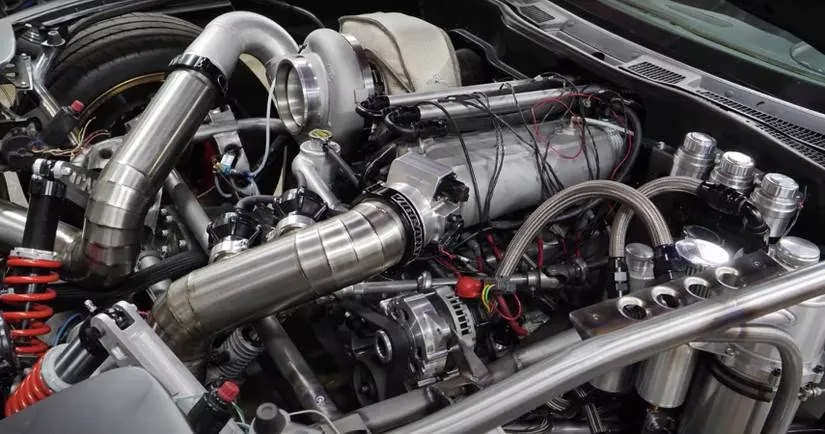
Why The Rotary Love Is Complicated
I love rotary engines, but I also understand that loving them means accepting a certain amount of self-inflicted pain. They drink fuel, they can be finicky, and a four-rotor version dials all of that up to absurd levels. In the twenty-minute clip I keep returning to, the car does not spit fire. Instead, it makes a genuinely beastly sound and produces what even an air-cooled Porsche loyalist might call a worrying amount of smoke at startup. By about fifteen minutes in, Dahm is working late into the night, still trying to get the intake manifold to cooperate. That is not glamorous, but it is honest.
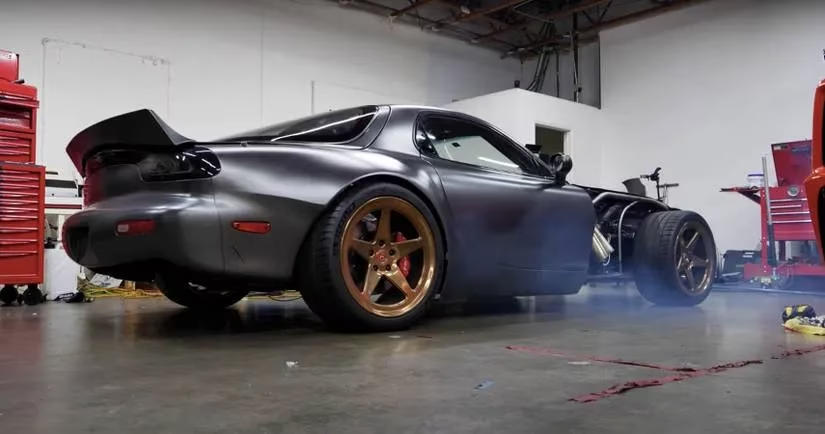
I first found this video years ago, and watching it again in 2026 has not changed the lesson. If anything, the quick-cut clips and short-form edits of today make a twenty-minute video about belt routing feel almost radical. The gap between online highlight reels and real garage work can feel massive. Television and social media often compress months of struggle into a few seconds of burnout footage. Dahm’s channel works because it refuses to do that. He shows the unglamorous parts alongside the big numbers, which is rare.
Here is what the two worlds teach me:
| What the highlight reel shows | What a four-rotor RX-7 actually teaches |
|---|---|
| Fire-breathing dyno pulls | Belt routing and pump clearances |
| Instant success | Late-night intake manifold troubleshooting |
| Clean, finished engine bays | Smoke, oil mist, and custom brackets |
Even in 2026, when the car scene is faster and more click-driven than ever, this RX-7 still resonates. I find myself paying less attention to the final product and more attention to the process. A wild swap is never truly finished, and that is okay.
What I take away from following Dahm’s journey is simple:
-
🔧 Small fixes are still progress, even when they look boring on camera.
-
🚗 A custom build lives in the details: brackets, belts, pumps, clearance, and patience.
-
🌙 If you have not been in the garage past midnight questioning your choices, have you even built a car?
-
😅 Rotary love is not logical, but it is persistent.
When the video ends without a tidy resolution, I am not disappointed. I am reminded that real projects move in uneven steps. Some nights you chase flames and horsepower. Other nights you fight smoke, belt alignment, and intake leaks. Both kinds of nights matter.
I may never build a four-rotor, all-wheel-drive RX-7 myself. But watching Rob work through the small, annoying failures makes me want to walk out to my own garage and solve the next problem in front of me. That, more than any dyno number, is the real inspiration behind this Mazda.
Leave a Comment